

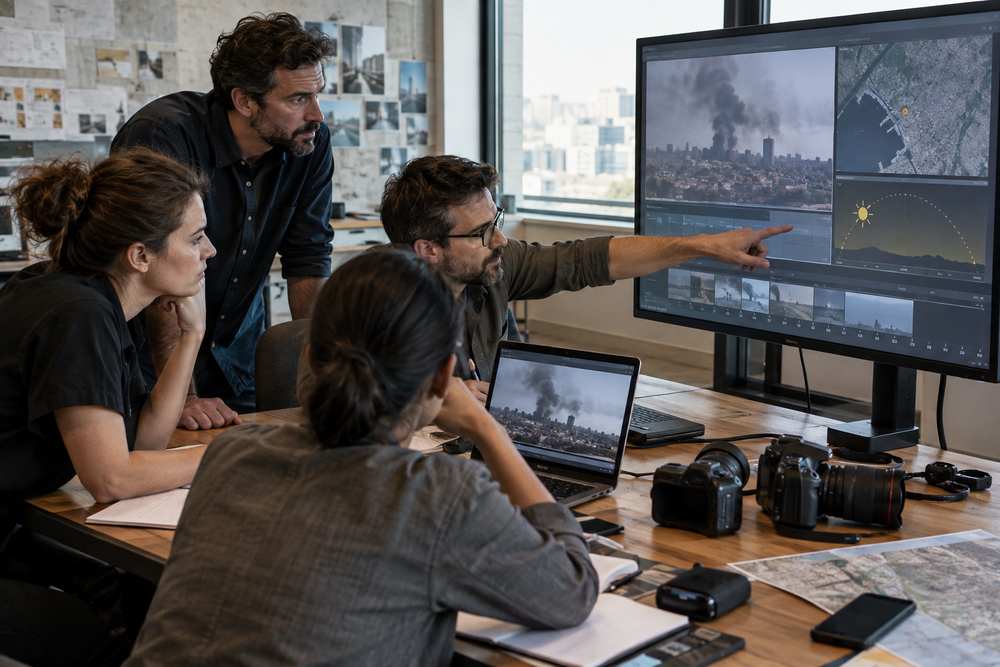
“This testimony through photography is a form of struggle against war and oblivion.”
Photojournalist Jesús Abad Colorado documented civilians living through Colombia’s armed conflict, returning to communities after massacres and displacement. His wording makes memory, not spectacle, the purpose of the image. That history gives Jesús Abad Colorado’s statement its precision. Spoken from the experience of reporting in Colombia, it turns photography as an archive against forgetting into a test of journalism’s public purpose. The issue is not whether a reporter appears heroic; it is whether verifiable testimony can reach an audience despite the political, legal, economic, or physical obstacles placed in its path.
The quote also resists a common distortion: treating pressure on a journalist as a private dispute. In Jesús Abad Colorado’s case, the larger target was information about public power and the lives affected by it. Readers benefit when coverage explains that connection precisely, without inflating every criticism into censorship or reducing a documented campaign to personality conflict. The best account identifies the actor, the mechanism of pressure, the evidence for retaliation, and the public-interest reporting that preceded it.
The relevant editorial response is concrete: caption people and places accurately, obtain meaningful consent, preserve negatives and metadata, and resist publishing graphic frames merely for shock. Verification should be visible in the structure of the story through attributed claims, links or descriptions of primary records, a meaningful right of reply, and plain language about uncertainty. Safety decisions belong in the reporting plan from the beginning, not in a hurried conversation after threats arrive. A durable handoff file can protect the investigation from becoming dependent on one person’s memory or continued availability.
The lesson remains current because the tools of suppression evolve faster than the underlying objective. A takedown request, coordinated smear, advertising boycott, platform restriction, spyware infection, or selective lawsuit can produce the same silence once sought through a raid. News organizations should track those tactics as part of the story, support targeted staff, and keep the original subject in view. Jesús Abad Colorado’s words endure when they lead to better evidence, safer collaboration, and a record strong enough to outlast the pressure around its publication. A high-quality account should return to the story after the immediate controversy, compare promised reforms with observable results, and tell readers which questions remain unanswered. That follow-up prevents a memorable quotation from replacing the harder work of accountability. It should also distinguish later evidence from what was known at the time, so readers can see how the public record developed rather than receiving a flattened retrospective. When new facts change the interpretation, the update belongs beside the original account with a clear explanation of why the conclusion moved.
Key Context for This Quote+
Photojournalist Jesús Abad Colorado documented civilians living through Colombia’s armed conflict, returning to communities after massacres and displacement. His wording makes memory, not spectacle, the purpose of the image. The quotation is preserved here in that documented context, not as an unattributed internet saying.
Meaning, Concerns, and Early Reactions+
The central concern is photography as an archive against forgetting. Strong coverage should caption people and places accurately, obtain meaningful consent, preserve negatives and metadata, and resist publishing graphic frames merely for shock.
Legacy and Relevance Today+
Its legacy is practical: preserve evidence, explain uncertainty, protect vulnerable contributors, and continue the public-interest reporting when pressure intensifies.
Explore more "Quotes of The Day"
Discover more notable quotes from influential voices across politics, science, business, technology, sports, and culture. Each quote offers insight into how ideas, beliefs, and decisions shape the world around us.