

On This Day in News: October 18, 1867
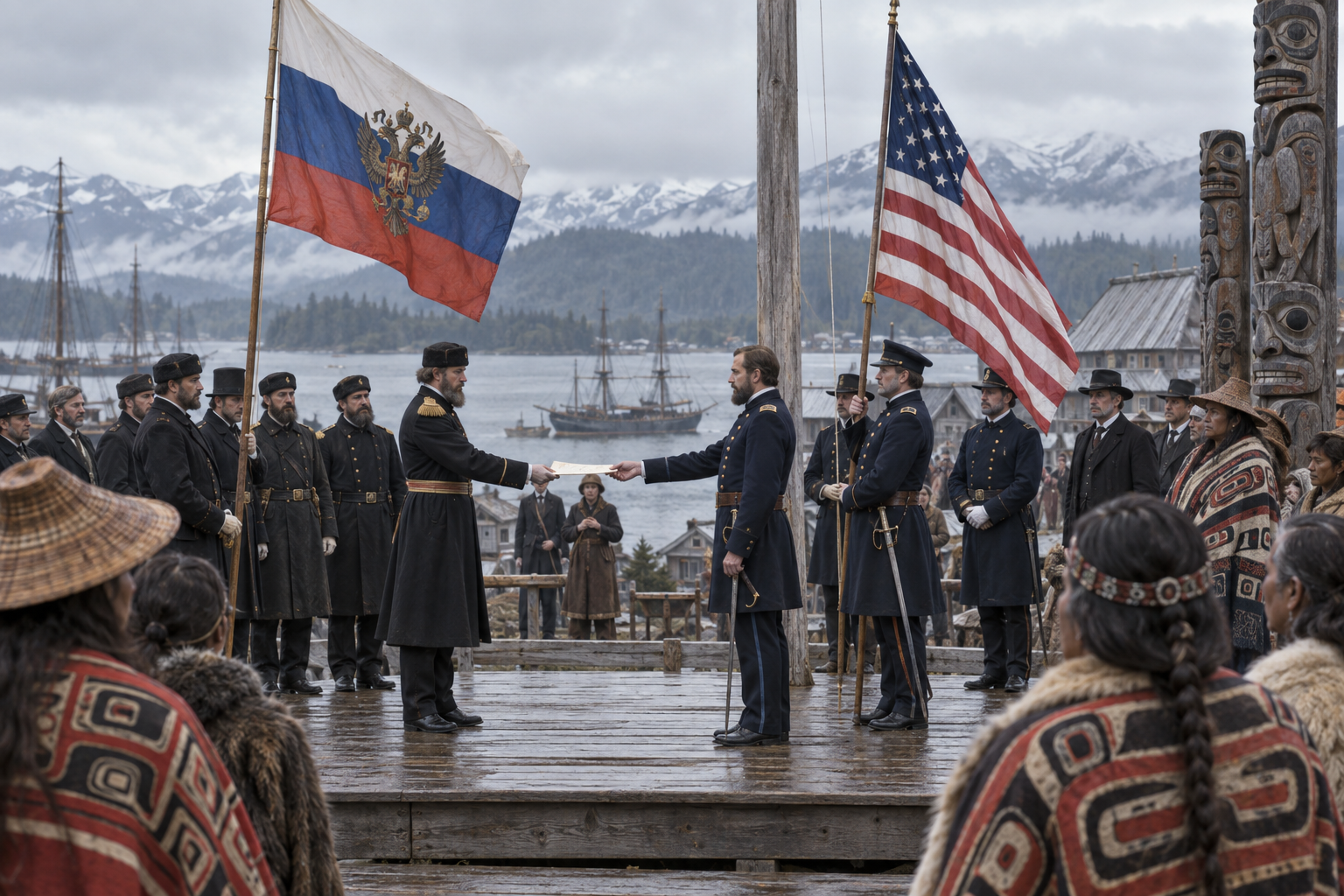
On October 18, 1867, Russian and American officials completed the formal transfer of Alaska at Sitka after the United States purchased the territory. The development immediately drew attention because it connected a specific decision, discovery, or crisis to larger questions of public responsibility and historical change. People following the news that day could see the central facts, but they could not yet know every consequence. Contemporary reporting therefore captured both the urgency of the formal transfer of Alaska from Russia to the United States and the uncertainty surrounding what would happen next.
The deeper setting was Russian financial and strategic concerns, American expansion, Secretary of State William Seward's negotiations, congressional skepticism, and Indigenous nations whose sovereignty was disregarded. Those conditions shaped the choices available to officials, participants, and affected communities, and they explain why the event unfolded as it did. They also show why an anniversary should not be treated as an isolated fact. Long-running pressures had already been building, and different groups encountered the moment from sharply different positions. Reconstructing that context helps distinguish documented causes from simplified hindsight.
The immediate result was that the Russian flag was lowered, the American flag was raised, and United States military administration began. Officials, journalists, and communities then had to interpret events with incomplete information and under intense pressure. Early accounts naturally emphasized the most visible developments, while later records, testimony, investigations, and scholarship added detail or corrected assumptions. Public understanding formed in stages rather than all at once, making careful chronology and source comparison essential.
The long-term importance is that the transfer greatly expanded United States territory and access to resources while introducing new colonial pressures on Alaska Native peoples and cultures. The anniversary still warrants attention because its effects reached institutions, law, culture, science, diplomacy, or public memory well beyond the original day. Remembering the event responsibly means examining the evidence, acknowledging the people most affected, and recognizing how later generations interpreted its meaning. It also requires separating consequences that were visible immediately from developments that emerged only over years or decades. For readers today, the best approach is to compare contemporary reports with official records and later scholarship, keeping commemoration connected to verifiable history rather than reducing it to a slogan. That comparison can reveal whose voices dominated the first reports, which experiences were overlooked, and how public institutions later responded. Accuracy, context, and proportion are the foundation of useful remembrance.
The immediate event was clear: Russian and American officials completed the formal transfer of Alaska at Sitka after the United States purchased the territory. Its wider importance came from the way that development intersected with institutions, public expectations, and historical forces.
The principal background was Russian financial and strategic concerns, American expansion, Secretary of State William Seward's negotiations, congressional skepticism, and Indigenous nations whose sovereignty was disregarded. That setting explains both the event's urgency and why different participants understood it differently.
In the short term, the Russian flag was lowered, the American flag was raised, and United States military administration began. People responding in real time had incomplete information, making verification, chronology, and responsible reporting especially important.
Early narratives could not capture every consequence. Later records, testimony, investigations, and scholarship added detail and sometimes corrected assumptions formed during the first news cycle.
The central legacy is that the transfer greatly expanded United States territory and access to resources while introducing new colonial pressures on Alaska Native peoples and cultures. That consequence connects the anniversary to debates and institutions that continued long afterward.
The event is best remembered with context and proportion rather than as a slogan. Its lasting value comes from examining evidence, affected communities, choices made at the time, and the decisions that followed.
Explore more of "On This Day ..."
Discover more events from the same date across news, politics, technology, sports, and other fields. Each link highlights significant moments that shaped history on different fronts.