

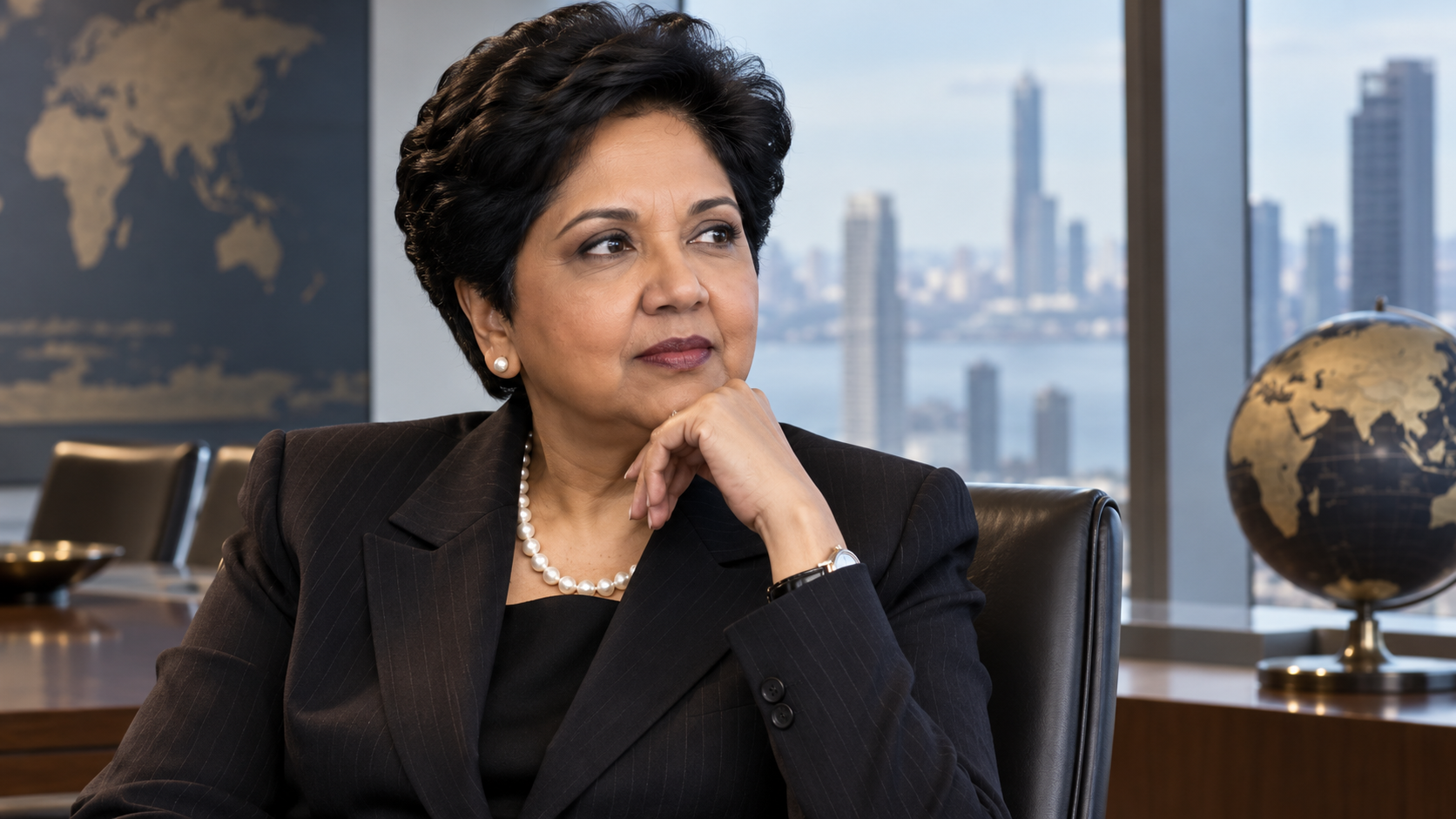
“Good for commerce and good for society have to go together.”
Indra Nooyi made this argument in a September 2007 address at Miami Dade College while serving as PepsiCo’s chair and chief executive. She asked what makes a “good” company and rejected an answer limited to shareholder return, customer satisfaction, and legal compliance. A corporation, she argued, operates inside society and draws on its people, institutions, infrastructure, and trust. Responsibility therefore cannot be a final check applied after the business plan is complete.
Nooyi’s formulation makes purpose operational. Product design, environmental impact, workforce practices, and commercial performance must be considered together rather than assigned to separate departments. A strategy that creates profit by worsening the conditions on which the company depends is internally unstable. Conversely, social ambition without a credible economic engine may not endure. The leadership task is to find models in which solving a real problem strengthens both competitive position and public value.
The phrase does not guarantee harmony. A company may face genuine conflicts among affordability, wages, environmental investment, and near-term returns. Leaders can also exaggerate social benefits while avoiding hard evidence. “Go together” should therefore mean disciplined integration: defined outcomes, transparent tradeoffs, independent measurement, and willingness to change a profitable practice when its wider costs are unacceptable.
Climate risk, public health, automation, and unequal access to opportunity make the interdependence even clearer today. Businesses cannot control every social condition, but they shape products, jobs, supply chains, lobbying, and capital allocation. Nooyi’s sentence offers a useful strategy screen: does the plan create an advantage by improving the system around the firm, or by quietly drawing value out of it? Companies built for the long term need commerce and society to reinforce one another rather than compete for the last word.
Nooyi delivered the line in a 2007 speech asking what it means for a company to be good in both commercial and moral terms.
She argued that responsibility must run through business planning instead of appearing as an ethical review at the end.
Economic durability and public value can reinforce each other when they are designed into products, operations, and workforce decisions.
Real conflicts still occur. Credibility requires measurable outcomes and transparent treatment of costs rather than purpose language alone.
Companies now influence climate, health, work, and access through global systems that no department can treat as external.
The quotation encourages strategy that strengthens the conditions on which long-term enterprise value depends.
Explore more "Quotes of The Day"
Discover more notable quotes from influential voices across politics, science, business, technology, sports, and culture. Each quote offers insight into how ideas, beliefs, and decisions shape the world around us.