

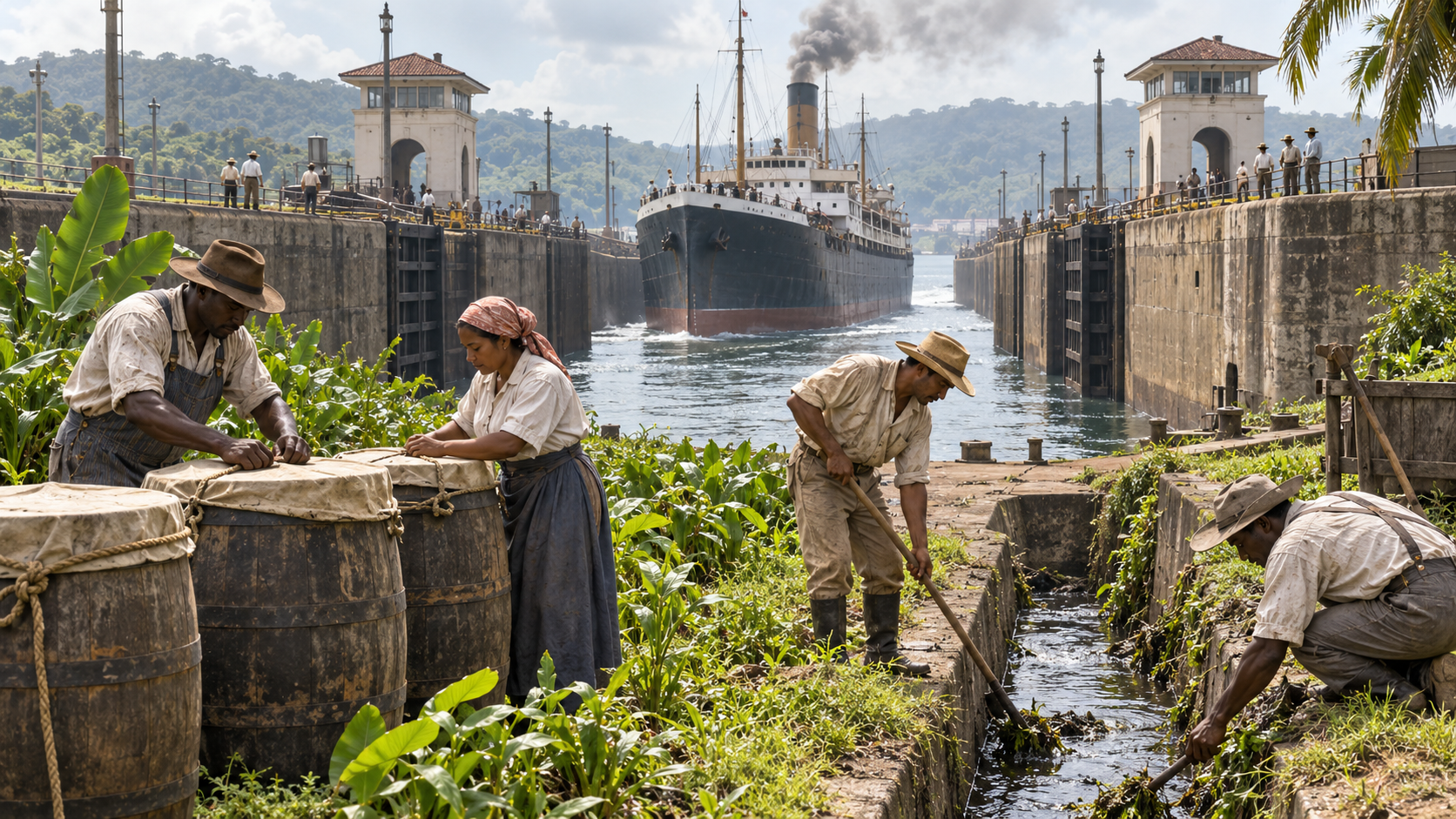
On This Day in Health: August 15, 1914
The Panama Canal officially opened to world commerce on August 15, 1914, when the steamship Ancon completed the ceremonial transit. The passage was an engineering milestone, but its completion also depended on a major campaign against disease. Earlier French construction had been devastated by yellow fever, malaria, accidents, and harsh living conditions. When the United States took over the project in 1904, Army physician William C. Gorgas led sanitation work in the Canal Zone. His program applied growing evidence that mosquitoes transmitted both yellow fever and malaria.
Health workers screened buildings, fumigated rooms, drained standing water, covered water containers, cleared vegetation, treated breeding sites with oil, and organized inspection teams. Yellow fever, carried by Aedes aegypti, was eliminated from the zone early in the American construction period. Malaria, transmitted by Anopheles mosquitoes, was harder to control because its vectors bred across a wider landscape. Gorgas’s department combined mosquito measures with clean water, sewage systems, hospitals, housing improvements, and systematic recordkeeping. Disease did not disappear, and workers still died from illness and injury, but mortality fell enough to sustain a large labor force.
The public-health story must also include the unequal conditions of canal construction. Tens of thousands of workers came from the Caribbean and elsewhere, and segregated payroll and housing systems shaped access to resources. Official hospital records list 5,609 deaths from disease and accidents during the American construction era, while the earlier French toll was far higher and incompletely recorded. Sanitation achievements were real, yet they operated inside an imperial labor system with sharp racial and economic divisions. Recognizing both facts produces a more accurate account than treating the canal as a simple triumph.
The opening demonstrated that vector control and urban infrastructure could change the feasibility of life and work in a tropical disease environment. It strengthened public-health practice built around surveillance, environmental management, trained personnel, and coordinated administration. Later mosquito programs would refine or reject particular methods, especially as ecological and chemical risks became better understood. Yellow-fever vaccination now adds powerful protection, while malaria control uses multiple tools and continues to face resistance and access challenges. August 15 therefore marks more than a ship passage. It shows how disease ecology, sanitation, labor policy, and engineering can determine whether a vast project succeeds and who bears its human costs. The canal campaign also showed that surveillance must guide operations. Health departments mapped cases, counted mosquito breeding sites, and adjusted teams to conditions across towns and worksites. The numbers were imperfect, but routine collection made prevention measurable and gave administrators evidence for directing labor and supplies rather than relying only on dramatic anecdotes.
The canal opened on August 15, 1914, after earlier French construction had suffered catastrophic losses from disease, accidents, and difficult working conditions.
Evidence from Finlay, Reed, and other researchers allowed Gorgas’s department to target mosquitoes rather than relying on older theories of contaminated air.
Screening, drainage, water-container control, fumigation, sewage work, hospitals, and surveillance reduced yellow fever and lowered malaria transmission.
Disease and injury continued, and segregated systems meant workers did not share risks, housing, pay, or health resources equally.
The campaign helped establish coordinated vector control and environmental sanitation as practical tools of large-scale public health.
Modern programs add vaccination, safer insecticides, diagnostics, treatment, community participation, and attention to the social conditions that shape exposure.
Explore more of "On This Day ..."
Discover more events from the same date across news, politics, technology, sports, and other fields. Each link highlights significant moments that shaped history on different fronts.