

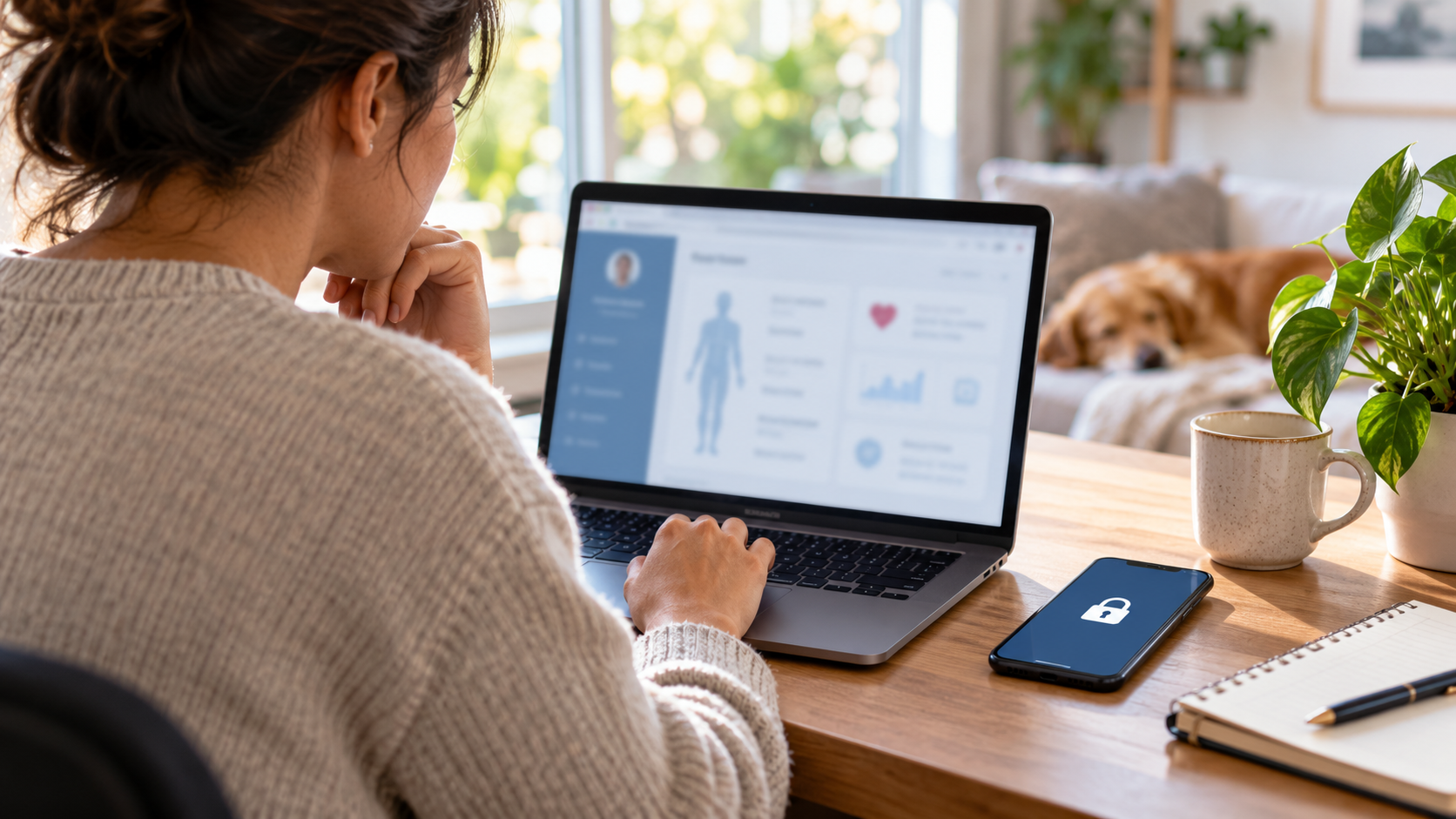
Health Data Privacy Explainer
Health data privacy concerns who may collect, use or share information about a person’s health and under what conditions. Health data can include clinical records, insurance claims, prescriptions, laboratory results and genetic information, but it can also arise from a fitness tracker, symptom app, search, location trail or purchase pattern. Privacy is related to security but is not the same thing. Privacy sets rules and expectations for appropriate use; security uses safeguards such as access controls and encryption to prevent unauthorized access, alteration or loss. Both matter because health information can expose intimate facts and cause stigma, discrimination, fraud or personal harm when misused.
In the United States, HIPAA protects most individually identifiable health information held or transmitted by covered health plans, health care clearinghouses, certain health care providers and their business associates. It gives people rights involving access to their records and limits many uses and disclosures, but it does not make every health-related fact confidential everywhere. HIPAA permits certain uses without a separate authorization for treatment, payment and health care operations and in other circumstances defined by law. An employer acting as an employer, a school record system or a direct-to-consumer app may fall under a different legal framework even when the information feels medical.
Consumer health technologies illustrate that boundary. A wellness or reproductive-health app may gather symptoms, device identifiers and location information without being a HIPAA covered entity. The Federal Trade Commission Act can apply to unfair or deceptive data practices, and the FTC’s Health Breach Notification Rule covers certain vendors of personal health records and related entities outside HIPAA. A privacy policy should explain collection, retention and sharing, but a long policy is not proof that a practice is necessary or safe. Users can review permissions, limit optional sharing, use strong unique passwords and multifactor authentication, and delete data or accounts when the service offers meaningful controls.
Organizations also need data minimization, role-based access, workforce training, vendor oversight, audit logs, secure backups and a tested incident-response plan. Encryption can reduce exposure, but no single control prevents every breach, and a notification sent after an incident does not undo the disclosure. The challenge is to preserve useful information flow for care, public health and research without treating sensitive data as unlimited raw material. Asking what is collected, why it is needed, who receives it and how long it remains available turns privacy from a vague promise into specific decisions that people and institutions can evaluate.
HIPAA applies to covered health plans, clearinghouses, certain providers and business associates handling protected health information for them. It limits uses and disclosures and creates individual rights, but it does not regulate every company that collects health-related information.
A consumer app, employer or school may operate under different federal or state rules. The same type of fact can receive different protection depending on who holds it and why. Users should not rely on a medical-looking interface or the phrase 'HIPAA compliant' as a complete privacy explanation.
A useful privacy review follows data from collection to deletion. It asks which fields and device signals are gathered, whether data is combined with other sources, which service providers or advertisers receive it and how long copies or backups remain.
Consent is meaningful only when the choice is understandable and not misleading. Optional permissions should be separable from functions required to provide the service. Data minimization reduces risk by collecting and retaining only what has a defined purpose.
Security measures include multifactor authentication, least-privilege access, encryption, software updates, logging, backups and staff training. These controls protect confidentiality, integrity and availability, but they need regular testing and vendor oversight.
Breach rules can require notice to affected people and regulators, depending on the organization and data. A response should also contain the incident, preserve evidence, correct weaknesses and offer practical guidance. Notification is accountability after harm, not a substitute for prevention.
Explore more "Explainers"
Discover additional explainers across politics, science, business, technology, and other fields. Each explainer breaks down a complex idea into clear, everyday language—helping you better understand how major concepts, systems, and debates shape the world around us.