

“The really important kind of freedom involves attention, and awareness, and discipline, and effort.”
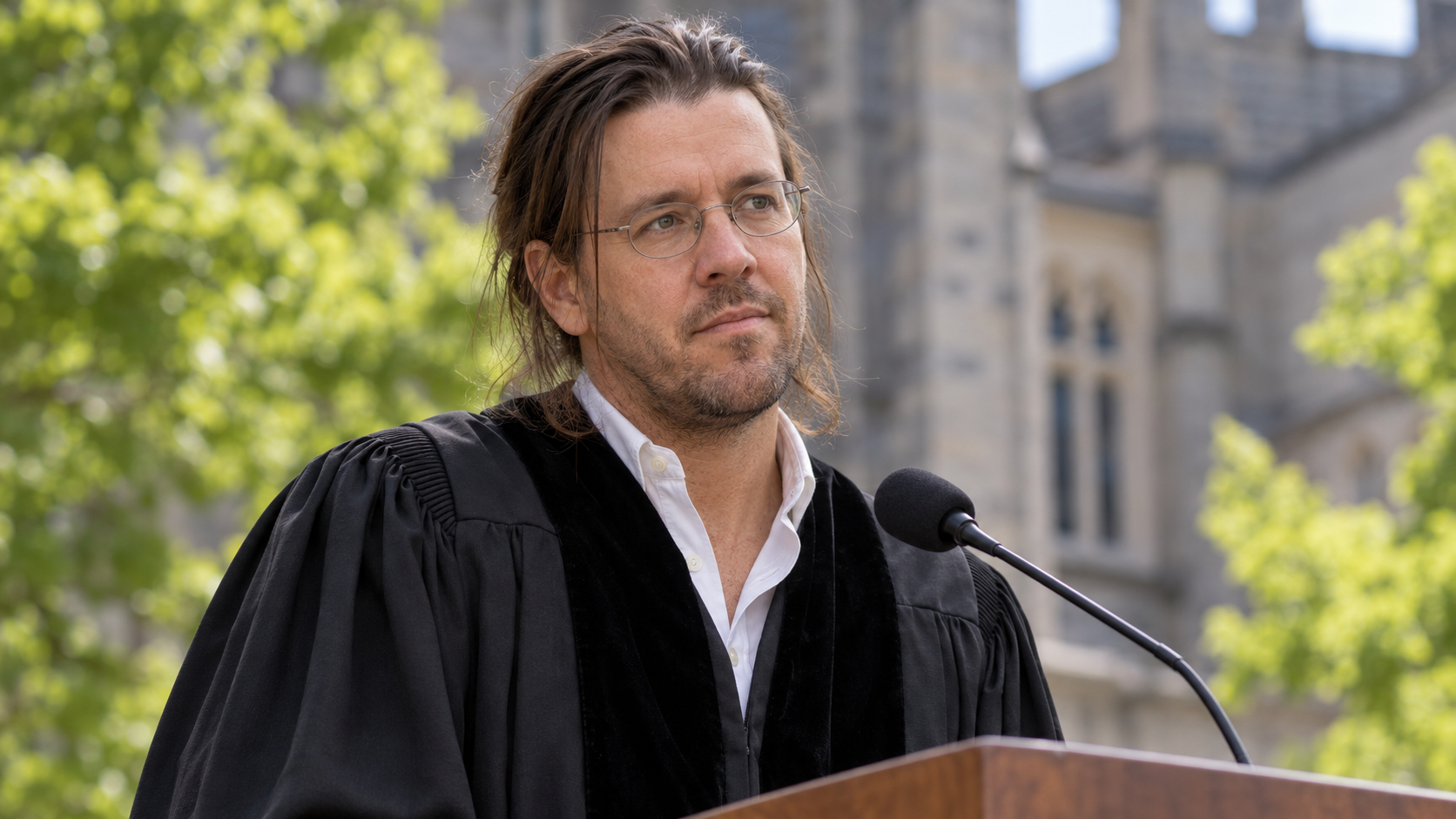
David Foster Wallace made this observation in “This Is Water,” his 2005 commencement address at Kenyon College. The speech begins with a deceptively simple fish story and moves toward the ordinary pressures of adult life: traffic, errands, fatigue, irritation, and the automatic assumption that one’s own inconvenience is the center of the scene. Wallace’s idea of freedom is deliberately different from doing whatever one wants. He describes a practice of choosing what to notice and of remembering that other people, even strangers in an exhausting grocery line, are living interior lives as complex as one’s own. The quotation is part of that argument. Attention is not passive observation; it is the work of interrupting a reflex.
The phrase can sound demanding because Wallace strings together four nouns: attention, awareness, discipline, and effort. He does not promise that a better interpretation of the world will appear naturally when life gets difficult. Under stress, most people default to stories that make themselves the injured party and everyone else an obstacle. His speech asks for a moment of mental flexibility: perhaps the slow driver is frightened, the impatient shopper is carrying a burden, or the situation is simply not about the self at all. This is not a command to invent cheerful explanations for harmful behavior. It is an invitation to recognize that the first explanation is not always the only one.
That nuance protects the quotation from becoming a demand for endless accommodation. Awareness should not erase boundaries, excuse injustice, or require someone to stay in a damaging situation. It can, however, make choices more precise. A person who notices their own assumptions can decide when to offer patience, when to ask a question, when to set a limit, and when to refuse a story designed to provoke contempt. Wallace’s version of freedom is therefore not a retreat from the world’s structures. It is a capacity to meet the next small encounter without surrendering entirely to habit, resentment, or distraction.
The thought still matters because modern routines are engineered to divide attention and reward immediate reaction. Notifications, comment threads, rushing, and constant comparison can make the self feel permanently under siege. Wallace offers a counter-practice that is modest but difficult: choose an interpretation rather than letting the loudest reflex choose it. That can look like pausing before replying, listening long enough to revise an assumption, or giving full attention to one necessary task. None of these actions creates perfect wisdom. Together they make room for a freedom that is less theatrical and more durable—the freedom to decide, repeatedly, what kind of mind one brings to shared life.
Wallace delivered “This Is Water” at Kenyon College’s commencement in 2005. Kenyon preserves the text and has also documented how the address was transcribed and later published.
The February 3 placement is editorial. The quotation is not presented as having been spoken on that date.
Wallace defines freedom as the ability to direct attention and choose an interpretation, especially in irritating everyday situations. His point is not that every interpretation is equally true.
The speech calls for empathy without requiring people to excuse cruelty or abandon boundaries. Awareness can help a person respond more deliberately to both kindness and harm.
Digital life and rushed routines make immediate reaction easy. The quote suggests that a pause before judging can be an active form of self-direction.
Its usefulness is practical: notice the automatic story, consider a second one, and then choose the next action with more care.
Explore more "Quotes of The Day"
Continue exploring how writers, thinkers, artists, and advocates have described the choices that shape an everyday life.