

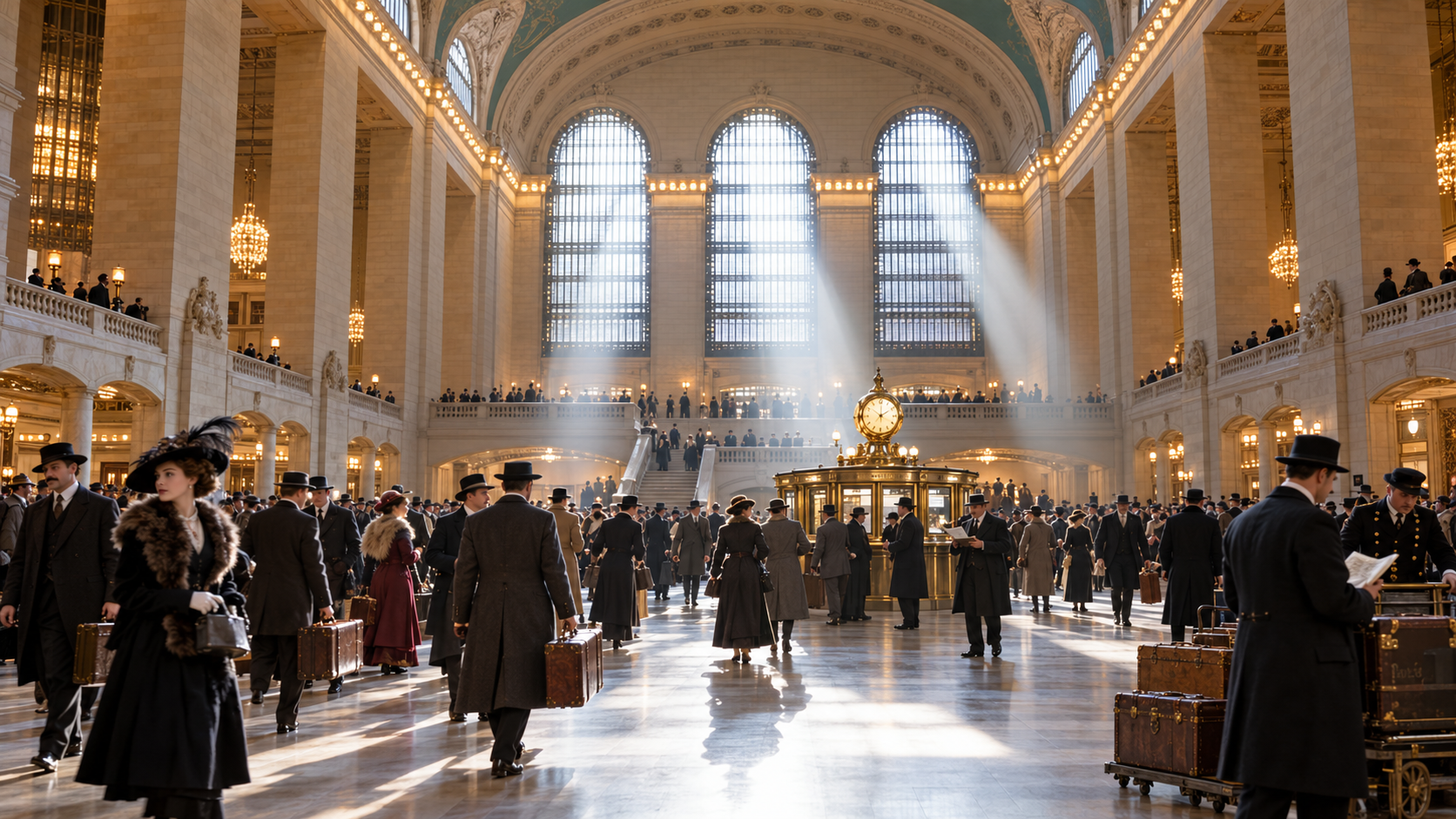
On This Day in Lifestyles: February 2, 1913
On February 2, 1913, Grand Central Terminal officially opened in Manhattan, welcoming travelers into a vast new gateway of stone, glass, ramps, platforms, and electric trains. Its Main Concourse turned movement into spectacle: high windows poured light across the floor, clocks helped organize crowds, and carefully planned routes moved people between streets, waiting rooms, shops, and tracks. What happened that day brought a long-developing idea into public view. The headline was important, but so was the experience around it: people could finally enter, read, watch, use, or discuss a change that previously belonged mostly to plans and specialists.
The terminal replaced an earlier station at a moment when New York was growing vertically and rail travel was central to business and leisure. Electric locomotives made it possible to remove smoke-filled operations from the neighborhood and place tracks below grade. That engineering decision freed valuable land above the rail yards and helped shape the blocks, hotels, offices, and avenues around Midtown. The background reveals how social need, technology, commerce, and imagination had gradually converged. No milestone appears from nowhere; it depends on earlier experiments, patient labor, institutions willing to invest, and audiences prepared to make the new development meaningful.
Opening day showed how infrastructure could also be civic theater. Travelers did not simply board trains; they met under a landmark clock, bought flowers and meals, checked luggage, and watched thousands of strangers cross paths. The building’s ramps reduced the need for stairs, while separate levels organized different services. Architecture made a complicated transportation system feel legible, ceremonial, and unusually welcoming. Contemporaries experienced both promise and friction. New systems rarely fit existing routines perfectly, so users and organizers learned through practice. Publicity amplified the breakthrough, but personal encounters—curiosity, inconvenience, pride, resistance, or delight—gave it emotional force.
Grand Central survived declining long-distance rail use, demolition proposals, and changing commuting patterns to become a symbol of preservation as well as mobility. Its restoration renewed details hidden by decades of grime and neglect. Today the terminal remains both a working station and a destination, demonstrating how a transportation building can support daily routines while giving a city a shared interior room. The anniversary endures because the underlying questions remain current. Who gets to participate, what values a system expresses, and how change reshapes relationships are not settled once. The historical moment offers a clear starting point for understanding choices still visible today. The anniversary also reminds us that everyday life is where large historical forces become personal, repeated, debated, and ultimately durable.
Grand Central Terminal began official service as New York’s monumental new rail gateway on February 2, 1913.
This detail helps place the anniversary in its original setting.
Electric trains, below-grade tracks, ramps, and separated circulation routes helped organize large crowds without the smoke of steam operations.
The wider context explains why the moment drew public attention.
The terminal combines working transportation with memorable civic architecture, shops, meeting places, and a preservation story.
Its legacy remains visible in contemporary culture and everyday life.
Explore more of “This Day in Lifestyles”
Discover more moments in everyday life, design, education, travel, food, fashion, and culture. Each story connects a calendar date with an event that changed how people lived.