

On This Day in Lifestyles: February 27, 1827
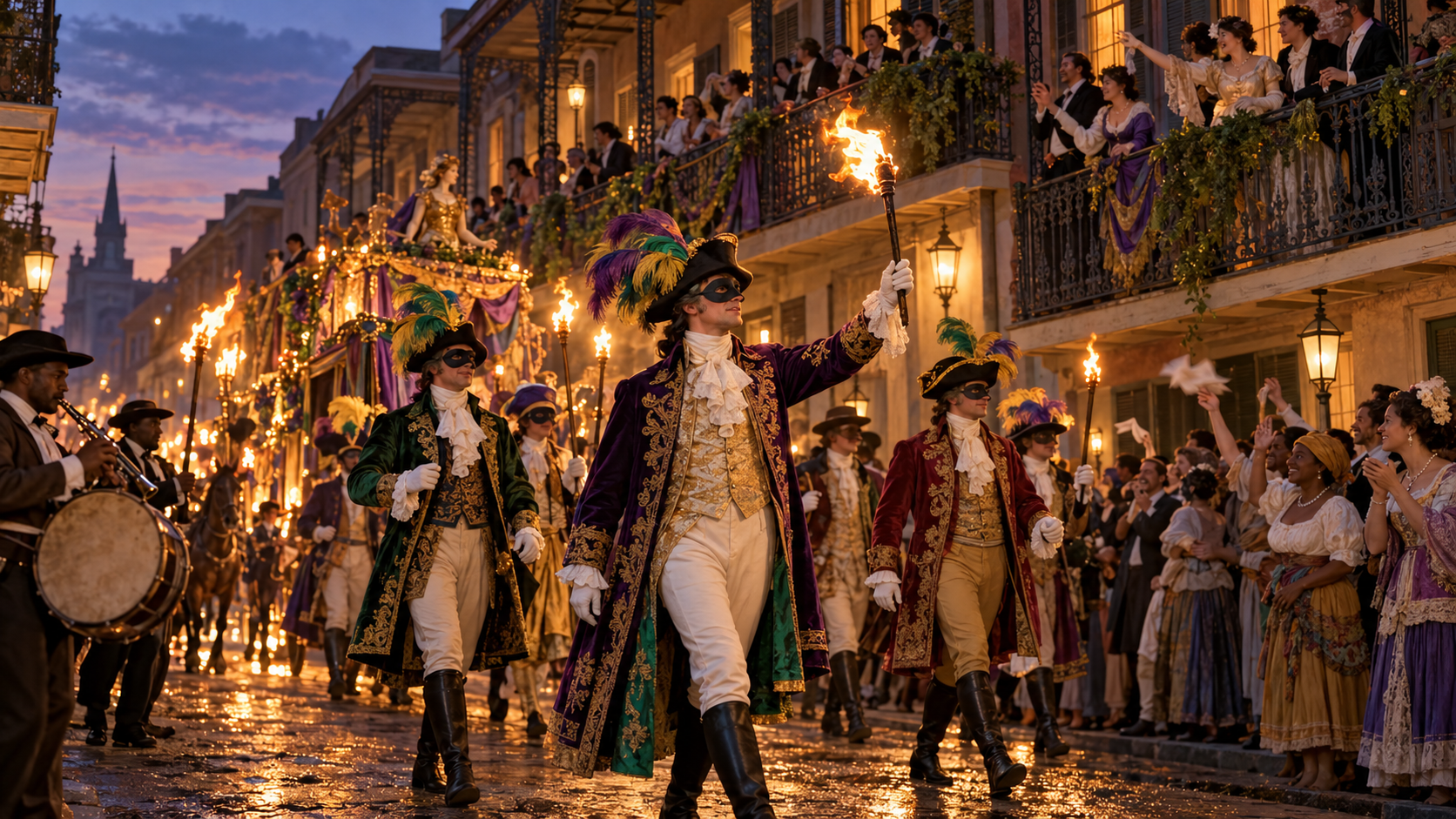
On February 27, 1827, a group of masked revelers organized an early Mardi Gras street procession in New Orleans. Accounts connect the parade with young Creole men who had encountered Carnival customs in Paris and brought a coordinated masquerade into the streets. The event did not invent Carnival in the city, but it helped establish public procession as a defining part of the celebration. The occasion became memorable because a large historical shift took a form people could see and feel. It joined public significance with an ordinary action, turning an abstract change into a shared experience that could be described at dinner tables and remembered later.
New Orleans had observed seasonal festivities under French and Spanish rule, with balls, masking, food, music, and shifting restrictions. Mardi Gras—the final day before Lent—joined religious calendar, local custom, and opportunities to cross ordinary social boundaries through disguise. The 1827 procession gave that energy a visible route through shared streets, where participants and spectators created the occasion together. Seen against its background, the moment was the product of sustained work rather than sudden inspiration. Earlier advocates, craftspeople, researchers, performers, organizers, or users supplied the knowledge and pressure that allowed the event to happen when it did.
Later decades added organized krewes, themed floats, torchbearers, marching groups, brass bands, and the ceremonial roles of Carnival royalty. These traditions were shaped by creativity and exclusion alike. Elite organizations often restricted membership, while Black New Orleanians built vital parallel and intersecting practices including neighborhood parades, music, masking traditions, and Mardi Gras Indian communities with distinct histories. Its first effects unfolded through details: schedules, rooms, tools, printed pages, broadcasts, conversation, and the movement of bodies through new routines. Those details show how history enters life—not as a slogan, but as hundreds of small adjustments made by real people.
Mardi Gras became central to New Orleans identity, tourism, family memory, performance, food, and neighborhood life. The festival changes each year while drawing power from repetition, handcrafted display, and public participation. The 1827 procession matters as an early step toward a street culture in which the city temporarily becomes a stage—joyful, contested, communal, and inseparable from the people who keep its traditions alive. Later generations inherited both the achievement and its unresolved tensions. The event helped establish a durable practice or institution, yet its meaning continues to evolve as society asks harder questions about inclusion, power, environmental cost, memory, and cultural ownership. The anniversary also reminds us that everyday life is where large historical forces become personal, repeated, debated, and ultimately durable.
No. Carnival customs were older, but the masked procession helped establish organized street parading in New Orleans.
This detail helps place the anniversary in its original setting.
Krewes, themed floats, marching groups, torches, brass bands, and Carnival royalty expanded the public spectacle.
The wider context explains why the moment drew public attention.
Creole, Black, immigrant, neighborhood, elite, and working-class communities created distinct and overlapping Carnival practices.
Its legacy remains visible in contemporary culture and everyday life.
Explore more of “This Day in Lifestyles”
Discover more moments in everyday life, design, education, travel, food, fashion, and culture. Each story connects a calendar date with an event that changed how people lived.