

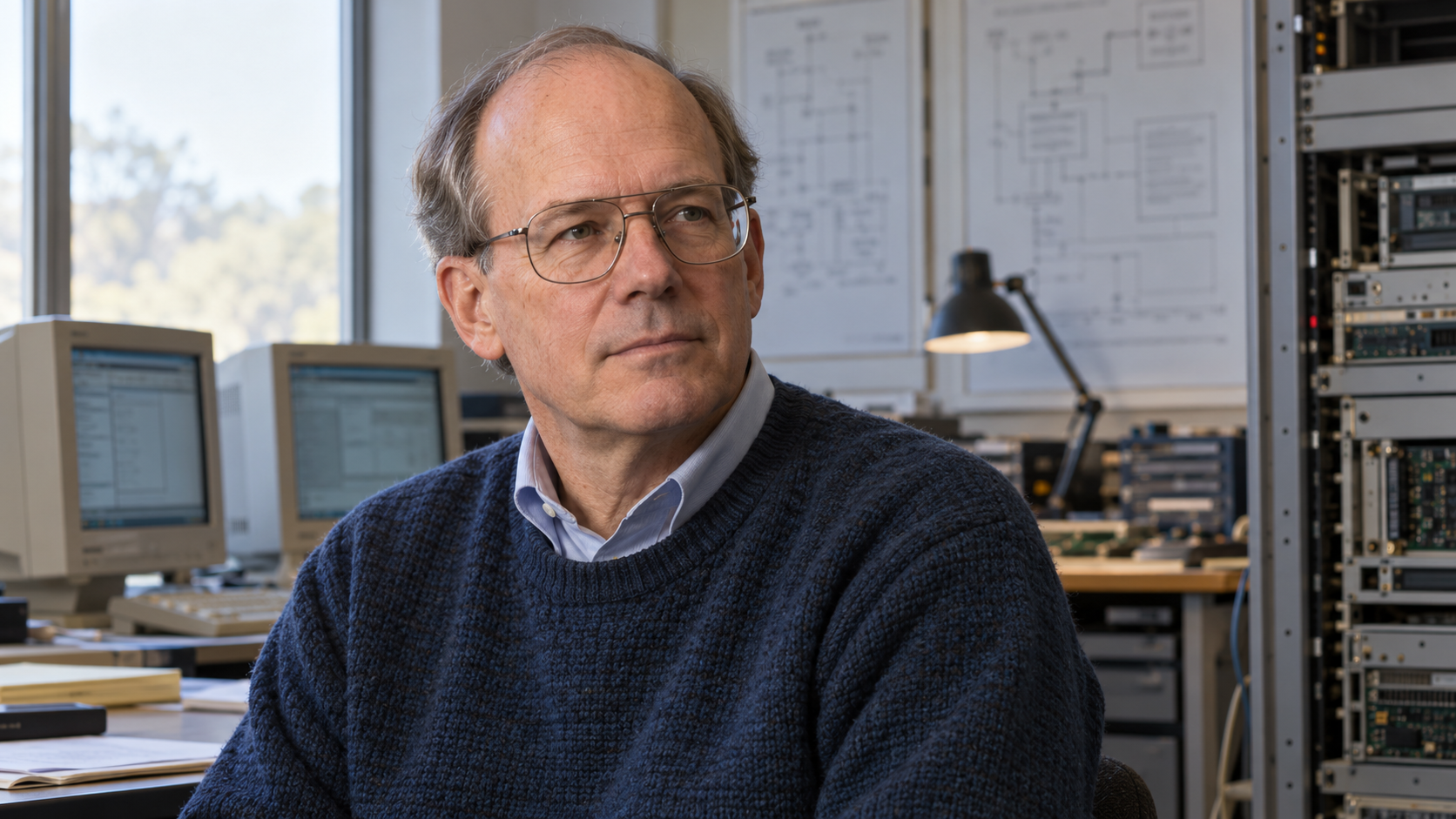
“When all is said and done, much more is said than done.”
David Cutler offered this line in his Computer History Museum Fellow profile and oral history. Cutler spent decades building operating systems and computer architectures, from RSX-11/M and VMS at Digital Equipment Corporation to Windows NT and later cloud and console work at Microsoft. The dry sentence fits an engineering career defined by shipping complex systems rather than only discussing them. The context matters because it shows which problem the speaker was actually trying to solve.
The line separates plans, meetings, and declarations from tested artifacts. In systems work, an idea becomes credible only when it survives implementation details, hardware differences, failures, schedules, and the needs of people who must operate it. The line asks readers to look past novelty and examine what the technology enables people to do. In practice, that means asking what changed, who gained new capability, which assumption carries the most risk, and how the result would be checked by someone who did not share the builder’s expectations. It also means comparing the claimed benefit with the maintenance, access, and recovery work required to keep it real over time. The quotation earns its place by sharpening those questions instead of closing them.
Action without discussion is not the lesson. Large operating systems require design reviews, written interfaces, coordination, and careful disagreement. The warning is against talk that never converges on a decision, experiment, or accountable owner. That distinction is essential whenever a compact quotation travels farther than the detailed account that produced it. Strong technology reporting must preserve this boundary, because the same words can support very different choices after the original constraints disappear. Readers should be able to see both the useful principle and the evidence that would require a different judgment. A responsible reading separates the speaker’s documented claim from broader promises that admirers may attach to it later.
Software teams can now produce proposals and generated code faster than ever, but delivery still depends on integration, testing, observability, and support. Cutler’s quip is a useful audit: which conversations created a verifiable next step, and which merely created the feeling of progress? Used this way, the quote becomes a prompt for better practice rather than a decorative line about innovation. Teams can make that test concrete through review, accessible documentation, independent feedback, and measures that include failures as well as successes. The same discipline should follow the system after launch, when real users reveal consequences no prototype fully predicted in advance. Those habits turn a memorable insight into work that readers, builders, and institutions can examine and improve.
David Cutler offered this line in his Computer History Museum Fellow profile and oral history. Cutler spent decades building operating systems and computer architectures, from RSX-11/M and VMS at Digital Equipment Corporation to Windows NT and later cloud and console work at Microsoft. The dry sentence fits an engineering career defined by shipping complex systems rather than only discussing them. The context matters because it shows which problem the speaker was actually trying to solve.
The source record connects the wording to his Computer History Museum Fellow profile and oral history, which is the context used for this post.
The line separates plans, meetings, and declarations from tested artifacts. In systems work, an idea becomes credible only when it survives implementation details, hardware differences, failures, schedules, and the needs of people who must operate it. The line asks readers to look past novelty and examine what the technology enables people to do. In practice, that means asking what changed, who gained new capability, which assumption carries the most risk, and how the result would be checked by someone who did not share the builder’s expectations. It also means comparing the claimed benefit with the maintenance, access, and recovery work required to keep it real over time. The quotation earns its place by sharpening those questions instead of closing them.
The interpretation focuses on a decision or design principle that readers can test against actual systems.
Action without discussion is not the lesson. Large operating systems require design reviews, written interfaces, coordination, and careful disagreement. The warning is against talk that never converges on a decision, experiment, or accountable owner. That distinction is essential whenever a compact quotation travels farther than the detailed account that produced it. Strong technology reporting must preserve this boundary, because the same words can support very different choices after the original constraints disappear. Readers should be able to see both the useful principle and the evidence that would require a different judgment. A responsible reading separates the speaker’s documented claim from broader promises that admirers may attach to it later.
Software teams can now produce proposals and generated code faster than ever, but delivery still depends on integration, testing, observability, and support. Cutler’s quip is a useful audit: which conversations created a verifiable next step, and which merely created the feeling of progress? Used this way, the quote becomes a prompt for better practice rather than a decorative line about innovation. Teams can make that test concrete through review, accessible documentation, independent feedback, and measures that include failures as well as successes. The same discipline should follow the system after launch, when real users reveal consequences no prototype fully predicted in advance. Those habits turn a memorable insight into work that readers, builders, and institutions can examine and improve.
Explore more "Quotes of The Day"
Discover more notable quotes from influential voices across politics, science, business, technology, sports, and culture. Each quote offers insight into how ideas, beliefs, and decisions shape the world around us.