

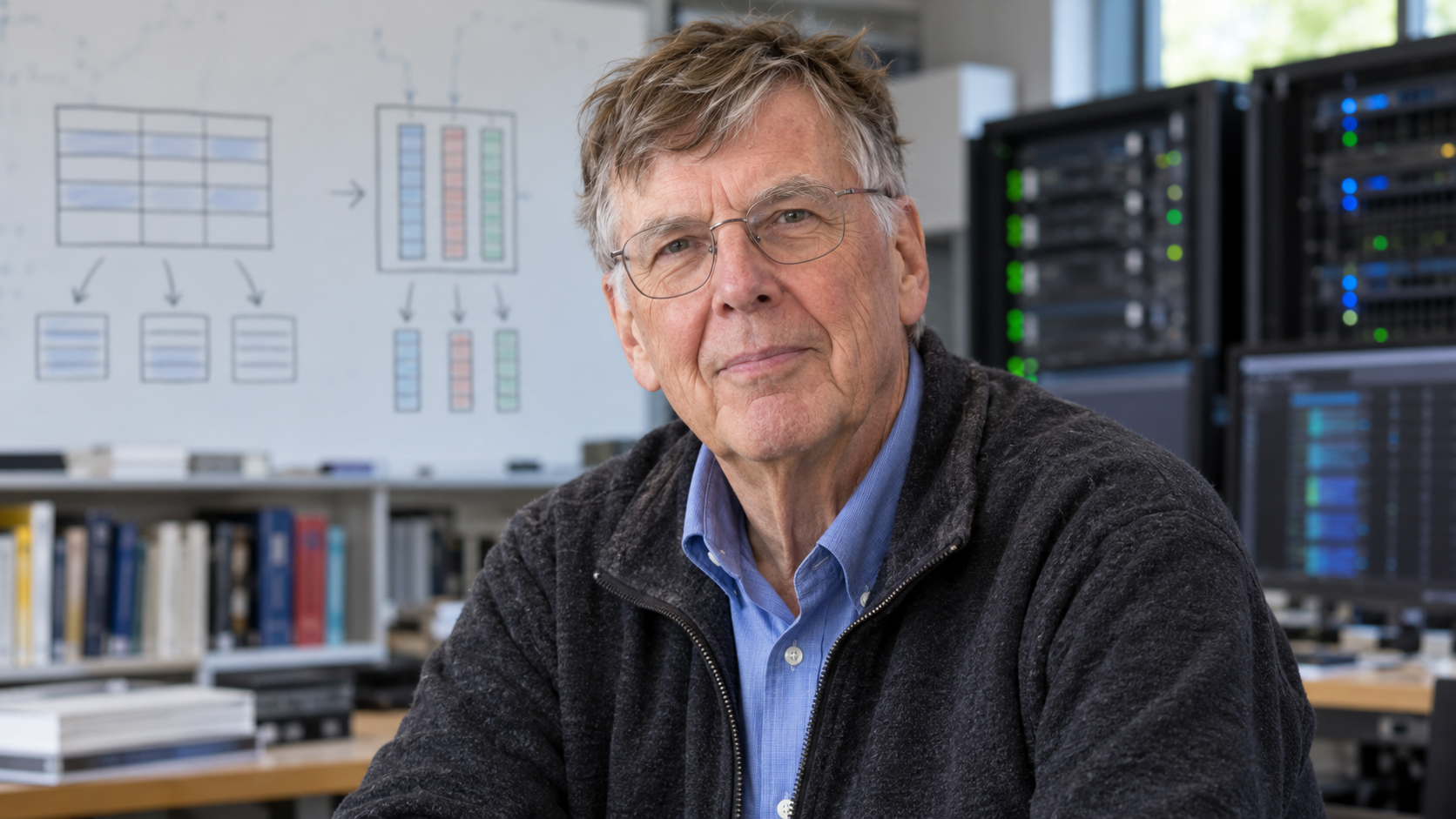
“One size fits all: an idea whose time has come and gone.”
Michael Stonebraker offered this line in the title and argument of his database paper with Uğur Çetintemel. Stonebraker and Çetintemel challenged the practice of using one traditional relational database architecture for transactions, warehouses, streams, and other workloads with very different access patterns. They argued that specialized engines could outperform a universal code line by large margins. The documented setting keeps the line attached to real work rather than turning it into a floating slogan.
Architecture should follow the dominant workload rather than institutional habit. Storage layout, indexing, concurrency, and recovery that serve one task well can impose expensive compromises on another, so specialization can reveal performance that a general system leaves unused. That interpretation makes the quotation useful as a decision rule rather than merely as inspiration. In practice, that means asking what changed, who gained new capability, which assumption carries the most risk, and how the result would be checked by someone who did not share the builder’s expectations. It also means comparing the claimed benefit with the maintenance, access, and recovery work required to keep it real over time. The quotation earns its place by sharpening those questions instead of closing them.
Specialized engines create their own costs: more products to learn, integrate, secure, and operate. The paper itself recognized pressure for common front ends. Choosing specialization therefore requires evidence that the workload benefit outweighs ecosystem complexity. Keeping that boundary visible prevents a memorable sentence from becoming an excuse for simplistic policy or design. Strong technology reporting must preserve this boundary, because the same words can support very different choices after the original constraints disappear. Readers should be able to see both the useful principle and the evidence that would require a different judgment. A responsible reading separates the speaker’s documented claim from broader promises that admirers may attach to it later.
Teams now choose among transactional databases, warehouses, search systems, vector stores, and streaming platforms. Stonebraker’s line discourages reflexive standardization, but it also demands a measured workload case before adding another permanent piece of infrastructure. The enduring lesson is to connect technical ambition with evidence, participation, and responsibility for outcomes. Teams can make that test concrete through review, accessible documentation, independent feedback, and measures that include failures as well as successes. The same discipline should follow the system after launch, when real users reveal consequences no prototype fully predicted in advance. Those habits turn a memorable insight into work that readers, builders, and institutions can examine and improve.
Michael Stonebraker offered this line in the title and argument of his database paper with Uğur Çetintemel. Stonebraker and Çetintemel challenged the practice of using one traditional relational database architecture for transactions, warehouses, streams, and other workloads with very different access patterns. They argued that specialized engines could outperform a universal code line by large margins. The documented setting keeps the line attached to real work rather than turning it into a floating slogan.
The source record connects the wording to the title and argument of his database paper with Uğur Çetintemel, which is the context used for this post.
Architecture should follow the dominant workload rather than institutional habit. Storage layout, indexing, concurrency, and recovery that serve one task well can impose expensive compromises on another, so specialization can reveal performance that a general system leaves unused. That interpretation makes the quotation useful as a decision rule rather than merely as inspiration. In practice, that means asking what changed, who gained new capability, which assumption carries the most risk, and how the result would be checked by someone who did not share the builder’s expectations. It also means comparing the claimed benefit with the maintenance, access, and recovery work required to keep it real over time. The quotation earns its place by sharpening those questions instead of closing them.
The interpretation focuses on a decision or design principle that readers can test against actual systems.
Specialized engines create their own costs: more products to learn, integrate, secure, and operate. The paper itself recognized pressure for common front ends. Choosing specialization therefore requires evidence that the workload benefit outweighs ecosystem complexity. Keeping that boundary visible prevents a memorable sentence from becoming an excuse for simplistic policy or design. Strong technology reporting must preserve this boundary, because the same words can support very different choices after the original constraints disappear. Readers should be able to see both the useful principle and the evidence that would require a different judgment. A responsible reading separates the speaker’s documented claim from broader promises that admirers may attach to it later.
Teams now choose among transactional databases, warehouses, search systems, vector stores, and streaming platforms. Stonebraker’s line discourages reflexive standardization, but it also demands a measured workload case before adding another permanent piece of infrastructure. The enduring lesson is to connect technical ambition with evidence, participation, and responsibility for outcomes. Teams can make that test concrete through review, accessible documentation, independent feedback, and measures that include failures as well as successes. The same discipline should follow the system after launch, when real users reveal consequences no prototype fully predicted in advance. Those habits turn a memorable insight into work that readers, builders, and institutions can examine and improve.
Explore more "Quotes of The Day"
Discover more notable quotes from influential voices across politics, science, business, technology, sports, and culture. Each quote offers insight into how ideas, beliefs, and decisions shape the world around us.