

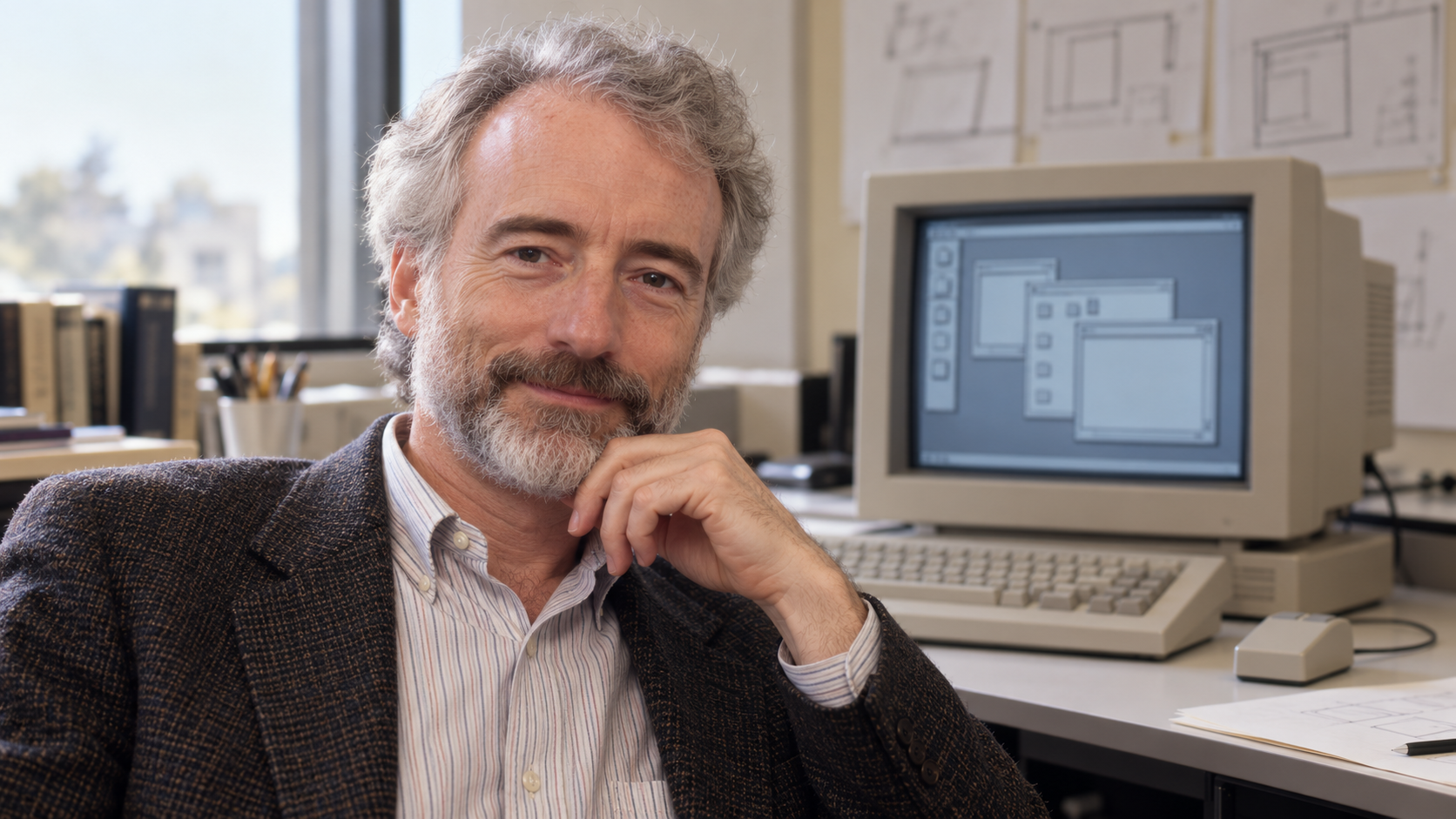
“Intelligence is whatever machines haven’t done yet.”
Larry Tesler offered this line in an early observation about the changing boundary of artificial intelligence. The Computer History Museum uses Tesler’s line to describe the “AI effect”: once a difficult capability becomes routine, people stop treating it as evidence of intelligence. Grammar checking, speech recognition, chess, and other achievements can move from wonder to ordinary infrastructure. The source makes clear that the remark grew from experience, not from a prediction made at a distance.
The definition of intelligence retreats as technology advances. That makes public judgment unstable: a machine can meet yesterday’s benchmark and still be dismissed because familiarity changes the category rather than the capability. Put into practice, the idea changes what a team measures and which tradeoffs it is willing to defend. In practice, that means asking what changed, who gained new capability, which assumption carries the most risk, and how the result would be checked by someone who did not share the builder’s expectations. It also means comparing the claimed benefit with the maintenance, access, and recovery work required to keep it real over time. The quotation earns its place by sharpening those questions instead of closing them.
The effect does not prove that every new system is intelligent or that human cognition has been reproduced. It describes how labels move. Specific performance, generalization, reliability, and social consequences still require separate evidence. A careful application therefore asks where the analogy stops as well as where it illuminates. Strong technology reporting must preserve this boundary, because the same words can support very different choices after the original constraints disappear. Readers should be able to see both the useful principle and the evidence that would require a different judgment. A responsible reading separates the speaker’s documented claim from broader promises that admirers may attach to it later.
AI marketing often alternates between grand claims and sudden normalization. Tesler’s quip encourages clearer language: name the task, conditions, and error rate instead of arguing endlessly over a word whose boundary shifts after every successful demonstration. Applied carefully, the idea helps teams turn historical insight into choices that can be tested and revised. Teams can make that test concrete through review, accessible documentation, independent feedback, and measures that include failures as well as successes. The same discipline should follow the system after launch, when real users reveal consequences no prototype fully predicted in advance. Those habits turn a memorable insight into work that readers, builders, and institutions can examine and improve.
Larry Tesler offered this line in an early observation about the changing boundary of artificial intelligence. The Computer History Museum uses Tesler’s line to describe the “AI effect”: once a difficult capability becomes routine, people stop treating it as evidence of intelligence. Grammar checking, speech recognition, chess, and other achievements can move from wonder to ordinary infrastructure. The source makes clear that the remark grew from experience, not from a prediction made at a distance.
The source record connects the wording to an early observation about the changing boundary of artificial intelligence, which is the context used for this post.
The definition of intelligence retreats as technology advances. That makes public judgment unstable: a machine can meet yesterday’s benchmark and still be dismissed because familiarity changes the category rather than the capability. Put into practice, the idea changes what a team measures and which tradeoffs it is willing to defend. In practice, that means asking what changed, who gained new capability, which assumption carries the most risk, and how the result would be checked by someone who did not share the builder’s expectations. It also means comparing the claimed benefit with the maintenance, access, and recovery work required to keep it real over time. The quotation earns its place by sharpening those questions instead of closing them.
The interpretation focuses on a decision or design principle that readers can test against actual systems.
The effect does not prove that every new system is intelligent or that human cognition has been reproduced. It describes how labels move. Specific performance, generalization, reliability, and social consequences still require separate evidence. A careful application therefore asks where the analogy stops as well as where it illuminates. Strong technology reporting must preserve this boundary, because the same words can support very different choices after the original constraints disappear. Readers should be able to see both the useful principle and the evidence that would require a different judgment. A responsible reading separates the speaker’s documented claim from broader promises that admirers may attach to it later.
AI marketing often alternates between grand claims and sudden normalization. Tesler’s quip encourages clearer language: name the task, conditions, and error rate instead of arguing endlessly over a word whose boundary shifts after every successful demonstration. Applied carefully, the idea helps teams turn historical insight into choices that can be tested and revised. Teams can make that test concrete through review, accessible documentation, independent feedback, and measures that include failures as well as successes. The same discipline should follow the system after launch, when real users reveal consequences no prototype fully predicted in advance. Those habits turn a memorable insight into work that readers, builders, and institutions can examine and improve.
Explore more "Quotes of The Day"
Discover more notable quotes from influential voices across politics, science, business, technology, sports, and culture. Each quote offers insight into how ideas, beliefs, and decisions shape the world around us.