

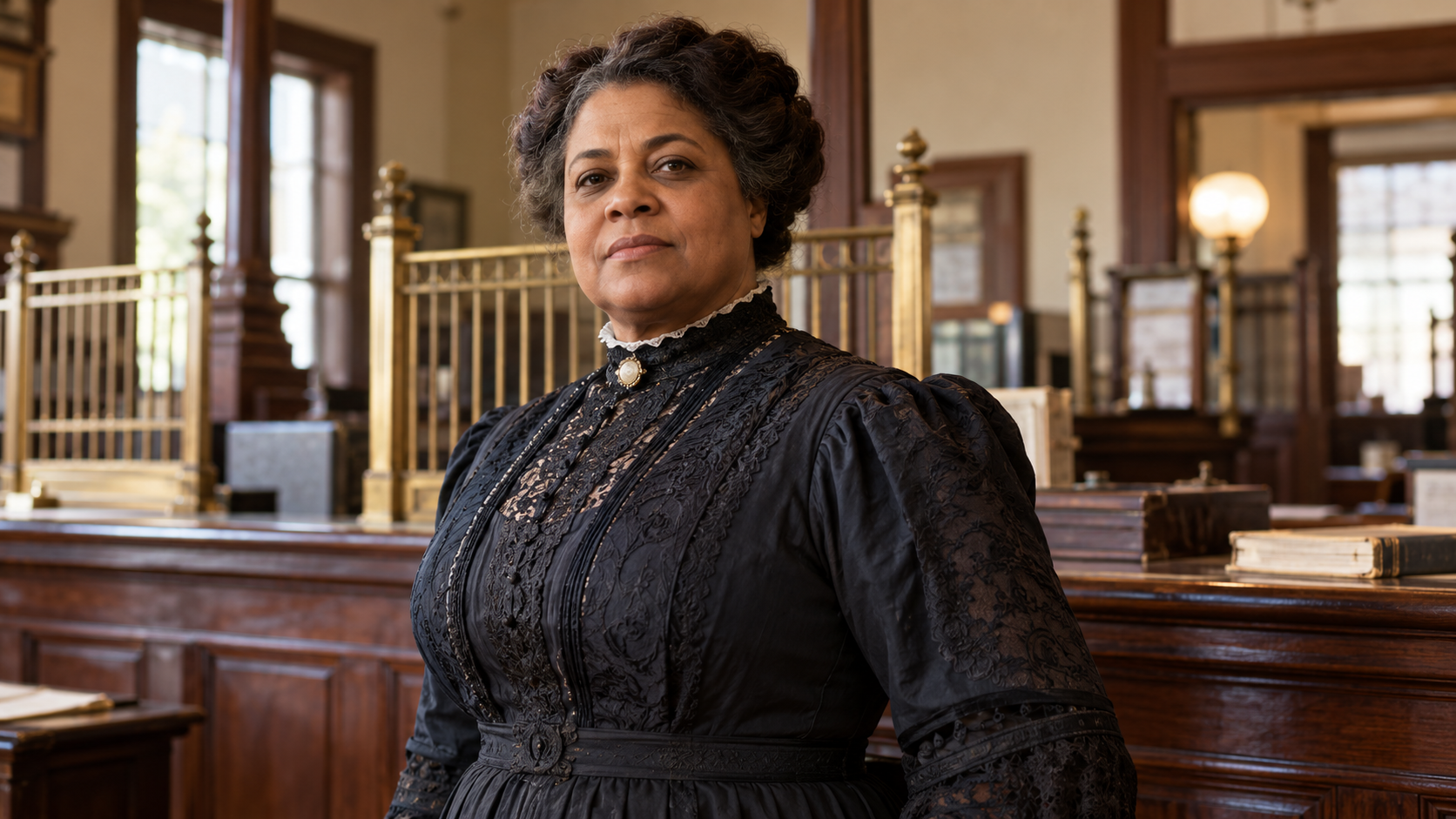
“Let us put our moneys together; let us use our moneys; let us put our money out at usury among ourselves, and reap the benefit ourselves.”
Maggie L. Walker delivered this appeal to the Independent Order of St. Luke in Richmond in 1901. Black families faced segregation, discriminatory credit, and economic institutions that often took their deposits while denying them fair access to capital. Walker proposed a bank chartered and operated by members of the community. Two years later she founded the St. Luke Penny Savings Bank, becoming the first African American woman in the United States to charter and lead a bank. Her words turned collective saving into institutional strategy.
The quote recognizes that money has power beyond individual consumption. Deposits pooled through a trusted institution can finance homes, enterprises, employment, and resilience. Walker was not asking people merely to admire cooperation; she was building governance, products, records, and a balance sheet capable of directing community resources toward community needs. The bank made small deposits economically meaningful and paired thrift with access. It showed how ownership of financial infrastructure can change who receives opportunity.
Historical context is essential. The call arose because mainstream systems excluded Black customers and entrepreneurs, not because communities should be permanently isolated from broader markets. Cooperative finance can fail without sound underwriting, transparency, professional management, and protection for depositors. Solidarity does not remove financial risk. Walker’s achievement joined mutual commitment with operational discipline, and its purpose was greater freedom of participation rather than withdrawal from the economy.
The idea remains relevant to credit deserts, unequal venture funding, community development finance, and employee or cooperative ownership. Businesses and financial institutions can ask where capital leaves a community without returning as opportunity, which criteria reproduce past exclusion, and how trust can be matched with accountable products. Walker’s sentence is a lesson in agency: people who are treated as marginal customers can become owners and institution-builders when resources, governance, and shared purpose are deliberately brought together. Walker’s bank also demonstrates the importance of converting rhetoric into infrastructure. Speeches can build shared purpose, but a charter, trained staff, accounting controls, products, and trusted governance are what allow money to circulate safely. Modern inclusion efforts often stop at outreach while leaving underwriting, ownership, and distribution unchanged. Her example suggests examining the full mechanism. Who controls the institution, who designs the product, whose risk is understood, and where do returns flow? Durable empowerment requires both community confidence and the operational competence to keep that confidence deserved. Institutional strength made the aspiration repeatable beyond a single charismatic founder.
Walker spoke at the Independent Order of St. Luke’s 1901 convention while proposing a bank owned and led within Richmond’s Black community.
She founded the St. Luke Penny Savings Bank in 1903 and served as its first president.
Pooling savings can convert scattered individual resources into credit, enterprise, and community resilience.
Shared purpose still requires professional management, prudent risk controls, transparency, and protection for depositors.
Persistent gaps in credit and investment show that access to financial infrastructure remains uneven.
Walker’s model invites institutions to pair inclusion with ownership, accountable governance, and locally relevant capital.
Explore more "Quotes of The Day"
Discover more notable quotes from influential voices across politics, science, business, technology, sports, and culture. Each quote offers insight into how ideas, beliefs, and decisions shape the world around us.