

On This Day in Health: September 9, 1955
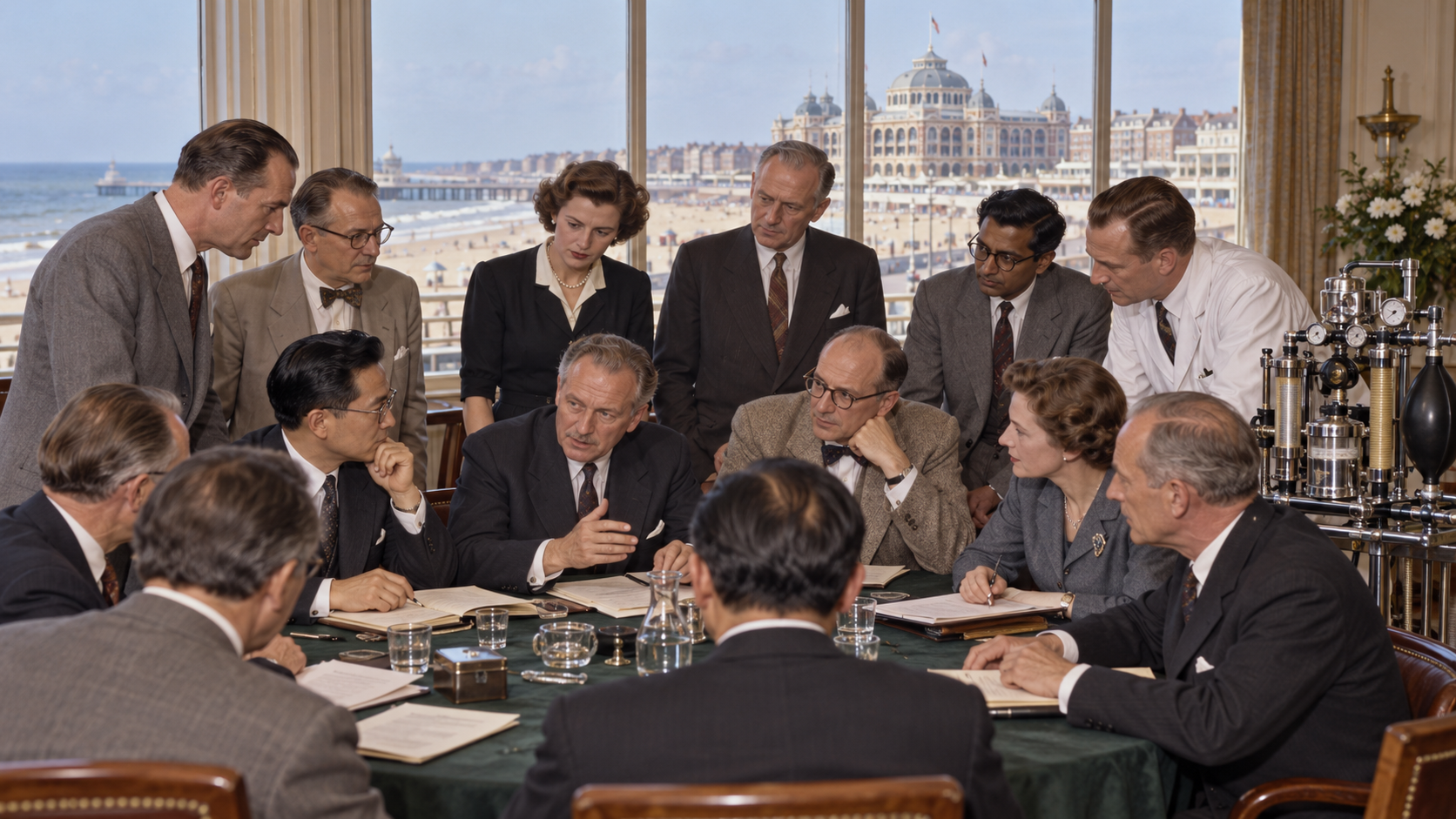
On September 9, 1955, delegates at the first World Congress of Anaesthesiologists in Scheveningen, the Netherlands, founded the World Federation of Societies of Anaesthesiologists. Harold Griffith became its first president, and 26 national societies joined the new federation. This date matters because it fixes a broad medical story to a specific moment, place, and group of people. It also shows how health history is shaped by institutions and practical choices as well as laboratory discoveries.
The background was already developing before that day. Anesthesia had advanced rapidly through inhaled agents, intravenous drugs, airway techniques, muscle relaxants, and physiologic monitoring. Yet standards, training, and access varied widely. A global profession needed regular ways to exchange evidence and improve the safety of surgery across national boundaries. Those conditions defined what participants could attempt and what patients or communities could reasonably expect. They also explain why later accounts sometimes compress years of preparation into a single anniversary. Looking at that preparation keeps credit broad and makes the turning point easier to understand without turning it into a miracle story.
What happened on the date was consequential but limited. The congress gathered anesthesiologists from many countries between September 5 and 10. On September 9 they established a permanent federation designed to link national organizations, support education, organize future congresses, and speak collectively about anesthesia and perioperative care. Creating an organization could not erase shortages of clinicians, medicines, oxygen, equipment, or training. Anesthesia remained especially dangerous where health systems lacked basic resources. The federation's influence depended on sustained national participation and practical programs rather than declarations alone. The distinction is important: the event did not instantly solve the underlying health problem, and later progress depended on follow-up research, training, policy, funding, and public trust. Contemporary evidence also helps separate what participants knew then from interpretations added after the result became famous.
Its longer legacy reaches beyond the original setting. WFSA grew into a worldwide professional body involved in education, workforce development, standards, advocacy, and patient safety. It helped make anesthesia visible as a specialty essential to surgery, obstetrics, trauma care, and pain treatment. Billions of people still lack timely access to safe surgical and anesthesia care. The federation's founding anniversary underscores that technical knowledge must be paired with staffing, systems, and international cooperation. Seen in context, the anniversary is useful because it connects a concrete historical episode with continuing questions about evidence, access, safety, and responsibility in health care. That connection is stronger when the people affected, the limits of the achievement, and the work still unfinished remain part of the account.
The congress gathered anesthesiologists from many countries between September 5 and 10. On September 9 they established a permanent federation designed to link national organizations, support education, organize future congresses, and speak collectively about anesthesia and perioperative care.
Creating an organization could not erase shortages of clinicians, medicines, oxygen, equipment, or training. Anesthesia remained especially dangerous where health systems lacked basic resources. The federation's influence depended on sustained national participation and practical programs rather than declarations alone.
WFSA grew into a worldwide professional body involved in education, workforce development, standards, advocacy, and patient safety. It helped make anesthesia visible as a specialty essential to surgery, obstetrics, trauma care, and pain treatment.
Anesthesia had advanced rapidly through inhaled agents, intravenous drugs, airway techniques, muscle relaxants, and physiologic monitoring. Yet standards, training, and access varied widely. A global profession needed regular ways to exchange evidence and improve the safety of surgery across national boundaries.
delegates at the first World Congress of Anaesthesiologists in Scheveningen, the Netherlands, founded the World Federation of Societies of Anaesthesiologists. Harold Griffith became its first president, and 26 national societies joined the new federation.
Billions of people still lack timely access to safe surgical and anesthesia care. The federation's founding anniversary underscores that technical knowledge must be paired with staffing, systems, and international cooperation.
Explore more of "On This Day ..."
Discover more events from the same date across news, politics, technology, sports, and other fields. Each link highlights significant moments that shaped history on different fronts.