

On This Day in Health: September 11, 1913
On September 11, 1913, Jacinto Convit García was born in the La Pastora district of Caracas, Venezuela. He became a physician and scientist whose long career centered on leprosy, leishmaniasis, public-health services, and the dignity of people living with stigmatized diseases. This date matters because it fixes a broad medical story to a specific moment, place, and group of people. It also shows how health history is shaped by institutions and practical choices as well as laboratory discoveries.
The background was already developing before that day. Leprosy programs in the early twentieth century commonly relied on compulsory isolation. Patients were separated from families and communities, while effective treatment remained limited. Convit worked in Venezuelan leprosaria, learned directly from patients, and joined efforts to replace isolation with diagnosis and outpatient therapy. Those conditions defined what participants could attempt and what patients or communities could reasonably expect. They also explain why later accounts sometimes compress years of preparation into a single anniversary. Looking at that preparation keeps credit broad and makes the turning point easier to understand without turning it into a miracle story.
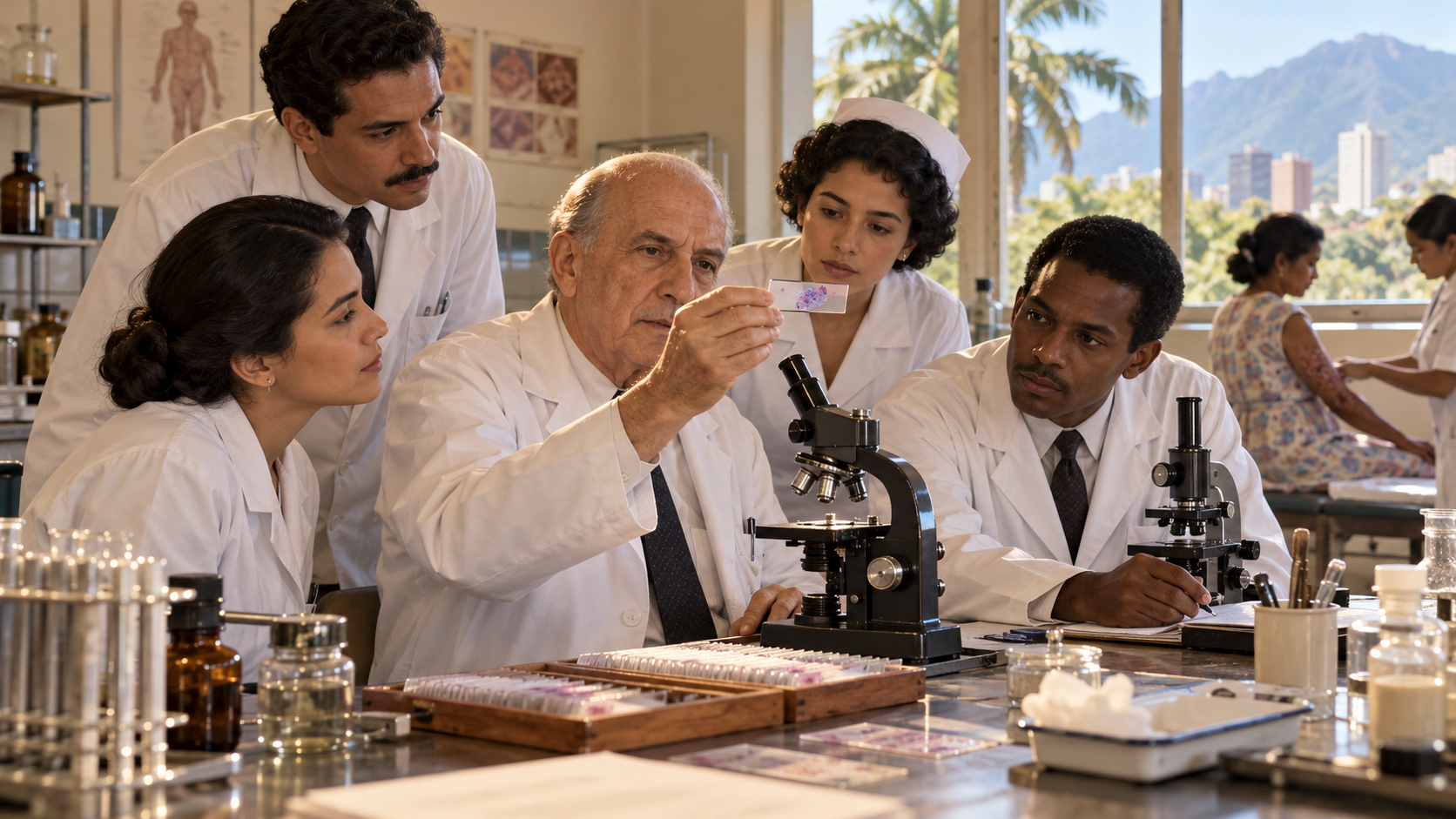
What happened on the date was consequential but limited. Convit helped organize national control programs and research institutions, including the Institute of Biomedicine in Caracas. His teams studied immunology and sought vaccines and immunotherapies for leprosy and leishmaniasis while expanding laboratory and clinical capacity in Venezuela. Some vaccine claims associated with his work did not become universally established treatments, and later evidence required careful reassessment. His enduring contribution rests more securely on integrated care, field research, institution building, and the movement away from segregation. The distinction is important: the event did not instantly solve the underlying health problem, and later progress depended on follow-up research, training, policy, funding, and public trust. Contemporary evidence also helps separate what participants knew then from interpretations added after the result became famous.
Its longer legacy reaches beyond the original setting. Convit's work linked tropical-medicine laboratories with community programs and trained generations of clinicians and researchers. He received major international recognition, including the Prince of Asturias Award, and remained active into his final years. Leprosy and leishmaniasis are treatable, yet delayed diagnosis, poverty, and stigma still hinder control. Convit's career shows why scientific ambition must stay connected to accessible services and respect for patients. Seen in context, the anniversary is useful because it connects a concrete historical episode with continuing questions about evidence, access, safety, and responsibility in health care. That connection is stronger when the people affected, the limits of the achievement, and the work still unfinished remain part of the account.
Convit helped organize national control programs and research institutions, including the Institute of Biomedicine in Caracas. His teams studied immunology and sought vaccines and immunotherapies for leprosy and leishmaniasis while expanding laboratory and clinical capacity in Venezuela.
Some vaccine claims associated with his work did not become universally established treatments, and later evidence required careful reassessment. His enduring contribution rests more securely on integrated care, field research, institution building, and the movement away from segregation.
Convit's work linked tropical-medicine laboratories with community programs and trained generations of clinicians and researchers. He received major international recognition, including the Prince of Asturias Award, and remained active into his final years.
Leprosy programs in the early twentieth century commonly relied on compulsory isolation. Patients were separated from families and communities, while effective treatment remained limited. Convit worked in Venezuelan leprosaria, learned directly from patients, and joined efforts to replace isolation with diagnosis and outpatient therapy.
Jacinto Convit García was born in the La Pastora district of Caracas, Venezuela. He became a physician and scientist whose long career centered on leprosy, leishmaniasis, public-health services, and the dignity of people living with stigmatized diseases.
Leprosy and leishmaniasis are treatable, yet delayed diagnosis, poverty, and stigma still hinder control. Convit's career shows why scientific ambition must stay connected to accessible services and respect for patients.
Explore more of "On This Day ..."
Discover more events from the same date across news, politics, technology, sports, and other fields. Each link highlights significant moments that shaped history on different fronts.