

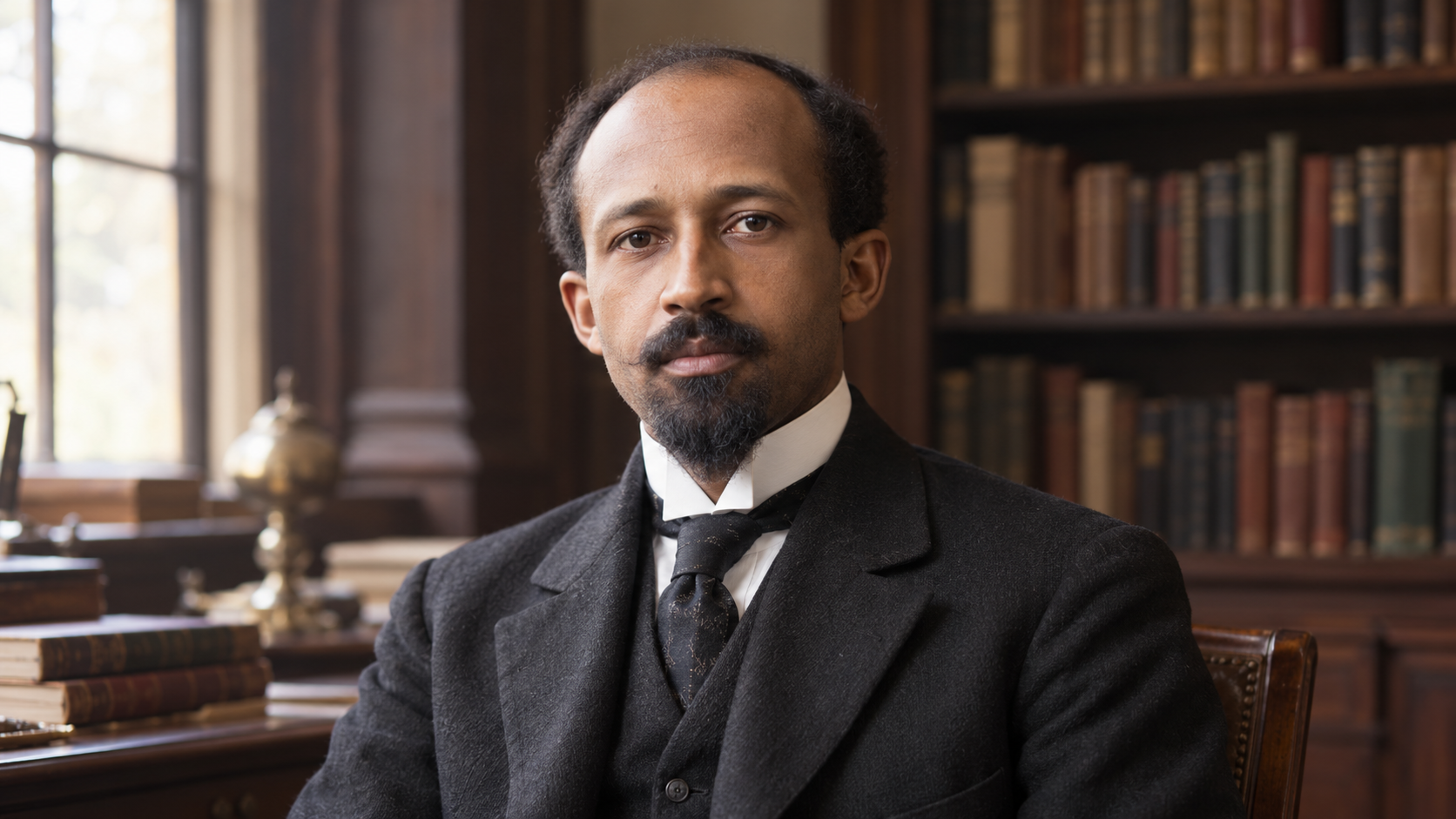
“To be a poor man is hard, but to be a poor race in a land of dollars is the very bottom of hardships.”
W. E. B. Du Bois writes this sentence in Of Our Spiritual Strivings, the opening chapter of The Souls of Black Folk, published in 1903. Its immediate setting is his account of the aspirations and frustrations that followed emancipation. He describes people entering a competitive society without land, tools, savings, or the security their established neighbors possessed. The quotation draws a distinction between the hardship of an individual and the burdens placed on a people by a long history of exclusion. Money is central to the sentence because the opportunities celebrated in a commercial society are difficult to reach when those who seek them have been denied the resources that make competition workable.
The phrase about a land of dollars directs attention to the standards by which advancement is judged. A society can praise enterprise while treating the consequences of slavery as though they were simply personal failures. Du Bois insists that the starting conditions matter. Poverty is not only a shortage to be measured at one moment; it can reflect relationships that constrain access to education, work, and accumulated resources. His sentence is forceful, but it is not a claim that every Black person has the same economic experience. It identifies a collective historical burden that an account of individual effort can miss. The hardship grows when material deprivation is combined with racial contempt and restrictions on civic participation.
The chapter also resists an explanation in which money alone solves the problem. Du Bois examines education, the vote, freedom, self-respect, and the experience of being treated as an outsider in one’s own country. These hopes cannot be separated neatly because the failure of one can weaken the others. An educated person still needs opportunities to use that education; a worker’s economic prospects can be damaged when political rights lack protection. The quotation should therefore be read as part of a wider account of citizenship and human development. It does not supply a single economic program, and its historical language should not be mistaken for a modern statistical classification. Its purpose is to expose a relationship between deprivation and a political order that makes deprivation harder to overcome.
For readers assessing public claims about opportunity, Du Bois offers a question about the conditions behind an apparent race to succeed. Who already possesses security, useful connections, or inherited assets? Which obstacles have been imposed on particular communities? What protections allow a person’s work and learning to produce a durable benefit? These questions require evidence about institutions and history rather than assumptions about character. The sentence also cautions against measuring freedom solely through the formal removal of a legal barrier. A person can be declared free while still lacking the resources and protections needed to act effectively. Its continuing political value lies in examining the distance between an invitation to compete and the actual conditions under which people must do so.
The sentence comes from chapter I of The Souls of Black Folk. Du Bois places it in his account of the hopes and burdens that followed emancipation.
The surrounding passage describes a lack of land, tools, savings, and other resources. These details ground the quotation in unequal material conditions.
Du Bois connects individual hardship with an imposed collective history. The sentence challenges explanations that treat a constrained starting position as a simple failure of effort.
The chapter considers education, voting, and self-respect alongside economic survival. Its argument cannot be reduced to income alone.
The quotation invites scrutiny of the conditions that make an opportunity usable. Formal permission to compete may leave substantial barriers intact.
Applying the argument today requires evidence about particular institutions and communities. Historical exclusion should be investigated through its mechanisms, rather than invoked as an all-purpose explanation.
Explore more "Quotes of The Day"
Discover more notable quotes from influential voices across politics, science, business, technology, sports, and culture. Each quote offers insight into how ideas, beliefs, and decisions shape the world around us.