

On This Day in Health: October 2, 1865
On October 2, 1865, Berkeley George Andrew Moynihan was born in Malta. He later became a leading British abdominal surgeon, teacher, author, and organizer of professional surgery. This date matters because it fixes a broad medical story to a specific moment, place, and group of people. It also shows how health history is shaped by institutions and practical choices as well as laboratory discoveries.
The background was already developing before that day. Late nineteenth-century surgery was changing rapidly as anesthesia, antisepsis, and better anatomical knowledge made longer operations possible. Surgeons still had to learn which procedures genuinely helped, how to reduce infection and shock, and how to teach complex techniques consistently. Those conditions defined what participants could attempt and what patients or communities could reasonably expect. The available tools, social expectations, and professional structures all shaped the result. Change also depended on cooperation among people whose roles were not always recorded equally. They also explain why later accounts sometimes compress years of preparation into a single anniversary. Looking at that preparation keeps credit broad and makes the turning point easier to understand without turning it into a miracle story.
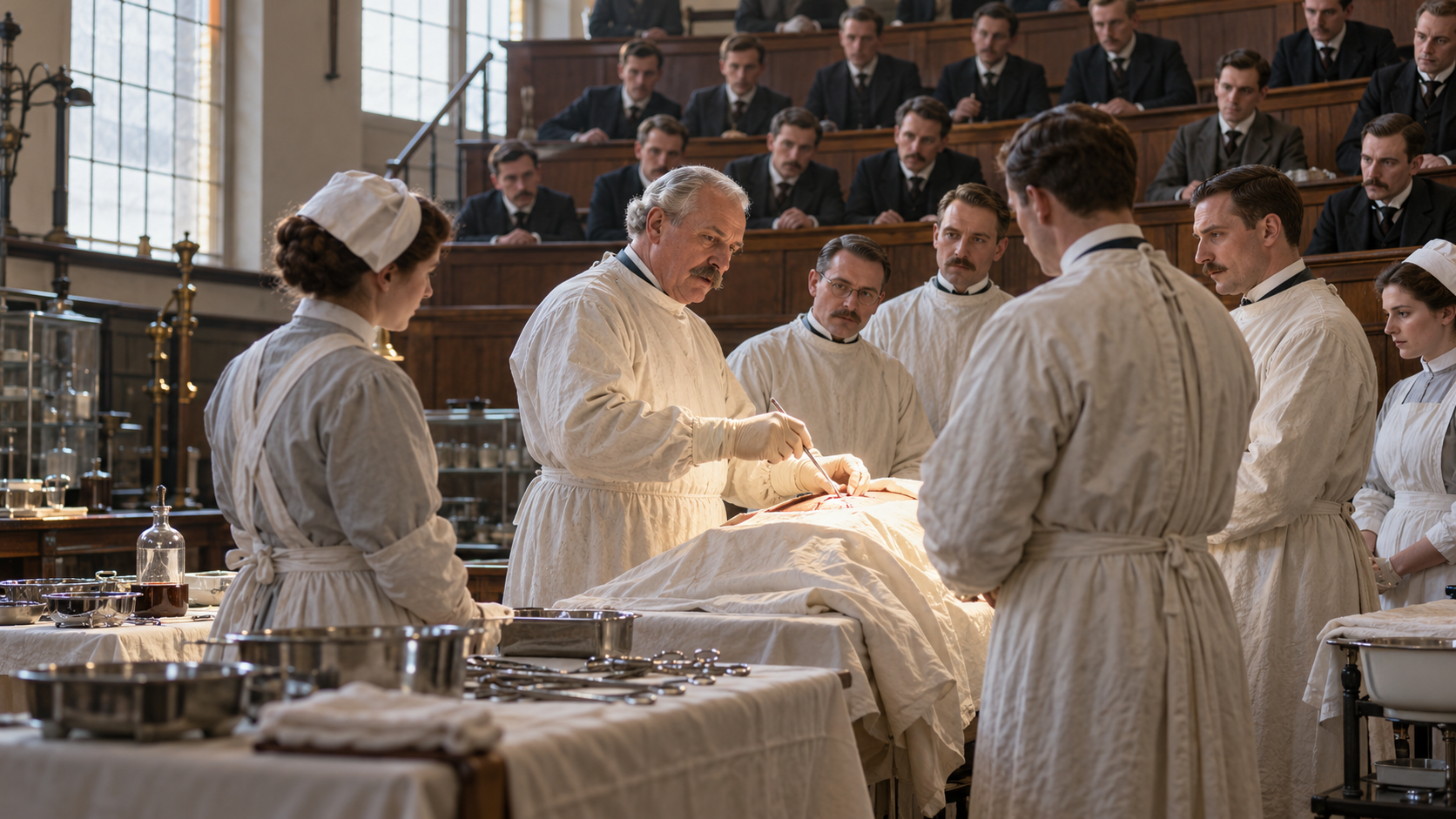
What happened on the date was consequential but limited. Working in Leeds, Moynihan refined operations on the stomach, gallbladder, and biliary tract and emphasized deliberate exposure, gentle tissue handling, and careful observation. His books and demonstrations spread a systematic approach to abdominal surgery beyond a single hospital. Many eponymous signs and procedures from the period were based on limited evidence, and later surgery revised or replaced them. Moynihan also worked within a profession whose training and leadership opportunities were restricted by class, gender, and empire. The distinction is important: the event did not instantly solve the underlying health problem, and later progress depended on follow-up research, training, policy, funding, and public trust. Contemporary evidence also helps separate what participants knew then from interpretations added after the result became famous.
Its longer legacy reaches beyond the original setting. He helped found the Association of Surgeons of Great Britain and Ireland and became the first president of the Royal College of Surgeons of England elected from outside London. Modern surgical safety depends on teams, audit, imaging, anesthesia, infection control, and patient consent, yet Moynihan's insistence on disciplined technique and structured training still feels recognizable. Seen in context, the anniversary is useful because it connects a concrete historical episode with continuing questions about evidence, access, safety, and responsibility in health care. That connection is stronger when the people affected, the limits of the achievement, and the work still unfinished remain part of the account.
Working in Leeds, Moynihan refined operations on the stomach, gallbladder, and biliary tract and emphasized deliberate exposure, gentle tissue handling, and careful observation. His books and demonstrations spread a systematic approach to abdominal surgery beyond a single hospital.
Many eponymous signs and procedures from the period were based on limited evidence, and later surgery revised or replaced them. Moynihan also worked within a profession whose training and leadership opportunities were restricted by class, gender, and empire.
He helped found the Association of Surgeons of Great Britain and Ireland and became the first president of the Royal College of Surgeons of England elected from outside London.
Late nineteenth-century surgery was changing rapidly as anesthesia, antisepsis, and better anatomical knowledge made longer operations possible. Surgeons still had to learn which procedures genuinely helped, how to reduce infection and shock, and how to teach complex techniques consistently.
Berkeley George Andrew Moynihan was born in Malta. He later became a leading British abdominal surgeon, teacher, author, and organizer of professional surgery.
Modern surgical safety depends on teams, audit, imaging, anesthesia, infection control, and patient consent, yet Moynihan's insistence on disciplined technique and structured training still feels recognizable.
Explore more of "On This Day ..."
Discover more events from the same date across news, politics, technology, sports, and other fields. Each link highlights significant moments that shaped history on different fronts.