

On This Day in Health: October 3, 1840
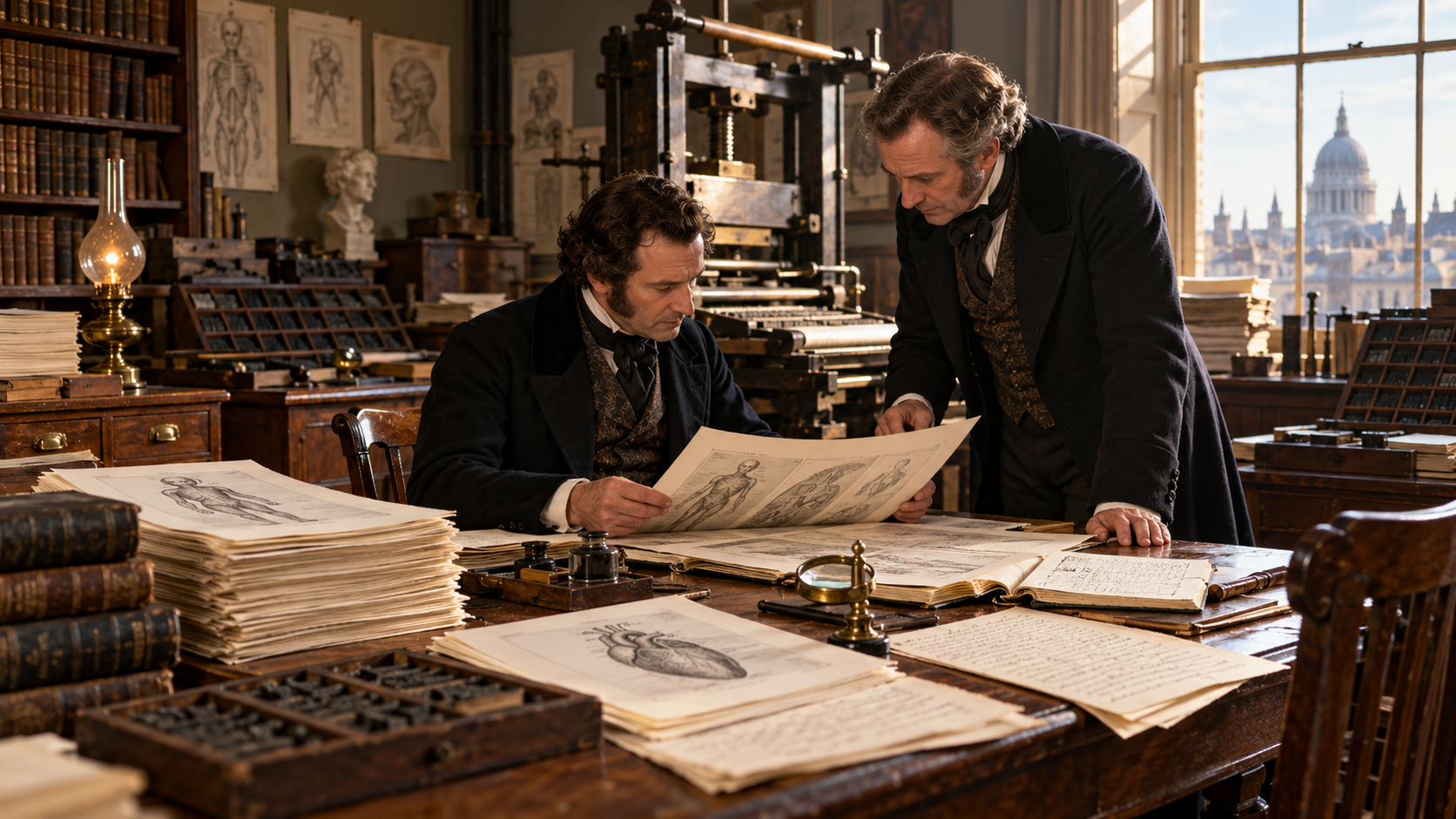
On October 3, 1840, the first weekly issue of the Provincial Medical and Surgical Journal appeared in Britain. Through later mergers and name changes, the publication became the British Medical Journal and eventually The BMJ. This date matters because it fixes a broad medical story to a specific moment, place, and group of people. It also shows how health history is shaped by institutions and practical choices as well as laboratory discoveries.
The background was already developing before that day. Medical knowledge in the 1840s traveled through lectures, correspondence, local societies, books, and a growing periodical press. Provincial practitioners wanted a forum that did not treat London as the only center of professional authority and that could circulate observations quickly. Those conditions defined what participants could attempt and what patients or communities could reasonably expect. The available tools, social expectations, and professional structures all shaped the result. Change also depended on cooperation among people whose roles were not always recorded equally. They also explain why later accounts sometimes compress years of preparation into a single anniversary. Looking at that preparation keeps credit broad and makes the turning point easier to understand without turning it into a miracle story.
What happened on the date was consequential but limited. Editors P. Hennis Green and Robert Streeten presented reports, clinical observations, reviews, professional debates, and calls for medical reform. Their opening issue linked the spread of knowledge with wider questions about standards and access to care. Nineteenth-century journals did not use modern peer review, trial registration, statistical standards, or conflict-of-interest policies. Published claims could be wrong or biased, and the professional press often reflected the exclusions and assumptions of its era. The distinction is important: the event did not instantly solve the underlying health problem, and later progress depended on follow-up research, training, policy, funding, and public trust. Contemporary evidence also helps separate what participants knew then from interpretations added after the result became famous.
Its longer legacy reaches beyond the original setting. The journal became a durable platform for landmark reports, public-health campaigns, clinical debate, and evidence about treatments and harms. Medical publishing now moves globally and digitally, but its central responsibilities remain familiar: test claims, correct errors, disclose uncertainty, and make useful evidence available to clinicians and the public. Seen in context, the anniversary is useful because it connects a concrete historical episode with continuing questions about evidence, access, safety, and responsibility in health care. That connection is stronger when the people affected, the limits of the achievement, and the work still unfinished remain part of the account.
Editors P. Hennis Green and Robert Streeten presented reports, clinical observations, reviews, professional debates, and calls for medical reform. Their opening issue linked the spread of knowledge with wider questions about standards and access to care.
Nineteenth-century journals did not use modern peer review, trial registration, statistical standards, or conflict-of-interest policies. Published claims could be wrong or biased, and the professional press often reflected the exclusions and assumptions of its era.
The journal became a durable platform for landmark reports, public-health campaigns, clinical debate, and evidence about treatments and harms.
Medical knowledge in the 1840s traveled through lectures, correspondence, local societies, books, and a growing periodical press. Provincial practitioners wanted a forum that did not treat London as the only center of professional authority and that could circulate observations quickly.
the first weekly issue of the Provincial Medical and Surgical Journal appeared in Britain. Through later mergers and name changes, the publication became the British Medical Journal and eventually The BMJ.
Medical publishing now moves globally and digitally, but its central responsibilities remain familiar: test claims, correct errors, disclose uncertainty, and make useful evidence available to clinicians and the public.
Explore more of "On This Day ..."
Discover more events from the same date across news, politics, technology, sports, and other fields. Each link highlights significant moments that shaped history on different fronts.