

On This Day in Health: October 26, 1977
On October 26, 1977, the world's last known case of naturally transmitted smallpox developed in Somalia. The patient, hospital cook Ali Maow Maalin, had been exposed while helping guide an infected family to care. This date matters because it fixes a broad medical story to a specific moment, place, and group of people. It also shows how health history is shaped by institutions and practical choices as well as laboratory discoveries.
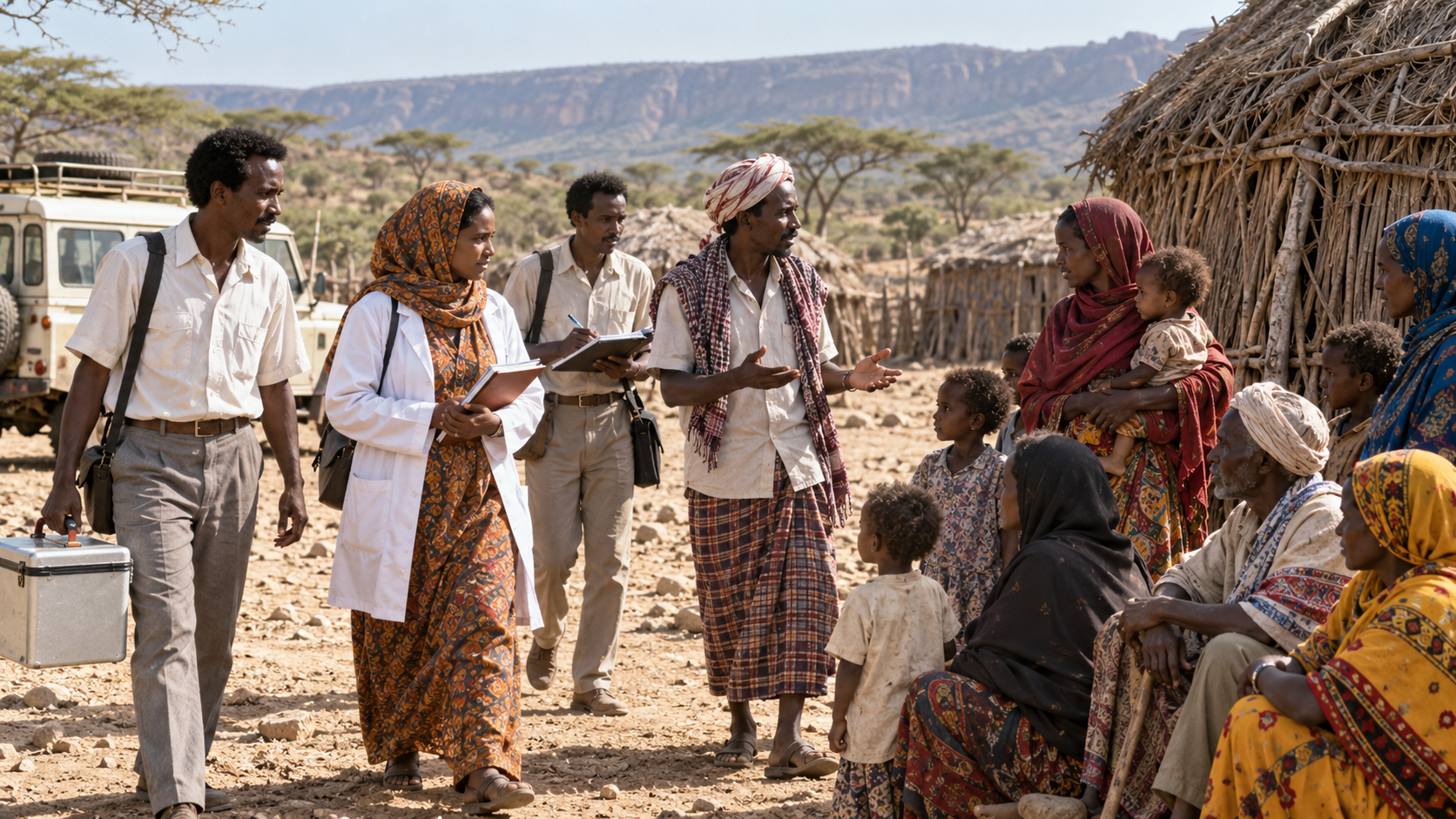
The background was already developing before that day. The World Health Organization's intensified eradication program combined vaccination with case finding, contact tracing, isolation, and rapid containment. By 1977, transmission persisted only in a small area of the Horn of Africa amid mobility, scarce services, and difficult field conditions. Those conditions defined what participants could attempt and what patients or communities could reasonably expect. The available tools, social expectations, and professional structures all shaped the result. Change also depended on cooperation among people whose roles were not always recorded equally. They also explain why later accounts sometimes compress years of preparation into a single anniversary. Looking at that preparation keeps credit broad and makes the turning point easier to understand without turning it into a miracle story.
What happened on the date was consequential but limited. After Maalin's infection was identified, teams traced contacts, vaccinated people at risk, and searched widely for additional cases. He recovered, and no further naturally acquired chain of human transmission was found. The milestone was not the same as immediate certification. Investigators still had to verify absence across countries, and a laboratory-associated outbreak in Birmingham in 1978 showed that stored virus remained dangerous. The distinction is important: the event did not instantly solve the underlying health problem, and later progress depended on follow-up research, training, policy, funding, and public trust. Contemporary evidence also helps separate what participants knew then from interpretations added after the result became famous.
Its longer legacy reaches beyond the original setting. In 1980 the World Health Assembly declared smallpox eradicated, the first and still only human infectious disease eliminated globally through deliberate public-health action. The achievement shows what vaccination, surveillance, local knowledge, logistics, and international cooperation can accomplish, while debates over remaining virus stocks and preparedness keep the history connected to current biosafety. Seen in context, the anniversary is useful because it connects a concrete historical episode with continuing questions about evidence, access, safety, and responsibility in health care. That connection is stronger when the people affected, the limits of the achievement, and the work still unfinished remain part of the account.
After Maalin's infection was identified, teams traced contacts, vaccinated people at risk, and searched widely for additional cases. He recovered, and no further naturally acquired chain of human transmission was found.
The milestone was not the same as immediate certification. Investigators still had to verify absence across countries, and a laboratory-associated outbreak in Birmingham in 1978 showed that stored virus remained dangerous.
In 1980 the World Health Assembly declared smallpox eradicated, the first and still only human infectious disease eliminated globally through deliberate public-health action.
The World Health Organization's intensified eradication program combined vaccination with case finding, contact tracing, isolation, and rapid containment. By 1977, transmission persisted only in a small area of the Horn of Africa amid mobility, scarce services, and difficult field conditions.
the world's last known case of naturally transmitted smallpox developed in Somalia. The patient, hospital cook Ali Maow Maalin, had been exposed while helping guide an infected family to care.
The achievement shows what vaccination, surveillance, local knowledge, logistics, and international cooperation can accomplish, while debates over remaining virus stocks and preparedness keep the history connected to current biosafety.
Explore more of "On This Day ..."
Discover more events from the same date across news, politics, technology, sports, and other fields. Each link highlights significant moments that shaped history on different fronts.