

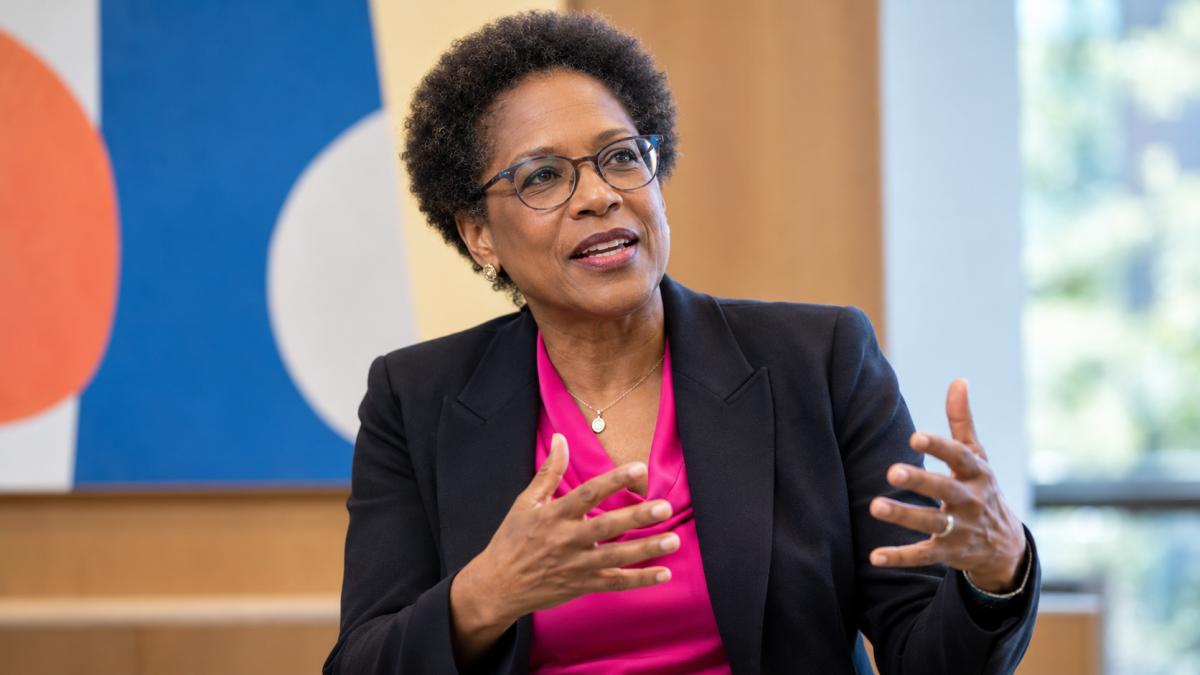
“Innovation is not about solo genius; it’s about collective genius.”
Linda A. Hill used this phrase to summarize research on leaders who repeatedly built innovative organizations. Studying companies in technology, design, law, and other fields, she and her collaborators found that breakthroughs rarely arrived as a complete vision handed down by one heroic individual. They emerged through collaboration, discovery-driven learning, and integrative decision making. People generated alternatives, tested them, argued across expertise, and combined elements into solutions no participant could have produced alone. The leader’s role was not to be the source of every answer, but to create a community able to do difficult creative work together.
Collective genius requires both belonging and productive friction. A shared purpose gives people a reason to contribute beyond their function. Rules of engagement make disagreement about ideas possible without turning it into a contest of status. Teams need permission to experiment, learn from intelligent failure, and revise proposals. They also need a method for deciding after debate. Leaders structure the environment, protect minority views, connect people who see different parts of the problem, and keep the group focused on the challenge rather than on defending authorship.
Collaboration should not be confused with endless consensus or a crowd automatically being wise. Groups can amplify bias, defer to prestige, and produce compromise that contains the weaknesses of every option. Individual mastery and preparation remain essential; collective creativity has more material to work with when participants bring distinct, developed expertise. Accountability also cannot disappear into the group. Hill’s model asks leaders to combine diversity of thought with disciplined experiments, clear constraints, and transparent decision rights so that creative abrasion produces learning instead of exhaustion.
The idea is useful for AI-era product development because no single specialty can resolve performance, user experience, security, ethics, regulation, and business viability alone. A team can make key assumptions visible, assign competing prototypes, invite affected users into evaluation, and document why one path was chosen. Credit systems should recognize integration and challenge, not only the person who presented the final concept. Hill’s sentence replaces the myth of the visionary savior with a more repeatable capability: organize talented people so that their differences become a source of invention rather than a barrier to it. Reward systems can strengthen collective genius by recognizing the person who improved someone else’s idea, connected two specialties, or stopped a seductive but unsafe path. Post-project reviews should trace how the final solution changed across contributors instead of inventing a single origin story. When integration and constructive challenge receive status, collaboration becomes more than an expectation; it becomes a visible route to influence and professional growth.
Hill presented the idea in her 2014 TED talk and research on leaders of consistently innovative organizations.
Her work emphasizes collaboration, discovery-driven learning, and decisions that integrate competing ideas.
Shared purpose, creative abrasion, experiments, and decision discipline allow diverse expertise to produce new solutions.
Collective work still needs individual mastery and accountability; consensus and group size do not guarantee wisdom.
AI products combine technical, human, regulatory, security, and commercial questions that no lone expert can settle.
Leaders can design the environment in which disagreement, testing, and integration become a repeatable innovation capability.
Explore more "Quotes of The Day"
Discover more notable quotes from influential voices across politics, science, business, technology, sports, and culture. Each quote offers insight into how ideas, beliefs, and decisions shape the world around us.