

On This Day in Business: April 12, 1992
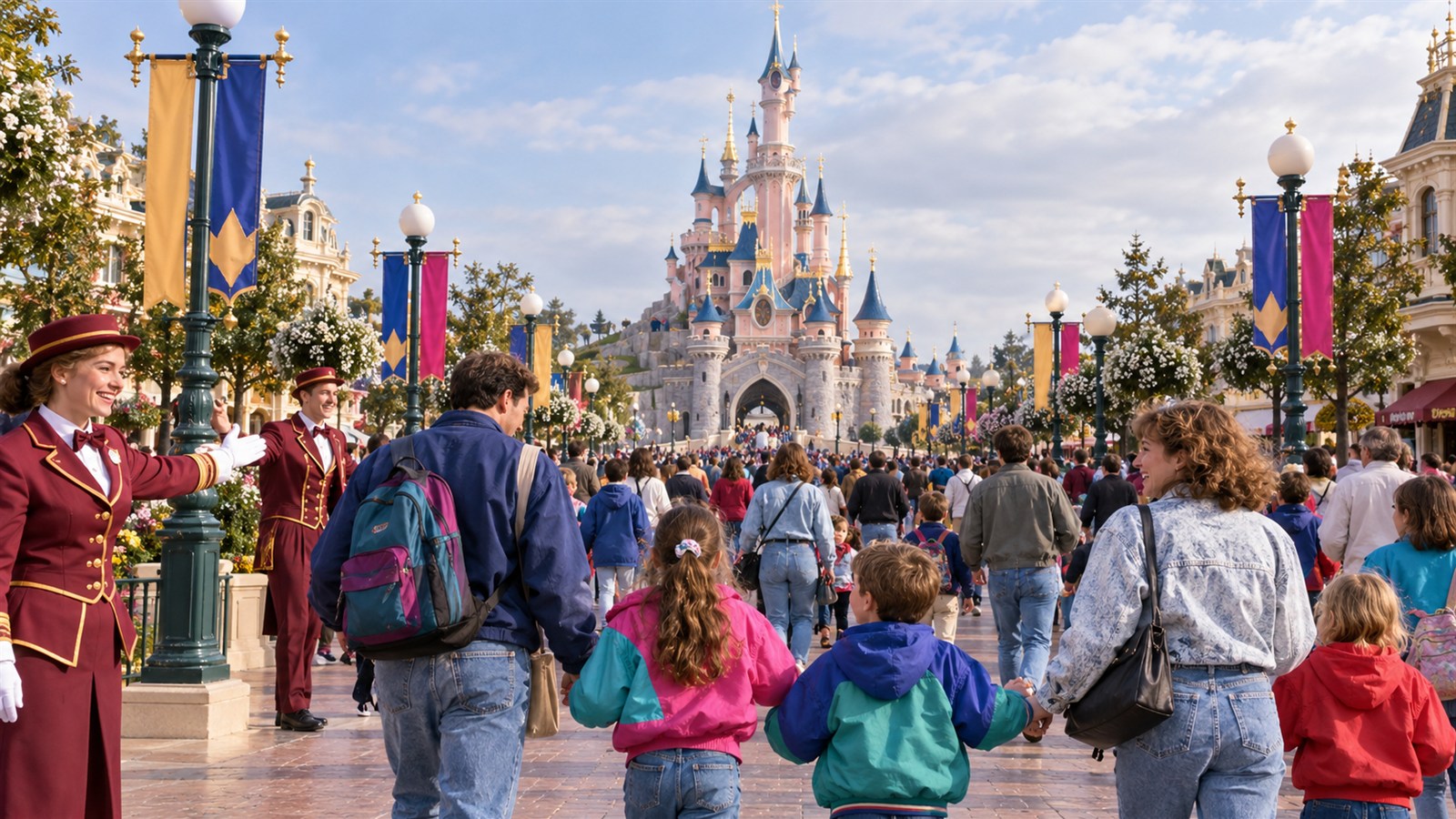
On April 12, 1992, Euro Disney opened in Marne-la-Vallée east of Paris. The resort brought Disney's theme-park model to continental Europe through a vast project that included the Disneyland park, hotels, retail, transportation links, and surrounding development. France offered access to a large regional population and strong rail connections, while the site could draw visitors from several countries. Disney expected familiar characters, detailed environments, and tightly managed service to produce a destination business. Opening day displayed an enormous investment in storytelling, construction, operations, and brand extension far from the company's American base.
The project also exposed the difficulty of transferring a successful formula across markets. Disney made choices about alcohol, food, staffing, prices, hotel capacity, and workplace practices that did not always match European habits or economic conditions. A recession, high interest costs, unfavorable attendance patterns, and heavy debt strained the resort. Visitors came, but they sometimes spent less or stayed for shorter periods than planners had expected. Negative press amplified cultural tension, while large fixed costs left little room for forecasting error. The park's popularity therefore did not immediately translate into a sustainable financial structure.
Disney and its partners responded with refinancing, operational changes, and a revised identity. The destination was renamed Disneyland Paris, alcohol policies and menus evolved, pricing became more flexible, and management adjusted hotel and labor practices. New attractions helped renew demand. The resort ultimately became one of Europe's leading tourist destinations, but its path included repeated financial restructurings and further investment. The experience showed that even an exceptionally strong global brand must be localized through careful observation rather than assumptions about customer behavior.
Euro Disney's opening is a case study in international expansion and capital intensity. Theme parks require large upfront spending and continuous reinvestment, so demand forecasts must account for seasonality, travel habits, currency, financing, and cultural preferences. Brand consistency matters, but rigid uniformity can turn a recognizable experience into an operational mismatch. The resort survived because the company could revise the offering and capital structure without abandoning the core promise. April 12 thus marks both an ambitious market entry and the beginning of a long lesson in adapting a global entertainment system to local realities. The resort also depended on a regional network beyond its gates. Airlines, trains, roads, travel agents, schools, and neighboring hotels affected the volume and timing of visitors. Disney could control the park experience more directly than the journey or local economy. International destination businesses must therefore model partners and public infrastructure as part of the product. A beautiful attraction can still underperform when transportation, calendars, or currency make the overall trip unattractive.
Disney selected the Paris region for its population access, transportation links, tourism market, and support for a large destination development.
The company attempted to reproduce its integrated park, hotel, retail, and service model at unprecedented scale in continental Europe.
Euro Disney opened on April 12, 1992, after years of construction, hiring, training, and intense public attention.
Debt, recession, cultural misjudgments, and visitor spending patterns quickly created financial pressure despite substantial attendance.
Renaming, refinancing, local operating changes, and new attractions helped Disneyland Paris build a more durable place in European tourism.
The resort shows why global brands must combine a consistent core experience with flexible local pricing, customs, and operations.
Explore more of "On This Day ..."
Discover more events from the same date across news, politics, technology, sports, and other fields. Each link highlights significant moments that shaped history on different fronts.