

On This Day in Business: April 30, 1939
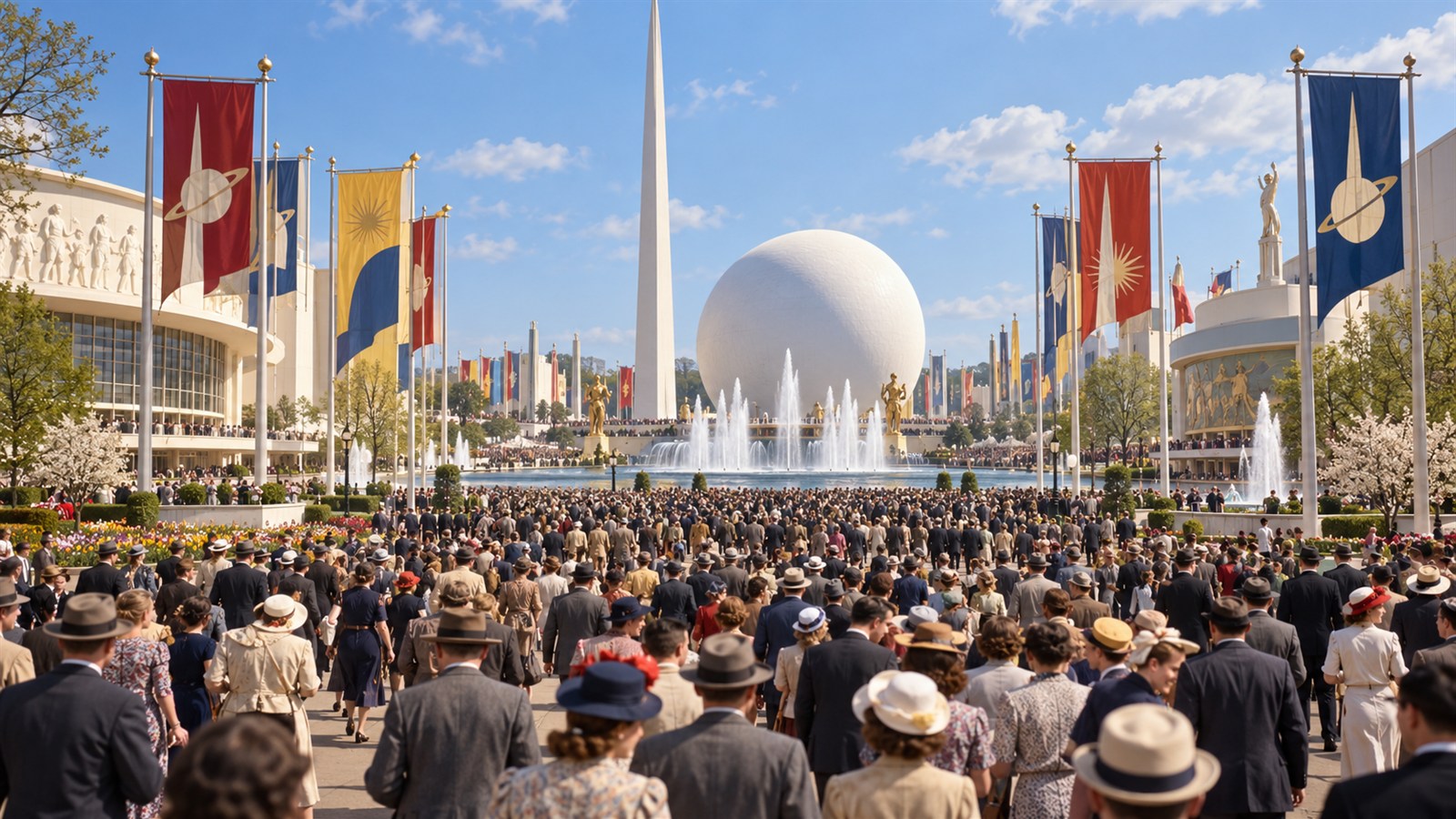
On April 30, 1939, the New York World's Fair opened at Flushing Meadows in Queens. Built around the theme of the World of Tomorrow, the exposition transformed former ash dumps into a vast landscape of pavilions, fountains, transportation systems, and the Trylon and Perisphere. President Franklin D. Roosevelt addressed the opening, which coincided with the anniversary of George Washington's first inauguration. Corporations, governments, and cultural organizations used exhibits to present visions of modern life. Visitors encountered streamlined appliances, synthetic materials, television demonstrations, industrial processes, and imagined cities shaped by highways and coordinated planning.
The fair was also a business platform on an extraordinary scale. Companies invested in architecture and immersive demonstrations to associate their brands with progress. General Motors' Futurama carried visitors over a model of a future America, while other exhibitors displayed electricity, communications, food, and consumer goods. The goal was not simply to sell an item at a booth. Exhibits taught audiences how technologies might fit into everyday routines, creating desire for homes, automobiles, services, and infrastructure that did not yet exist at mass scale.
Financing and attendance posed challenges. The fair required enormous construction spending and depended on admissions, concessions, exhibitors, and continued public interest. It operated through 1939 and 1940, drawing millions but facing financial difficulties and a world moving toward war. The future it presented was selective: confident corporate planning often overlooked inequality, public transit alternatives, and the destructive uses of technology already visible abroad. Even so, the exposition influenced design, advertising, urban imagination, and how companies staged complex products for mass audiences.
The opening demonstrates that markets are shaped by stories about future life. Consumers rarely demand an unfamiliar technology in isolation; they respond to a picture of the household, city, or workplace it might enable. World's fairs allowed firms to build that context physically and let visitors experience it together. The same practice appears today in product launches, concept stores, and technology conferences. April 30 marks a high point of corporate futurism, when businesses used architecture and spectacle to turn research, infrastructure, and consumer goods into a shared promise of modernity—just before global events exposed how uncertain every forecast could be. Temporary exhibitions also created long-lived assets in images, prototypes, and expectations. A pavilion might stand for only two seasons, yet its design could influence products and planning for decades. Companies accepted the short physical life because the audience and publicity concentrated attention. The investment resembled a large experiential advertisement, measured partly in future preference rather than immediate sales. The fair made corporate research theatrical and gave abstract forecasts a form visitors could remember.
New York converted Flushing Meadows into a monumental exposition ground centered on an optimistic vision of technology and planned modern life.
Corporate exhibitors used immersive architecture and demonstrations to connect unfamiliar products with desirable homes, cities, and lifestyles.
The fair opened on April 30, 1939, with national ceremony, the Trylon and Perisphere, and exhibits from companies and governments.
High fixed costs, dependence on attendance, and the worsening international climate made the ambitious event financially vulnerable.
Its pavilions influenced industrial design, advertising, highway-centered planning, and the public presentation of innovation.
The fair shows how companies create demand by telling coherent future stories around technologies that consumers cannot yet evaluate on their own.
Explore more of "On This Day ..."
Discover more events from the same date across news, politics, technology, sports, and other fields. Each link highlights significant moments that shaped history on different fronts.