

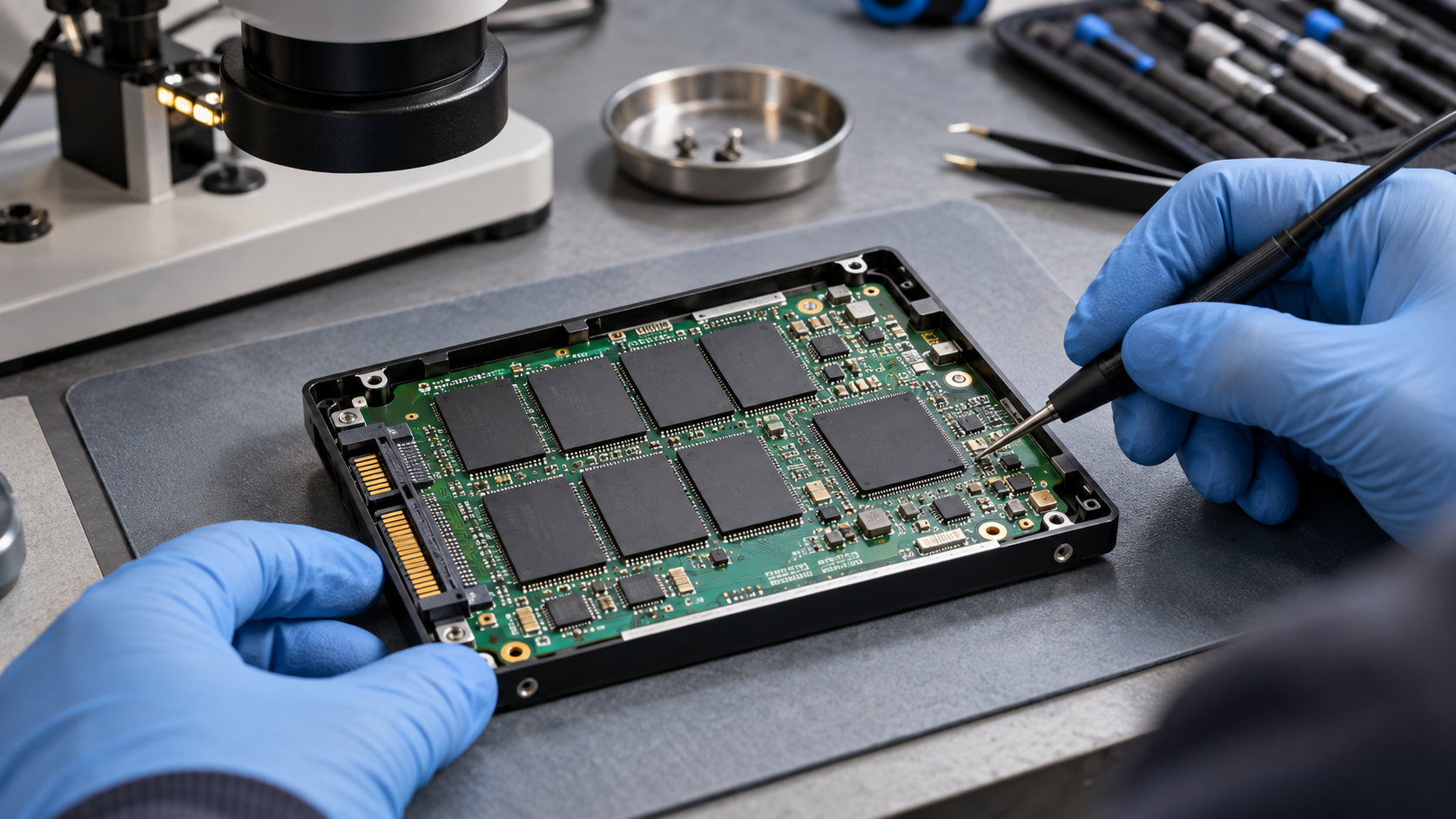
SSD Wear Leveling Explained
SSD wear leveling is a controller strategy that spreads writing and erasing across a solid-state drive’s flash memory instead of repeatedly using the same physical cells. NAND flash stores data by changing the electrical state of cells, and each block can tolerate only a finite number of program-and-erase cycles. A computer may rewrite the same logical file location many times, but the drive does not have to use the same physical location. Wear leveling breaks that direct connection so heavily updated data does not exhaust one small area first. Without it, a frequently changed directory or database could wear a limited set of cells far sooner than the rest.
The key is the flash translation layer inside the drive’s controller. The operating system sends reads and writes using logical block addresses, much as it would for another storage device. The controller maintains a map from those logical addresses to physical pages in NAND. When data changes, the controller can write the new version to a different available page and update its map, rather than overwriting the old page in place. Old pages are later marked invalid and reclaimed in larger erase blocks. This indirection is invisible to normal applications, which continue addressing storage in a simple linear form.
Dynamic wear leveling rotates blocks that receive new writes, keeping frequently changing data from concentrating wear. Static wear leveling goes further by occasionally moving long-lived, rarely changed data. That movement frees lightly used blocks so they can join the pool receiving new writes. Static leveling can produce a more even distribution across the entire drive, although moving valid data also creates additional internal work. Firmware balances endurance, performance, power use, and available spare space when deciding what to move. Controllers also track erase counts so their decisions reflect the physical history of individual blocks.
Garbage collection supports the process because NAND is erased in blocks that contain many pages. The controller gathers still-valid pages from partially obsolete blocks, copies them elsewhere, and erases the block for reuse. Overprovisioning reserves capacity that the host computer does not see, giving the controller room to rotate data and clean blocks. The TRIM command can tell the drive which logical data the operating system no longer needs, allowing those pages to be reclaimed without preserving deleted content unnecessarily. More free space usually gives the firmware additional choices and reduces urgent cleanup during foreground writes.
These background operations explain write amplification: the drive may write more data internally than the computer requested. A small host update can cause valid pages to be copied during garbage collection. Heavy random writes, a nearly full drive, and weak controller algorithms can increase that overhead. Consumer and enterprise SSDs use different flash types, spare capacity, firmware, and endurance targets, so two drives with the same visible size may have different rated lifetimes and sustained-write behavior. Manufacturers commonly summarize endurance with workload ratings that buyers can compare against expected use.
Wear leveling cannot make flash immortal, but it prevents premature failure caused by uneven use. Modern drives also track errors, retire weak blocks, and use error-correcting codes to preserve data as cells age. Users can help by leaving reasonable free space, maintaining backups, and choosing a drive with an endurance rating suited to the workload. The practical result is that everyday file activity is distributed behind the scenes, allowing the whole pool of NAND to age more evenly than its logical layout would suggest. Backups remain essential because controller failure, power problems, or other faults can occur before wear limits are reached. Wear estimates describe workloads and device populations, not a guaranteed expiration date for one drive. Health data can offer clues, but it is not a substitute for another copy of important files.
Logical addresses from the computer are translated to changing physical pages in NAND flash.
Dynamic leveling rotates new writes, while static leveling can move cold data to free lightly used blocks.
Flash type, spare area, garbage collection, write amplification, workload, and firmware all influence useful drive life.
Explore more "Explainers"
Discover additional explainers across politics, science, business, technology, and other fields. Each explainer breaks down a complex idea into clear, everyday language—helping you better understand how major concepts, systems, and debates shape the world around us.