

On This Day in Politics: March 12, 1947
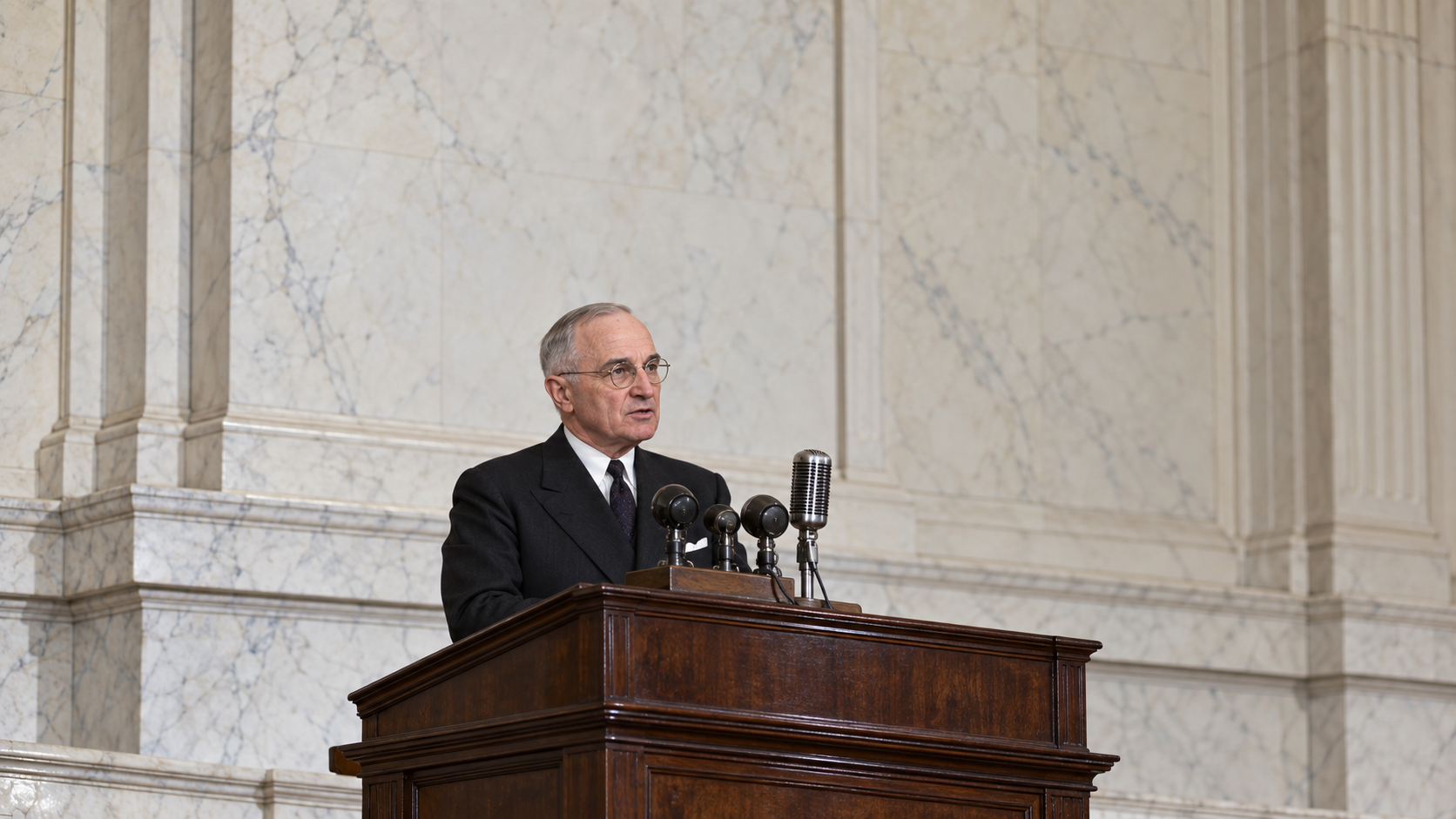
On March 12, 1947, President Harry S. Truman addressed a joint session of Congress and requested $400 million in assistance for Greece and Turkey. The speech became known as the Truman Doctrine because it connected a specific aid proposal with a much broader statement about American responsibilities abroad. Truman argued that the United States should help societies resisting coercion from armed groups or outside powers. His request included economic support, equipment, and American civilian and military personnel. The immediate decision belonged to Congress, but the language of the address helped define the emerging American approach to the Cold War for many years.
Britain’s declining ability to support Greece and Turkey provided the immediate impetus. After World War II, the British government faced serious financial difficulties and told Washington that its assistance could not continue. Greece was struggling with civil war and damaged infrastructure, while Turkey faced pressure connected to Soviet strategic interests. American officials feared that instability in either country could affect the wider region. These were different national situations, however, and treating them as a single confrontation could obscure local causes. The speech placed both within a common American security argument, linking conditions far from the United States to the country’s own future.
Truman’s message also presented aid as an instrument of reconstruction. He described needs for food, fuel, supplies, administrative expertise, and economic recovery, alongside military requirements. He asked for oversight of American assistance and acknowledged that support did not amount to approval of every action taken by the Greek government. These details mattered because the proposed commitment involved more than a declaration of sympathy. It required money, personnel, and a continuing relationship with recipient governments. By bringing the request to Congress, Truman sought legislative authority for a policy whose effects would extend beyond the delivery of an individual shipment or the resolution of one diplomatic dispute.
The doctrine became a central expression of containment, the effort to limit the expansion of Soviet influence and communist power. Congressional support showed that a Democratic president and a Republican-controlled legislature could cooperate on major Cold War commitments. Yet the speech’s broad division between freedom and coercion also invited difficult judgments about which governments deserved support and what forms that support should take. March 12 is therefore remembered both for the immediate proposal concerning Greece and Turkey and for the wider principle attached to it. The address made clear that economic weakness and regional conflict could become matters of American foreign policy, while leaving future leaders to debate the boundaries of that responsibility.
Truman requested $400 million for Greece and Turkey in a joint address to Congress on March 12, 1947.
Britain’s inability to continue assistance helped prompt the request. Greece and Turkey faced different immediate challenges.
The proposed program combined economic assistance with equipment and civilian and military personnel.
The speech was a request for congressional authority. It did not itself transfer every dollar or implement the entire program.
The doctrine became a lasting expression of American containment policy during the Cold War.
Its broad language raised enduring questions about intervention, aid, and the relationship between strategic interests and democratic principles.
Explore more of "On This Day ..."
Discover more events from the same date across news, politics, technology, sports, and other fields. Each link highlights significant moments that shaped history on different fronts.