

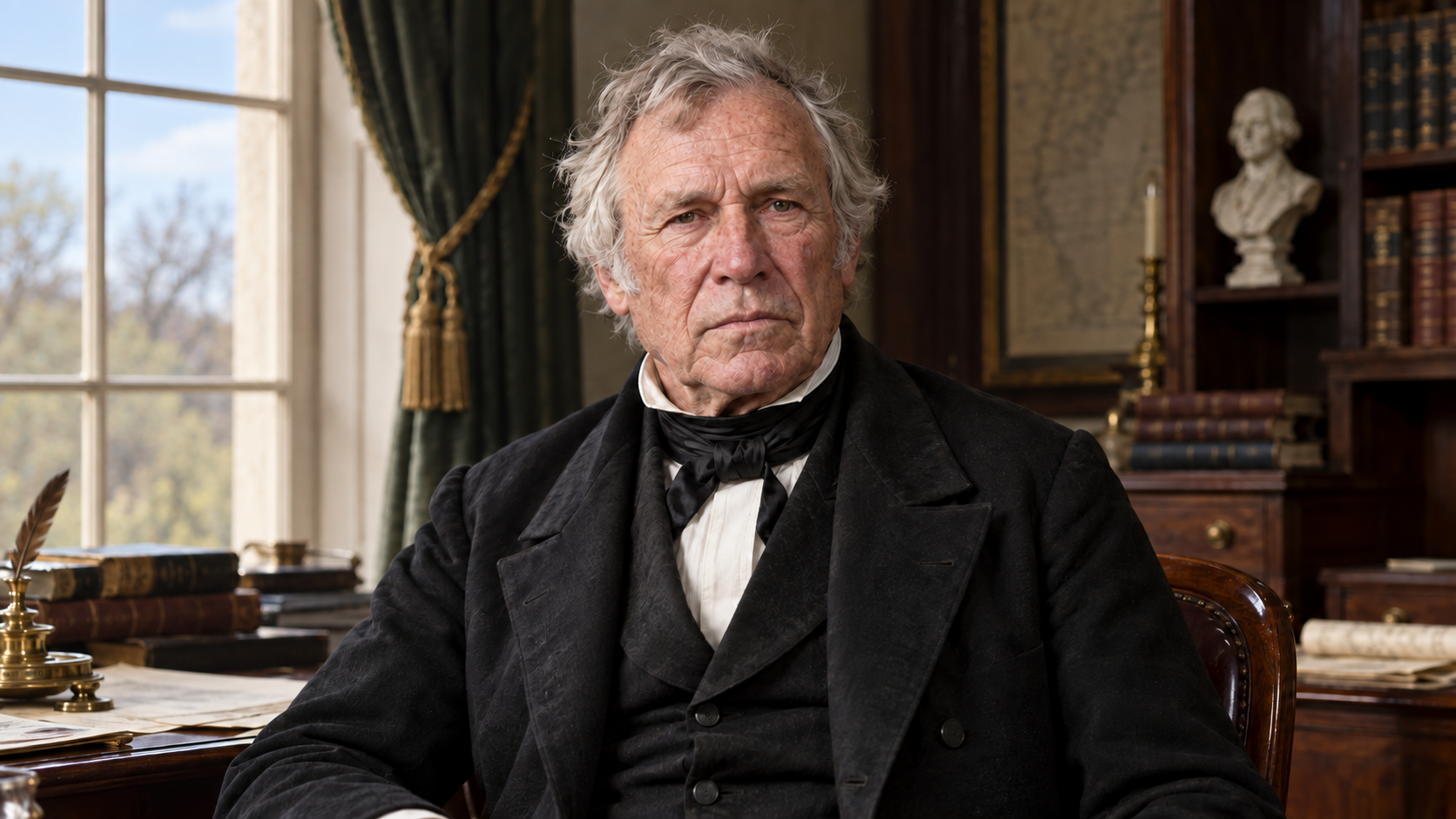
“In all disputes between conflicting governments it is our interest not less than our duty to remain strictly neutral,”
Zachary Taylor included this clause during the inaugural speech he delivered on March 5, 1849. He entered civilian leadership with a reputation earned in military service, yet described a foreign policy that emphasized restraint in disputes between other governments. The quotation retains its final comma because it is the opening portion of a longer sentence. Taylor continued by referring to the country’s geographical position and its ability to maintain neutrality. The words therefore combine a principle with an assessment of circumstances. They announce an intended course for his administration, rather than documenting an unbroken record of American neutrality across the nation’s history.
Taylor treats interest and duty as reasons that can reinforce one another. Staying outside a foreign conflict could protect a country from the costs and risks of involvement, while also expressing a judgment about its proper responsibilities. His address associated this outlook with Washington’s warnings about entangling alliances. At the same time, Taylor expressed sympathy for people seeking civil and political liberty. Such sympathy did not automatically commit the government to entering their conflicts. The distinction matters because a public preference for another people’s freedom and a decision to employ national power are different acts, with different obligations and consequences.
The surrounding history complicates any easy description of Taylor as a consistent opponent of expansion or war. His military career included the war with Mexico, and his presidency began after that conflict had substantially enlarged American territory. A statement about neutrality among conflicting governments does not erase that background. Nor does it resolve the contradiction between appeals to liberty and Taylor’s own involvement in slavery. Reading the address carefully means taking its policy declaration seriously without turning it into a complete moral portrait of the speaker. The language reveals how he presented his presidential responsibilities at the beginning of his term.
The clause invites a disciplined discussion of foreign policy choices. Before involvement, leaders should explain which national interests are at stake, what duties they believe apply, and how the proposed action serves both. Neutrality also has consequences that deserve scrutiny; remaining outside a dispute is still a decision rather than an absence of policy. Taylor’s formulation makes the relationship between principle and practical judgment visible. It asks readers to consider whether enthusiasm, sympathy, or rivalry has been mistaken for a sufficient case for intervention. That question remains useful even when a later situation leads to a different conclusion from the course he announced.
Taylor delivered his inaugural address on March 5, 1849. This excerpt is a clause from a longer sentence about neutrality and the country’s geographical position.
The comma is retained from the original text. The passage presents a policy intention at the start of his presidency.
He links restraint to both national interest and public duty. Sympathy with liberty abroad does not by itself determine whether to enter a conflict.
His military service in the Mexican War complicates any claim that the sentence describes an entirely nonexpansionist career.
Ask which interests and obligations justify involvement in a dispute. A clear explanation should address the consequences of action.
A decision to remain neutral also warrants examination. Restraint needs reasons, just as intervention does.
Explore more "Quotes of The Day"
Discover more notable quotes from influential voices across politics, science, business, technology, sports, and culture. Each quote offers insight into how ideas, beliefs, and decisions shape the world around us.