

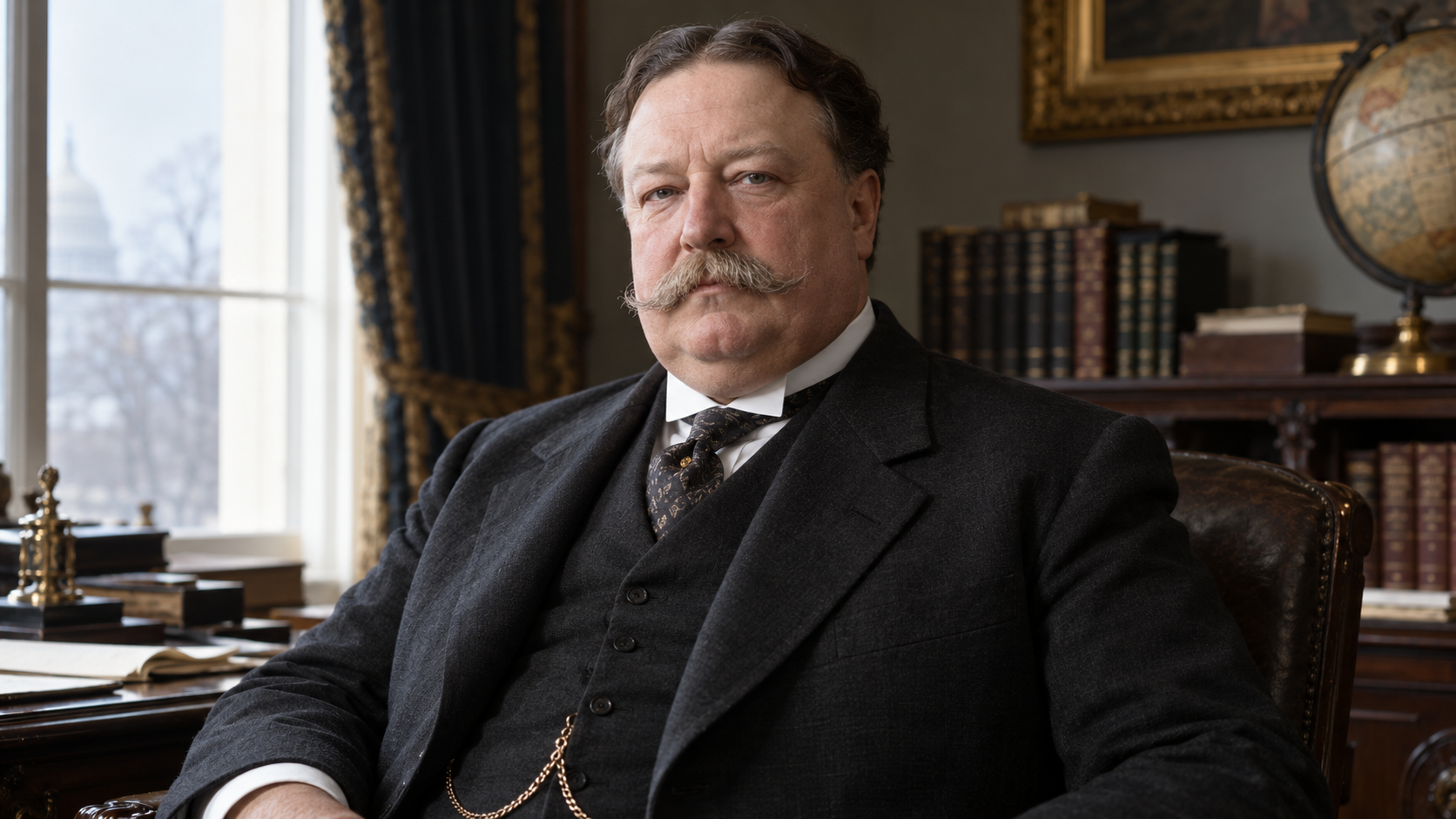
“Our international policy is always to promote peace.”
William Howard Taft stated this policy at his inauguration on March 4, 1909. The sentence introduces a discussion of international peace, arbitration, and military readiness. It expresses a goal for the United States, rather than a claim that disputes or the use of force would disappear. Taft described war as enormously costly and referred to efforts to create methods for resolving disagreements without it. Yet he also argued that the country needed armed forces capable of protecting its interests. The quoted line is therefore part of a qualified policy argument. Its meaning becomes clearer when the sentences following it remain in view.
Taft’s address treated peaceful settlement as something that required arrangements, not simply a favorable attitude. Arbitration provides a procedure through which governments can bring disputes before an agreed authority. Such a mechanism seeks to replace escalation with a decision the parties can recognize. The argument assumes that international relationships benefit when there are accepted channels for resolving conflict. It also recognizes that declarations of goodwill alone may not prevent a dangerous confrontation. The speech’s attention to organization makes the aspiration more specific: promoting peace includes supporting practices that let countries handle incompatible claims without making war the first or only available instrument.
Military preparedness complicates the formulation without making the complication invisible. Taft believed strength could help preserve influence and defend national interests; he did not present peace as a rejection of every capacity to fight. His address also discussed American responsibilities and power beyond the continental mainland. Those assumptions belong to the era’s unequal international order and should not be converted into a claim that all peoples enjoyed equal control over their political futures. The speech shows how Taft combined a stated peaceful purpose with the possession and possible use of force. Evaluating that combination requires attention to policy choices, not just the reassuring word peace.
For readers, the sentence creates a useful distinction between an announced objective and the instruments selected to pursue it. A government can claim to favor peace while disagreeing with others about what security requires. The relevant questions concern whether negotiation has real channels, whether arbitration is supported when results are inconvenient, and whether military measures advance or undermine the stated objective. Taft’s address makes those tensions part of the record. The quotation can encourage a closer look at how a policy works, rather than treating its declared aim as sufficient evidence of success. Peace becomes a standard for evaluating conduct as well as a word in a speech.
Taft delivered the quotation in his March 4, 1909, inaugural address. Its surrounding passage discusses arbitration and the costs of war.
The same discussion supports military preparedness. The line describes a goal within that qualified argument.
Peaceful settlement needs procedures that governments can use when their claims conflict. Arbitration was one instrument Taft supported.
He also linked national security to armed strength. His approach should not be presented as an unconditional rejection of force.
Compare a government’s stated peaceful purpose with its choices in actual disputes. Examine the channels it supports for negotiation and review.
A policy’s instruments may create tensions with its objective. Those tensions require evidence and judgment rather than reassurance alone.
Explore more "Quotes of The Day"
Discover more notable quotes from influential voices across politics, science, business, technology, sports, and culture. Each quote offers insight into how ideas, beliefs, and decisions shape the world around us.