

United Nations Security Council Explainer
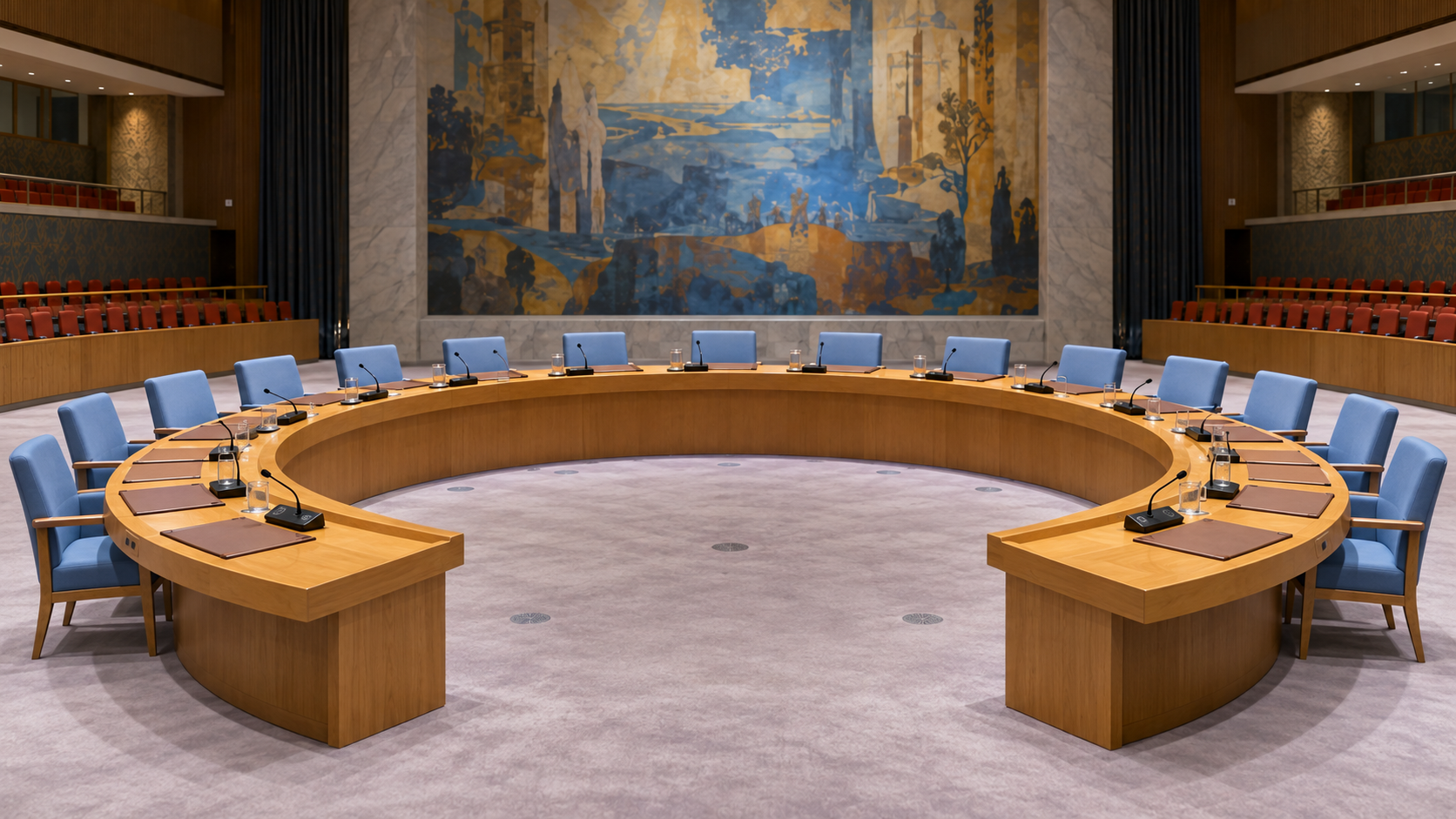
The United Nations Security Council is the UN body with primary responsibility for maintaining international peace and security. It has fifteen members: five permanent members and ten elected members that serve two-year terms. The permanent members are China, France, Russia, the United Kingdom, and the United States. Every member has one vote, but permanent members have a special role in substantive decisions through the veto. The council’s structure therefore combines broader rotating participation with powers held continuously by a smaller group of states.
The council can examine threats to peace, seek peaceful settlement, impose sanctions, establish peacekeeping missions, and authorize action under the United Nations Charter. Its legal authority depends on the Charter and the particular decision. A resolution can contain binding decisions as well as recommendations or other language with different effects. The council is distinct from the General Assembly, where the UN’s member states participate in a broader forum. An Assembly vote and a Security Council decision do not necessarily carry the same legal consequences.
Procedural decisions require at least nine affirmative votes. Substantive decisions also require at least nine affirmative votes and must not be blocked by a negative vote from a permanent member. A permanent member’s abstention does not by itself function as a veto. These rules mean that a proposal can receive substantial support yet fail because of a veto, or fail simply because it lacks enough affirmative votes. Understanding the recorded vote requires identifying the kind of matter, the number of supporting members, and any permanent-member opposition.
The council does not maintain its own standing army. Implementation depends on member states, UN structures, and the arrangements established for the particular action. Disagreements among permanent members can limit collective responses, while negotiated resolutions can provide a basis for cooperation. Debate over reform concerns representation, effectiveness, and the veto’s place in the international system. To interpret a council meeting, distinguish discussion, a proposed resolution, an adopted decision, and subsequent implementation. The institution’s significance comes from its Charter powers, but its practical effect also depends on the political agreement and resources available to carry those decisions out.
The council has fifteen members, including five permanent and ten elected seats. Elected members serve two-year terms.
Its primary responsibility concerns international peace and security. The General Assembly has a different structure and role.
Nine affirmative votes are required for decisions. Substantive matters also face the permanent members’ veto power.
A permanent member’s abstention is not a veto. A negative vote can block a substantive decision even with sufficient affirmative support.
Resolutions can contain language with different legal effects. The text and Charter basis matter when assessing an obligation.
Debate focuses on representation, veto power, and whether adopted decisions can be implemented effectively.
Explore more "Explainers"
Discover additional explainers across politics, science, business, technology, and other fields. Each explainer breaks down a complex idea into clear, everyday language—helping you better understand how major concepts, systems, and debates shape the world around us.