

On This Day in Health: November 13, 1908
On November 13, 1908, Maurice Lev was born in Russia and later became a leading cardiac pathologist whose detailed studies clarified disease of the heart's electrical conduction system. This date matters because it fixes a broad medical story to a specific moment, place, and group of people. It also shows how health history is shaped carefully by institutions and practical choices as well as laboratory discoveries.
The background was already developing before that day. Electrocardiography could reveal abnormal rhythms, but clinicians often lacked anatomical explanations for heart block and sudden death. The tiny nodes and pathways that initiate and conduct impulses were difficult to preserve, section, and reconstruct. Those conditions defined what participants could attempt and what patients or communities could reasonably expect. The available tools, social expectations, and professional structures all shaped the result. Change also depended on cooperation among people whose roles were not always recorded equally. They explain why later accounts sometimes compress years of preparation into a single anniversary. Looking at that preparation keeps credit broad and makes the turning point easier to understand without turning it into a miracle story.
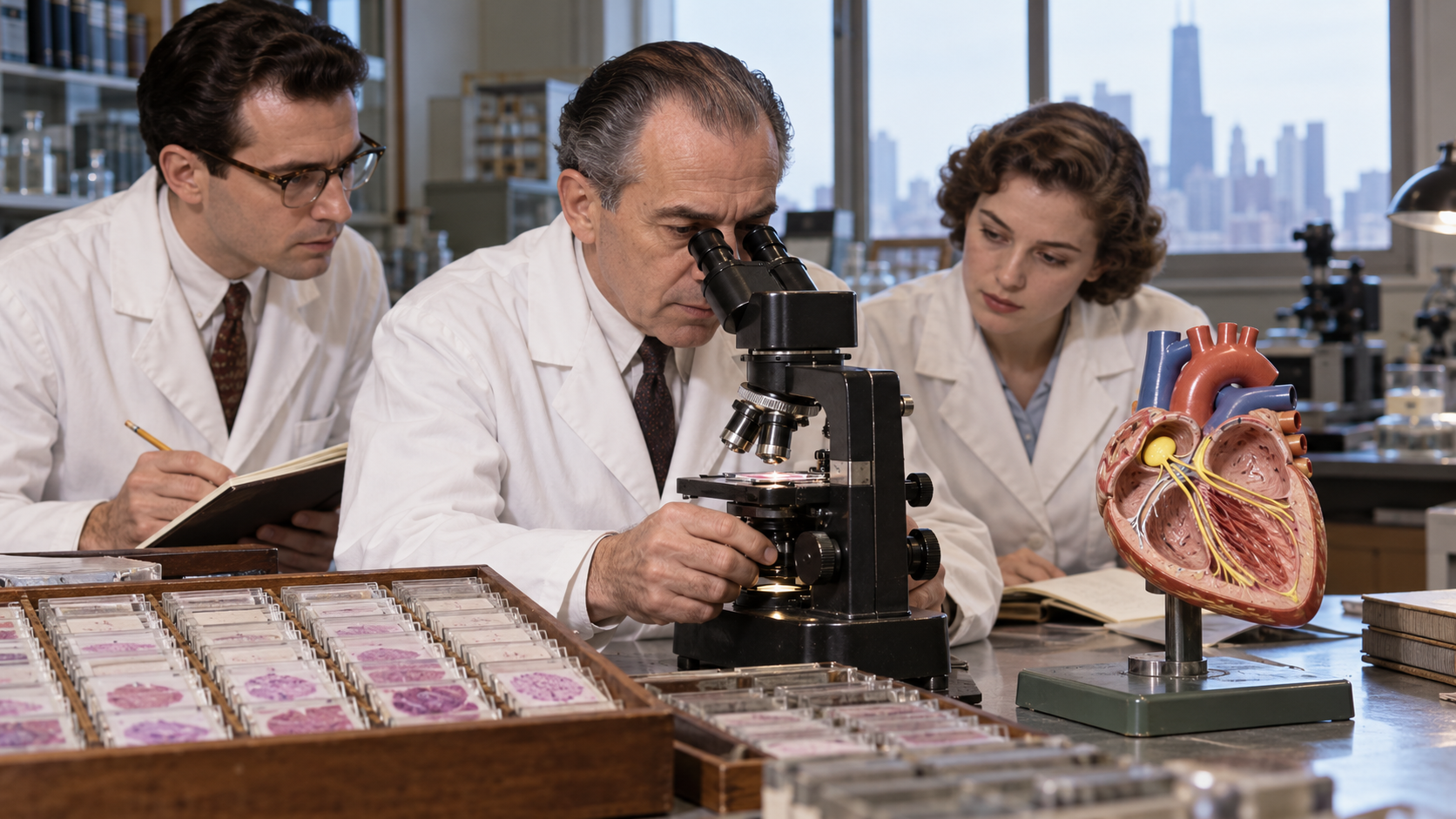
What happened on the date was consequential but limited. Working in Chicago, Lev developed meticulous serial-section methods and correlated microscopic conduction-system changes with clinical findings. He described age-related fibrosis and calcification associated with acquired atrioventricular block. Autopsy correlations can show association without proving that one lesion caused a rhythm disturbance. Sampling, preservation, clinical records, and evolving definitions all affect interpretation, and not every conduction disorder fits a single pathological category. The distinction is important: the event did not instantly solve the underlying health problem, and later progress depended on follow-up research, training, policy, funding, and public trust. Contemporary evidence also helps separate what participants knew then from interpretations added after the result became famous.
Its longer legacy reaches beyond the original setting. His atlases and investigations gave cardiologists and pathologists a structural framework for congenital heart disease, conduction block, and the placement of pacing therapy. Electrophysiology, imaging, genetics, implanted monitors, and pacemakers now examine living function directly, while careful pathology remains essential for unexplained death, inherited disease, and device-related questions. Seen in context, the anniversary is useful because it connects a concrete historical episode with continuing questions about evidence, access, safety, and responsibility in health care. That connection is stronger when the people affected, the limits of the achievement, and the work still unfinished remain part of the account.
Working in Chicago, Lev developed meticulous serial-section methods and correlated microscopic conduction-system changes with clinical findings. He described age-related fibrosis and calcification associated with acquired atrioventricular block.
Autopsy correlations can show association without proving that one lesion caused a rhythm disturbance. Sampling, preservation, clinical records, and evolving definitions all affect interpretation, and not every conduction disorder fits a single pathological category.
His atlases and investigations gave cardiologists and pathologists a structural framework for congenital heart disease, conduction block, and the placement of pacing therapy.
Electrocardiography could reveal abnormal rhythms, but clinicians often lacked anatomical explanations for heart block and sudden death. The tiny nodes and pathways that initiate and conduct impulses were difficult to preserve, section, and reconstruct.
Maurice Lev was born in Russia and later became a leading cardiac pathologist whose detailed studies clarified disease of the heart's electrical conduction system.
Electrophysiology, imaging, genetics, implanted monitors, and pacemakers now examine living function directly, while careful pathology remains essential for unexplained death, inherited disease, and device-related questions.
Explore more of "On This Day ..."
Discover more events from the same date across news, politics, technology, sports, and other fields. Each link highlights significant moments that shaped history on different fronts.