

On This Day in Health: November 26, 1921
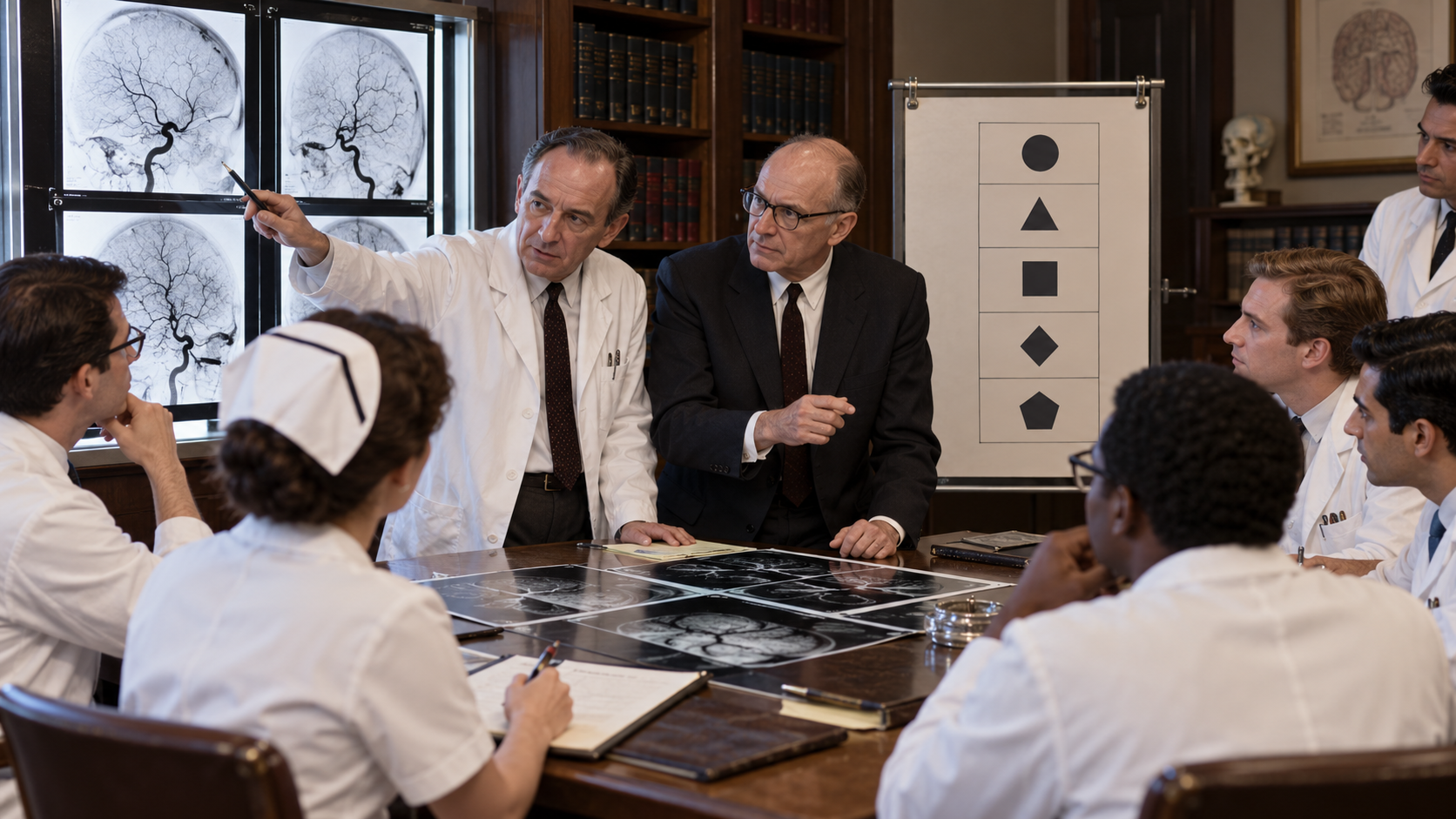
On November 26, 1921, William Edward Hunt was born and later became an American neurosurgeon known for work on intracranial aneurysms and neurological grading. This date matters because it fixes a broad medical story to a specific moment, place, and group of people. It also shows how health history is shaped carefully by institutions and practical choices as well as laboratory discoveries.
The background was already developing before that day. Subarachnoid hemorrhage from a ruptured aneurysm could present from severe headache to coma. Surgeons needed a shared way to describe condition at admission, estimate operative risk, compare outcomes, and decide when intervention was feasible. Those conditions defined what participants could attempt and what patients or communities could reasonably expect. The available tools, social expectations, and professional structures all shaped the result. Change also depended on cooperation among people whose roles were not always recorded equally. They explain why later accounts sometimes compress years of preparation into a single anniversary. Looking at that preparation keeps credit broad and makes the turning point easier to understand without turning it into a miracle story.
What happened on the date was consequential but limited. Hunt and Robert Hess published a five-grade scale based on headache, meningeal signs, focal deficit, drowsiness, stupor, and coma. It turned bedside status into a concise language for clinical decisions and research. The scale compresses complex patients into broad categories, and sedatives, seizures, hydrocephalus, intubation, or systemic illness can alter the grade. It does not replace imaging, vascular anatomy, age, comorbidity, or repeated examination. The distinction is important: the event did not instantly solve the underlying health problem, and later progress depended on follow-up research, training, policy, funding, and public trust. Contemporary evidence also helps separate what participants knew then from interpretations added after the result became famous.
Its longer legacy reaches beyond the original setting. The Hunt-Hess scale became widely used alongside later systems and helped make outcome reporting more consistent during rapid advances in aneurysm surgery. Modern care adds CT, angiography, endovascular treatment, microsurgery, nimodipine, intensive monitoring, and rehabilitation, while neurological grade still helps teams communicate severity and uncertainty. Seen in context, the anniversary is useful because it connects a concrete historical episode with continuing questions about evidence, access, safety, and responsibility in health care. That connection is stronger when the people affected, the limits of the achievement, and the work still unfinished remain part of the account.
Hunt and Robert Hess published a five-grade scale based on headache, meningeal signs, focal deficit, drowsiness, stupor, and coma. It turned bedside status into a concise language for clinical decisions and research.
The scale compresses complex patients into broad categories, and sedatives, seizures, hydrocephalus, intubation, or systemic illness can alter the grade. It does not replace imaging, vascular anatomy, age, comorbidity, or repeated examination.
The Hunt-Hess scale became widely used alongside later systems and helped make outcome reporting more consistent during rapid advances in aneurysm surgery.
Subarachnoid hemorrhage from a ruptured aneurysm could present from severe headache to coma. Surgeons needed a shared way to describe condition at admission, estimate operative risk, compare outcomes, and decide when intervention was feasible.
William Edward Hunt was born and later became an American neurosurgeon known for work on intracranial aneurysms and neurological grading.
Modern care adds CT, angiography, endovascular treatment, microsurgery, nimodipine, intensive monitoring, and rehabilitation, while neurological grade still helps teams communicate severity and uncertainty.
Explore more of "On This Day ..."
Discover more events from the same date across news, politics, technology, sports, and other fields. Each link highlights significant moments that shaped history on different fronts.