

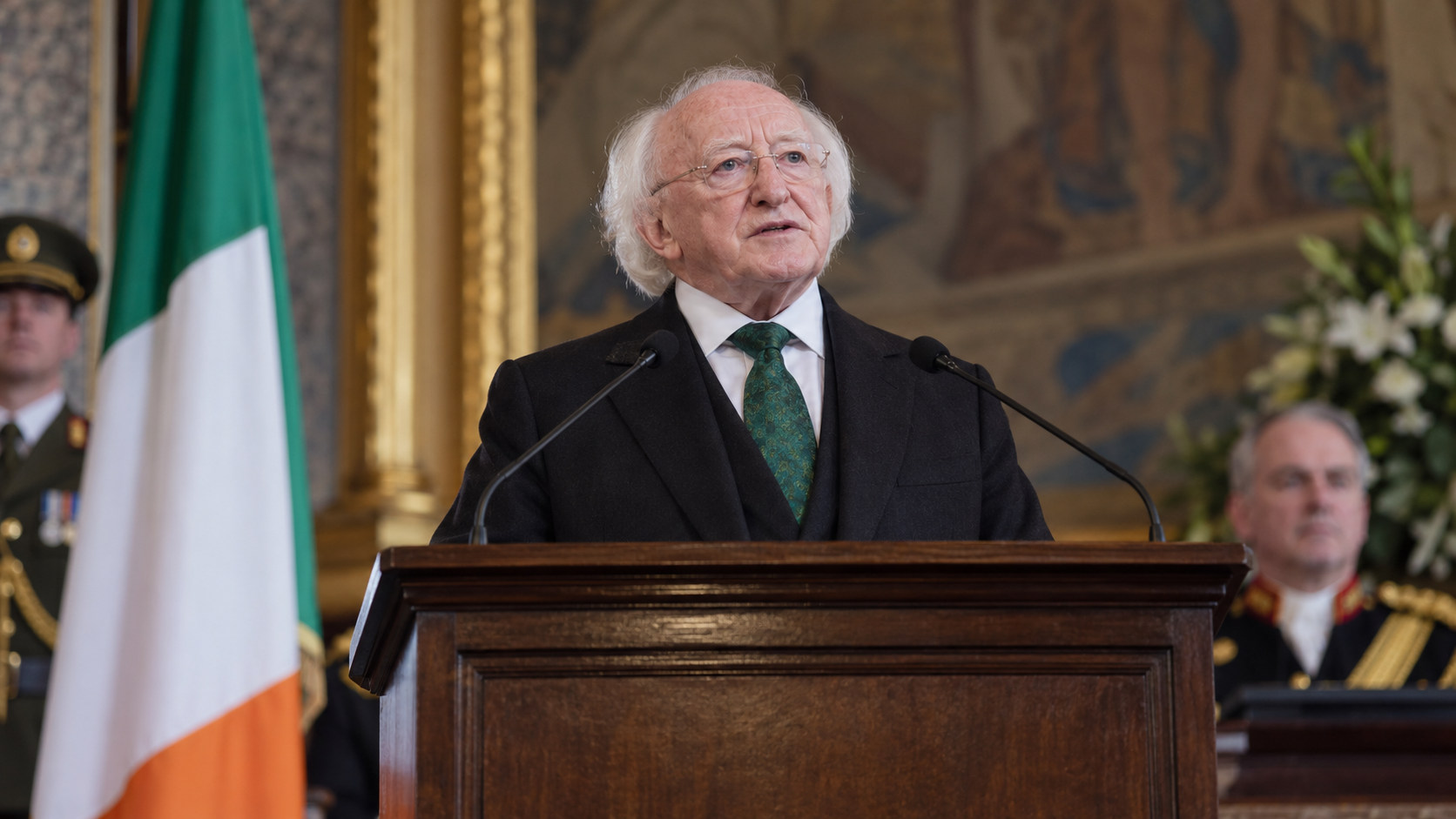
“We must seek to build together a real republic of substance.”
The featured words from Michael D. Higgins come from the Inaugural address as President of Ireland on November 11, 2011. Higgins took office after a financial crisis that had brought bank failures, austerity, unemployment, and public anger over institutional trust. He called for citizenship, creativity, inclusion, and an economy judged by social purpose rather than by narrow calculation. The quotation reads: 'We must seek to build together a real republic of substance.' November 29 is its calendar assignment in this series; the historical date is given here so the words are not mistaken for a statement made on this day.
The phrase distinguishes formal republican institutions from a society in which dignity and participation are experienced in daily life. The phrasing compresses a larger political argument into a memorable standard, but its force depends on the relationships it names: between citizen and state, principle and practice, or power and accountability. Read in context, it asks who can act, whose experience becomes visible, and what institutions must do. It also requires readers to separate a principle that travels across time from the specific coalition, conflict, and vocabulary that first carried it into public debate. This approach moves attention beyond admiration for a speaker and toward the rules, incentives, and distribution of practical power that made the statement necessary.
Ireland's presidency has limited executive power, so the address set a civic aspiration more than a program the speaker could implement alone. That qualification does not erase the quotation; it defines the work required to use it responsibly. Historical reputation cannot settle the issue. A serious reading keeps achievement beside contradiction and later outcomes, while distinguishing the claim's strongest principle from uses the record cannot support. The words should open examination rather than close disagreement, especially where translation, transcription, institutional position, or unequal risk affects what an audience hears.
The test remains concrete: ask whether housing, work, culture, services, and political voice allow people to participate as equal citizens. Applied now, the quotation becomes a method rather than an ornament. Readers can compare official ideals with law, budgets, enforcement, access, representation, and lived results, then decide what repair or restraint the evidence requires. That judgment should include people most affected by the policy at issue and should remain open to revision when facts change. It should also distinguish a measurable public commitment from a ceremonial promise that carries no accountable result. Political memory has value when it sharpens public responsibility in the present instead of turning a complicated figure or moment into a harmless slogan.
Higgins took office after a financial crisis that had brought bank failures, austerity, unemployment, and public anger over institutional trust.
He called for citizenship, creativity, inclusion, and an economy judged by social purpose rather than by narrow calculation.
The phrase distinguishes formal republican institutions from a society in which dignity and participation are experienced in daily life.
The featured wording is part of a larger argument, so its political meaning depends on the institution, audience, and conflict surrounding it rather than on the isolated sentence alone.
Ireland's presidency has limited executive power, so the address set a civic aspiration more than a program the speaker could implement alone.
The test remains concrete: ask whether housing, work, culture, services, and political voice allow people to participate as equal citizens.
Explore more "Quotes of The Day"
Discover more notable quotes from influential voices across politics, science, business, technology, sports, and culture. Each quote offers insight into how ideas, beliefs, and decisions shape the world around us.