

On This Day in Politics: March 24, 1976
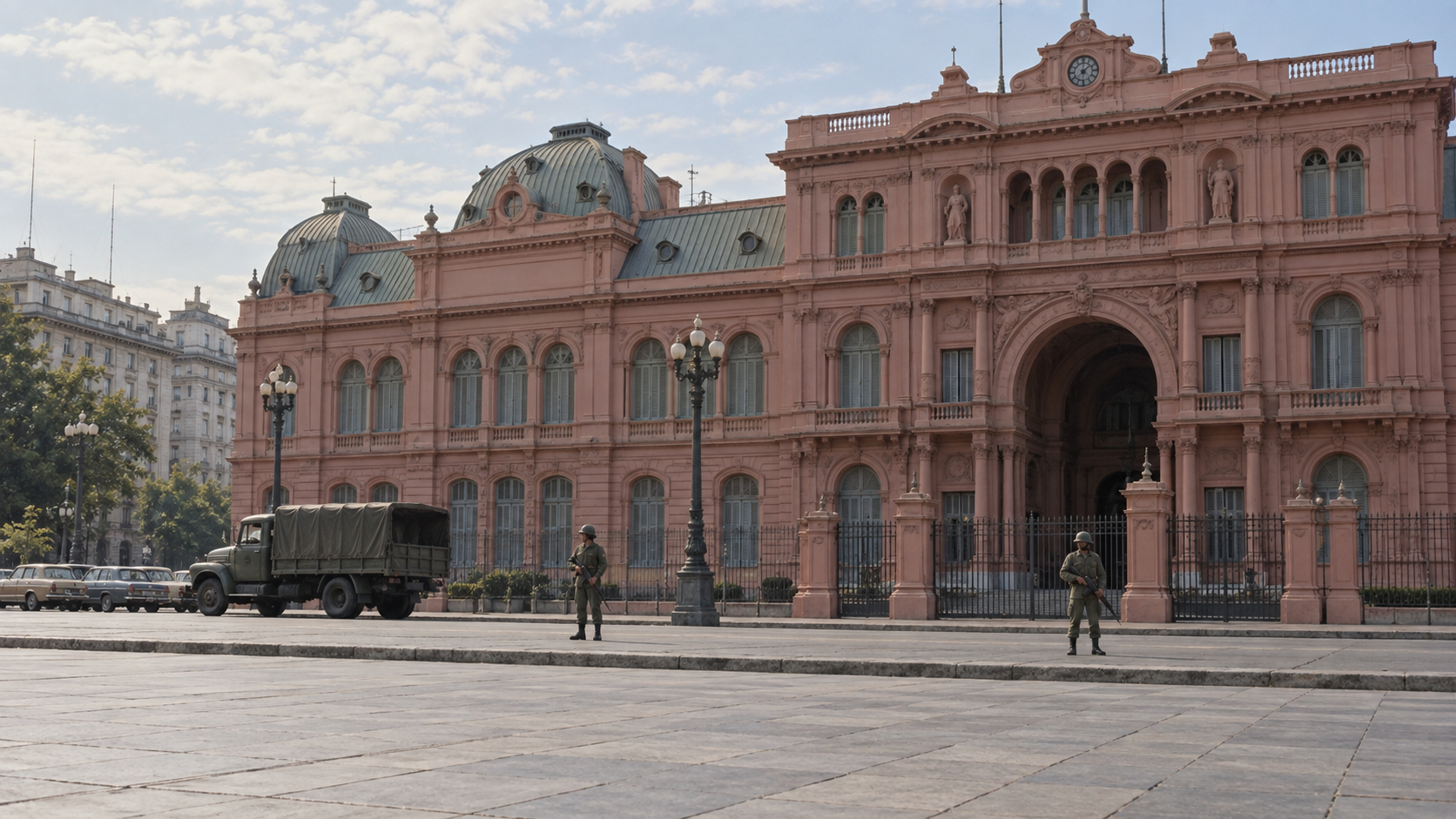
On March 24, 1976, Argentina’s armed forces overthrew the constitutional government of President María Estela Martínez de Perón, widely known as Isabel Perón. A military junta took control, beginning a dictatorship that lasted until December 1983. The coup replaced civilian constitutional authority with military rule and opened a period of systematic state repression. Its significance extends beyond the removal of one president: the regime subordinated public life to its own commands and treated perceived political opposition as a target for coercion. March 24 became a central date in Argentina’s historical memory because of the disappearances, torture, and other abuses committed during the years that followed.
Repression did not begin from an empty background. A contemporary United States diplomatic analysis noted that several thousand alleged subversives were already detained under a state of siege declared in November 1974. Written the day after the coup, the assessment anticipated an intensified security campaign and warned that serious human rights violations were likely. It also recorded that Perón was being detained inside Argentina. The document’s cautious and sometimes accommodating descriptions reveal how foreign officials assessed the junta at the moment it took power. Its warnings are particularly significant because they show that the danger of escalating abuses was recognized immediately, before the full record of the dictatorship had emerged.
Under military rule, security forces and associated structures abducted, tortured, and forcibly disappeared people regarded as political suspects. The disappearance system inflicted harm on families as well as those detained, withholding information about where relatives were held and what had happened to them. The dictatorship continued until the restoration of democratic government on December 10, 1983. Remembering the coup therefore requires distinguishing the seizure of power on one day from a sustained system of state violence. It also requires attention to constitutional guarantees: the destruction of meaningful restraints on official power helped make people vulnerable to detention and abuse without effective protection.
After democracy returned, demands for truth and accountability remained part of national public life. Human rights organizations, including the Mothers and Grandmothers of the Plaza de Mayo, sought answers about missing relatives and children whose identities had been taken. Investigations, prosecutions for crimes against humanity, reparations, and the preservation of former detention sites became parts of Argentina’s response to the dictatorship. In 2002, legislation formally designated March 24 as the National Day of Memory for Truth and Justice; it became a national holiday in 2006. The anniversary honors victims and connects historical remembrance with the defense of democratic institutions. Its continuing importance lies in keeping the consequences of state repression visible and preserving the evidence needed for public understanding and accountability.
Argentina’s military overthrew Isabel Perón’s constitutional government on March 24, 1976.
The resulting dictatorship remained in power until December 10, 1983.
The regime carried out abductions, torture, and forced disappearances.
A US diplomatic assessment issued immediately after the coup warned of likely serious human rights violations.
Human rights groups and democratic institutions pursued truth, accountability, and the recovery of stolen identities.
March 24 was designated the National Day of Memory for Truth and Justice in 2002.
Explore more of "On This Day ..."
Discover more events from the same date across news, politics, technology, sports, and other fields. Each link highlights significant moments that shaped history on different fronts.