

On This Day in Politics: March 25, 1957
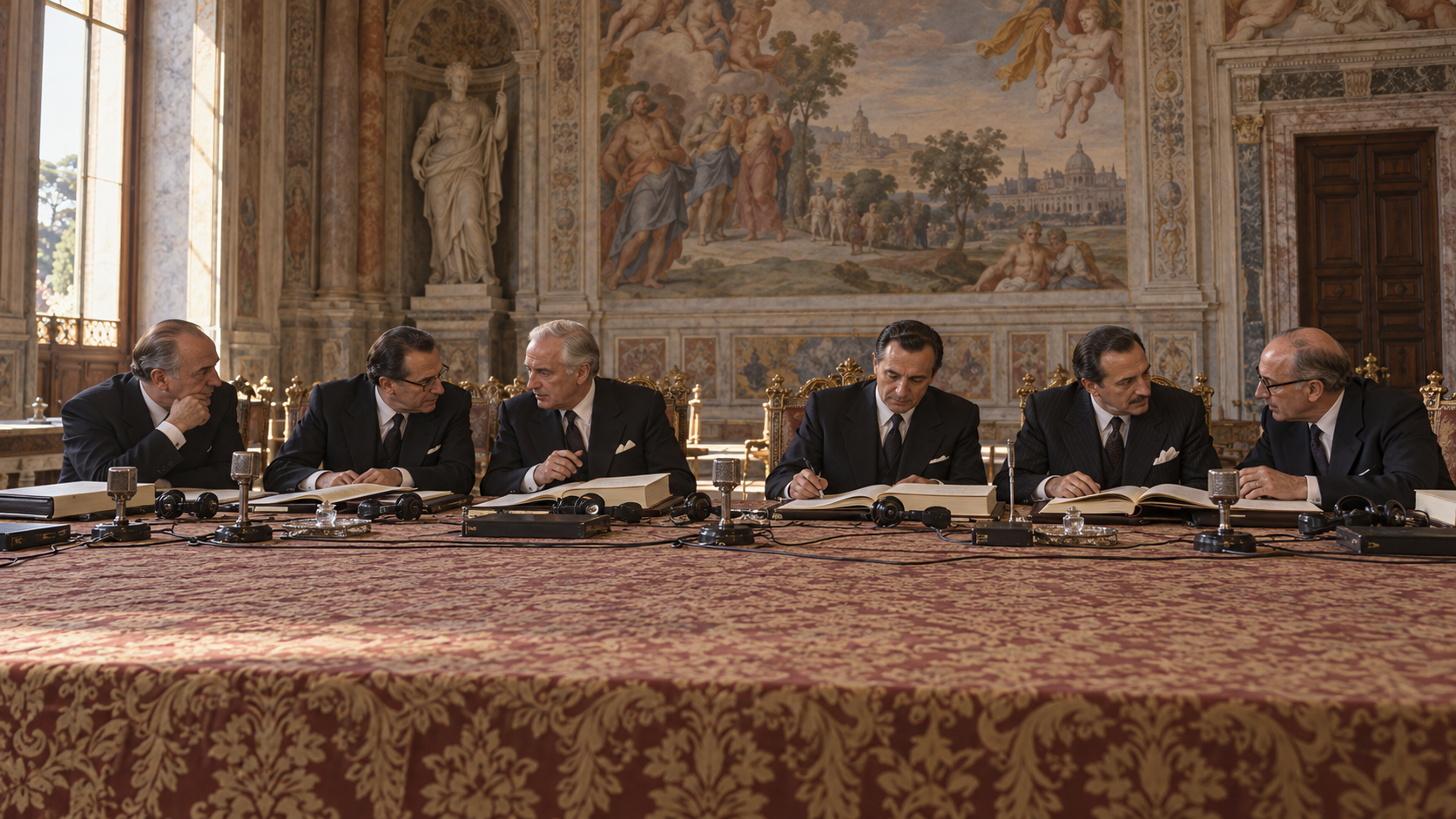
On March 25, 1957, six European countries signed two treaties in Rome that broadened their cooperation beyond coal and steel. Belgium, France, West Germany, Italy, Luxembourg, and the Netherlands agreed to establish the European Economic Community and the European Atomic Energy Community, known as Euratom. The ceremony took place in the frescoed Hall of the Horatii and Curiatii on Rome’s Capitoline Hill. The agreements became effective on January 1, 1958. March 25 therefore marks the signing of the founding commitments, rather than the day the new communities began operating. Together, the treaties became a major foundation for the later development of the European Union.
The initiative grew from the search for lasting cooperation after the destruction of the Second World War. Robert Schuman’s 1950 proposal to pool coal and steel production had led the same six countries to sign the Paris treaty in 1951. The resulting European Coal and Steel Community began work the following year. The Rome agreements extended that approach into a much wider range of economic activity. They were negotiated in a Europe still divided by the Cold War, and they represented an undertaking by six countries rather than the whole continent. Their importance lay in making further cooperation a continuing institutional project, with rules and responsibilities that governments would have to put into practice.
The Economic Community aimed to create a common market, allowing freer movement of goods, people, services, and capital among its members. Euratom addressed cooperation in nuclear energy. The treaties also created separate councils for the two new communities alongside the existing Coal and Steel Community’s council. National governments thus retained an organized role in collective decision-making. Rotating presidencies and rules for weighted voting helped define how that work would proceed. The institutions did not all begin in the unified form familiar from later European arrangements. A subsequent merger brought the three councils together in 1967, illustrating how the structure continued to change after Rome.
Later treaties expanded and revised this framework. The European Union itself was established through the Maastricht Treaty, which entered into force in 1993; it was not the formal name of the organization created in 1957. The original Economic Community treaty also underwent repeated amendment and eventually became the Treaty on the Functioning of the European Union. This history explains why the Rome anniversary is associated with European integration while still referring to a specific set of earlier agreements. The signatures committed the six governments to a broader common economic undertaking. Building the institutions, implementing the common market, and deciding how far political cooperation should extend remained tasks for the years that followed.
Six countries signed the Treaties of Rome on March 25, 1957.
The agreements entered into force on January 1, 1958.
One treaty established the European Economic Community; the other created Euratom.
Their aims covered a common market and cooperation in nuclear energy.
The communities built on earlier cooperation in coal and steel.
Later treaties revised the framework, and the European Union was formally established in 1993.
Explore more of "On This Day ..."
Discover more events from the same date across news, politics, technology, sports, and other fields. Each link highlights significant moments that shaped history on different fronts.