

Wet-Road Tire Tread Explainer
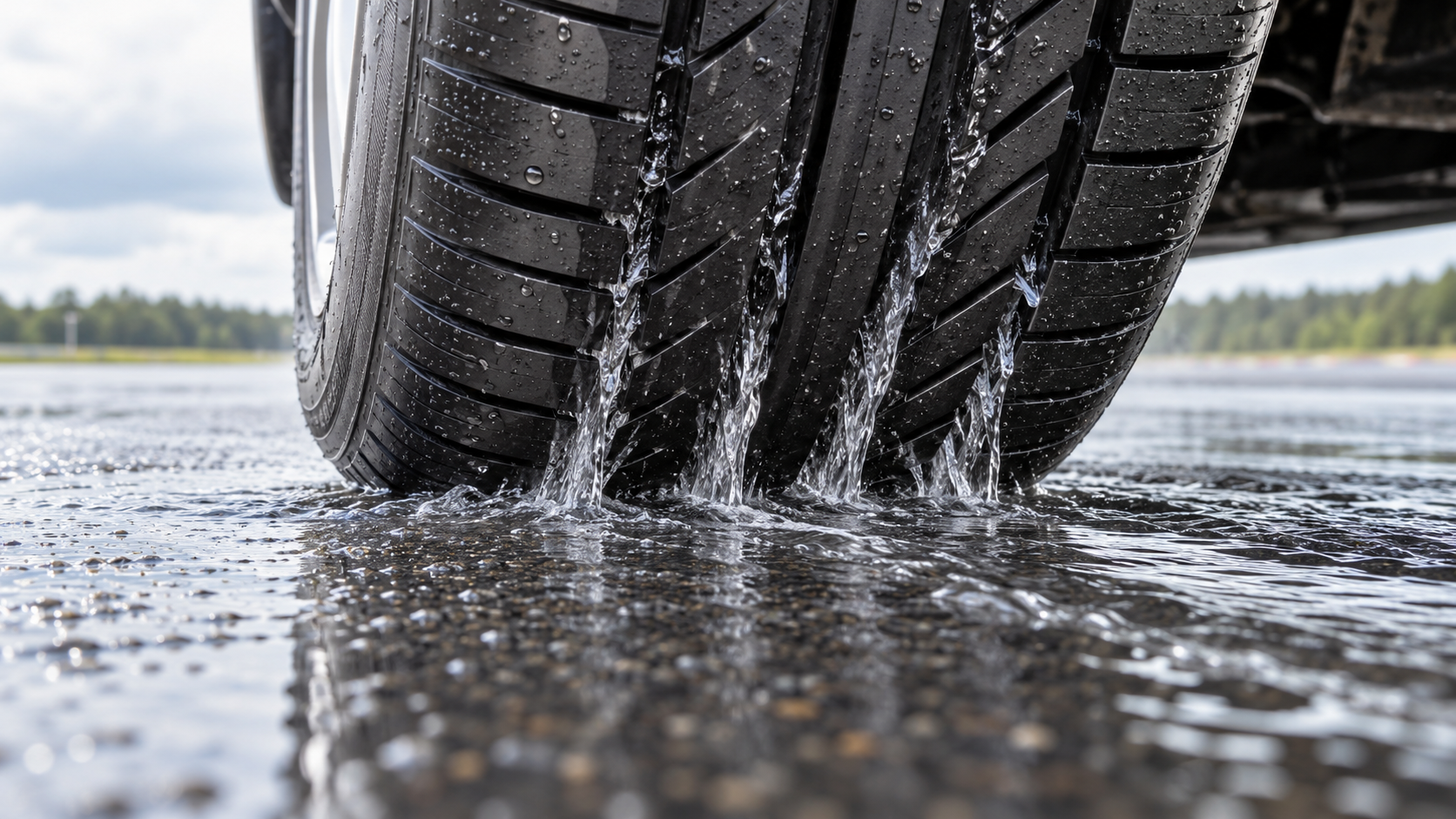
A rolling tire must displace water before its rubber can make useful contact with wet pavement. Long circumferential grooves collect water entering the front of the contact patch, while lateral channels provide routes toward the sides. As tread blocks press down, water is pushed through this network instead of remaining trapped beneath the tire. The design does not make the road dry; it gives a rapidly compressed liquid somewhere to go during the brief time each tread element is on the ground.
Smaller cuts called sipes divide tread blocks and create additional edges. On a wet or icy surface, those edges can break through thin films and deform to follow texture. The block shape must remain stable enough for steering and braking, so more void space is not automatically better. Designers balance water evacuation, dry grip, snow traction, noise, wear, heat, and structural strength. Different tire categories therefore use visibly different groove directions, depths, and block patterns.
Hydroplaning occurs when water pressure builds faster than the tire can clear it, partially or fully separating rubber from pavement. Speed, water depth, tread depth, inflation pressure, tire load, and surface texture all influence the threshold. Deep standing water at highway speed can overwhelm even a good pattern. When contact shrinks, steering and braking forces fall sharply. The safest response emphasizes smooth control and reduced speed rather than assuming tread can defeat every puddle.
Tread becomes less capable as it wears because the channels lose volume. Wear bars provide a visible legal-limit reference, but wet-weather performance may decline before the bars are flush. Underinflation changes the contact shape, increases heat and flexing, and may reduce the tire’s ability to manage water as intended. Overinflation creates other contact and ride problems. Pressure is checked cold against the vehicle placard, not the maximum molded on the sidewall.
No tread pattern compensates for damaged rubber, exposed cords, age-related cracking, unsuitable seasonal design, or mismatched tires. Regular inspection should include depth across the width, embedded objects, bulges, cuts, and uneven wear that may signal alignment or suspension trouble. Rotating and replacing tires follow vehicle and tire guidance. Drivers should increase following distance in rain, avoid cruise control where conditions are variable, and slow before entering standing water.
Wet-road grip begins with contact, and tread is the plumbing that helps preserve it. Grooves provide bulk flow paths, sipes add local edges, and the rotating tire continually opens and closes those spaces as it deforms. The system has finite capacity, which falls with wear and can be exceeded by speed or water depth. Safe performance therefore combines sound tread, correct pressure, suitable tires, and driving that leaves enough time for the water to escape.
Grooves and channels give water escape paths from the contact patch so tread rubber can reach the road. Key terms include contact patch, circumferential groove, lateral channel, sipe, void ratio, tread depth, hydroplaning, and inflation.
No. The drainage capacity is finite and can be overwhelmed by speed, standing-water depth, low pressure, or other conditions.
Shallower grooves hold and move less water, so pressure can build beneath the tire more readily before rubber establishes contact.
Explore more "Explainers"
Discover additional explainers across politics, science, business, technology, and other fields. Each explainer breaks down a complex idea into clear, everyday language—helping you better understand how major concepts, systems, and debates shape the world around us.