

On This Day in Lifestyles: May 14, 1796
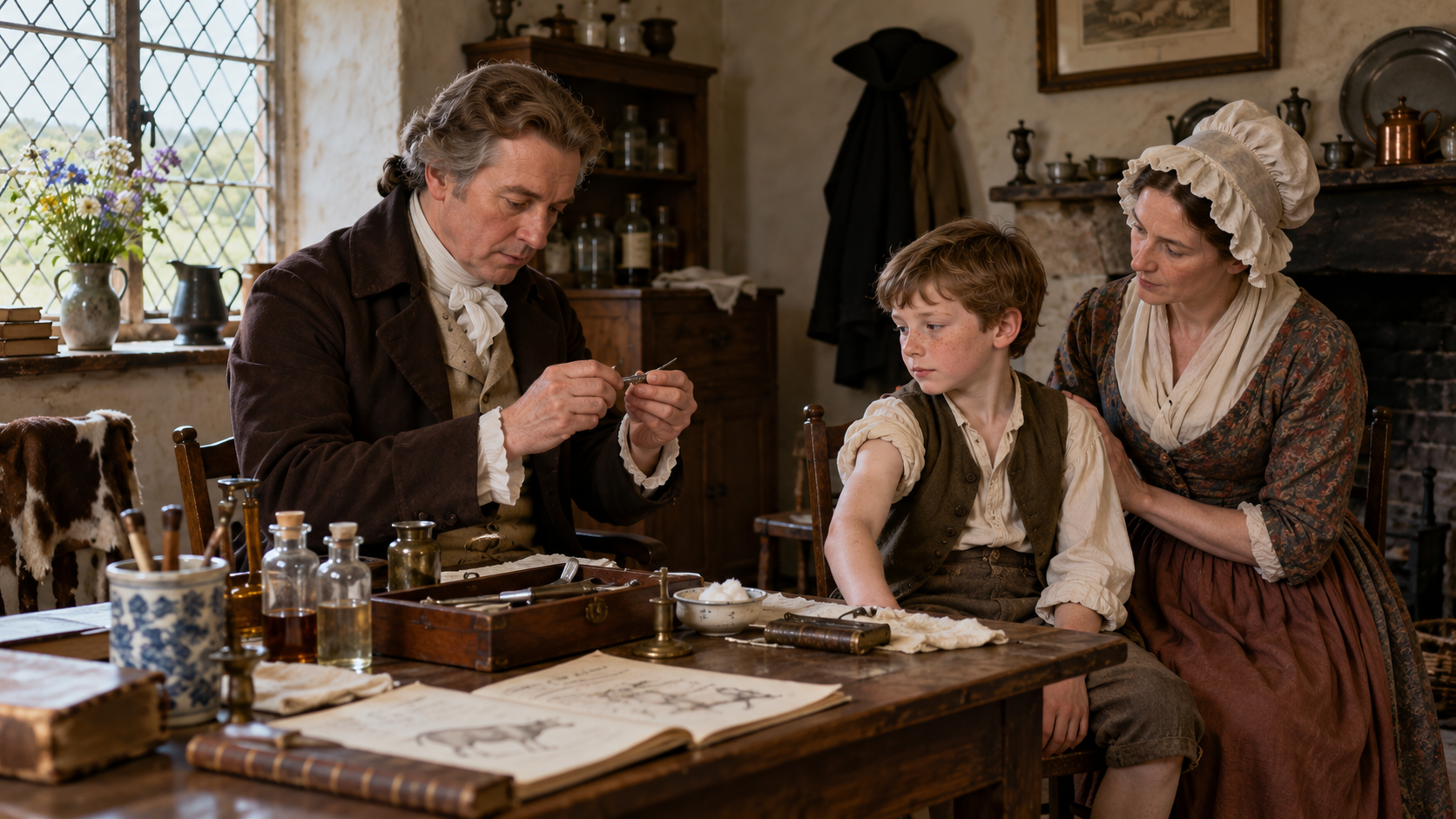
On May 14, 1796, Edward Jenner inoculated eight-year-old James Phipps with material from a cowpox sore, beginning the famous experiment that helped establish vaccination against smallpox. The date matters in lifestyle history because medicine becomes lifestyle history when a clinical idea changes the risks families accept and the futures children can expect. It was not merely a headline for institutions or specialists; it touched the settings, objects, expectations, and shared rituals through which people organized ordinary days. A physician, a child, and a family occupied the intimate center of a development whose consequences would extend far beyond their village. Seen at human scale, the episode shows how a public milestone becomes meaningful through repeated personal choices, conversations, and memories.
People already knew that smallpox survivors gained immunity and that variolation could provide protection, though variolation carried serious danger. Jenner investigated the rural observation that milkmaids who caught cowpox seemed protected from smallpox. The setting is essential to understanding why the event attracted attention. New ideas rarely arrive in isolation: they meet existing technology, commerce, custom, law, and desire. Contemporary newspapers, broadcasts, public spaces, shops, schools, workplaces, or homes carried the story outward, giving people practical ways to interpret it. Some welcomed the change, others doubted it, and many first encountered it indirectly. That mixture of novelty and familiarity helped the moment travel from a single date into a broader change in behavior.
The experiment contributed to a method that was safer than variolation and eventually supported broad vaccination campaigns. The change reached deeply into family life, childhood, community health, travel, and expectations about preventable disease. In daily life, the consequences appeared through altered routines, new expectations, and different ways of spending time or money. Modern ethics would not permit such an experiment on a child without informed safeguards, and the episode belongs in a history that includes scientific progress alongside questions of consent and power. The benefits were never the whole story; major changes also exposed questions about access, responsibility, fairness, cost, and who had power to define progress. Those tensions deserve a place beside the celebration because they show how culture actually develops. The event mattered not because everyone experienced it in the same way, but because it opened a durable argument about how people wanted to live.
Today, the legacy remains visible: Vaccination remains one of public health’s most consequential tools and also a continuing site of debate about trust, access, communication, and responsibility. Familiarity can make that inheritance easy to overlook, yet the practices surrounding it were built through years of experimentation, adaptation, criticism, and use. Looking back does more than celebrate an anniversary. It reveals the chain between public decisions and private habits, between ambitious ideas and the small acts that make them ordinary. On this day, a small rural procedure opened a path toward controlling one of humanity’s deadliest diseases. Remembering the full setting lets the milestone feel less like a frozen fact and more like a living part of modern experience.
On May 14, 1796, Edward Jenner inoculated eight-year-old James Phipps with material from a cowpox sore, beginning the famous experiment that helped establish vaccination against smallpox.
People already knew that smallpox survivors gained immunity and that variolation could provide protection, though variolation carried serious danger. Jenner investigated the rural observation that milkmaids who caught cowpox seemed protected from smallpox.
The experiment contributed to a method that was safer than variolation and eventually supported broad vaccination campaigns. The change reached deeply into family life, childhood, community health, travel, and expectations about preventable disease.
The event matters in lifestyle history because medicine becomes lifestyle history when a clinical idea changes the risks families accept and the futures children can expect.
Modern ethics would not permit such an experiment on a child without informed safeguards, and the episode belongs in a history that includes scientific progress alongside questions of consent and power.
The legacy remains visible today: Vaccination remains one of public health's most consequential tools and also a continuing site of debate about trust, access, communication, and responsibility.
Explore more of “This Day in Lifestyles”
Discover more moments in everyday life, design, education, travel, food, fashion, and culture. Each story connects a calendar date with an event that changed how people lived.