

On This Day in Business: May 27, 1937
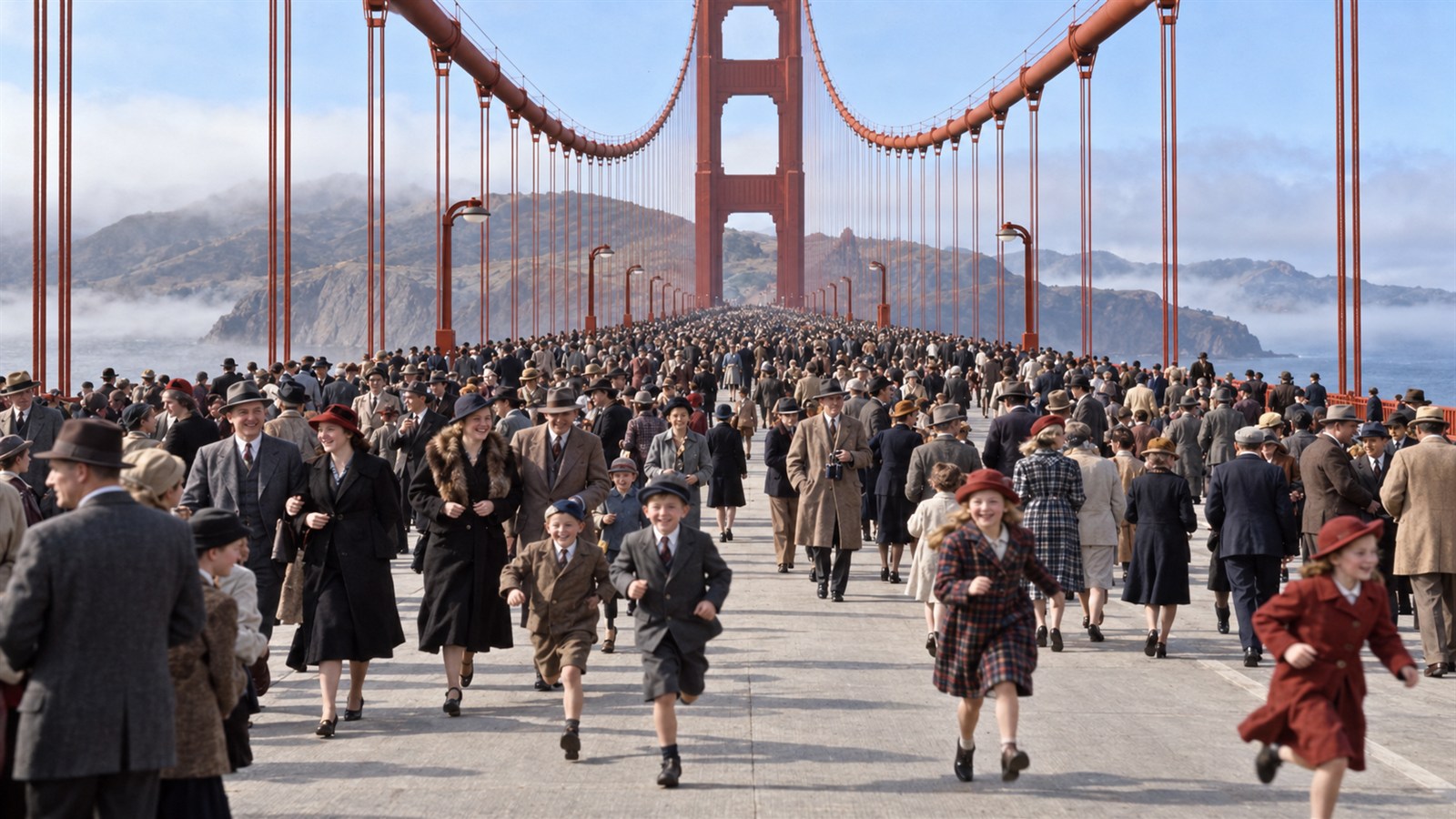
On May 27, 1937, the Golden Gate Bridge opened to pedestrians for a day-long public celebration. More than 200,000 people crossed the new span on foot before vehicles were admitted the following day. The bridge connected San Francisco with Marin County across a strait known for deep water, strong currents, wind, and fog. At completion, its 4,200-foot main span was the longest suspension span in the world. The opening transformed a difficult engineering project into working transportation infrastructure and gave the region a landmark whose public identity quickly matched its practical value.
Financing was especially difficult during the Great Depression. Voters in the bridge district approved bonds secured by local property, and Bank of America purchased much of the issue when private appetite was weak. Chief engineer Joseph Strauss led the project with major contributions from engineers Charles Ellis and Leon Moisseiff and architect Irving Morrow. Contractors and thousands of workers built towers, anchorages, cables, and deck in an exposed marine environment. Safety nets saved workers’ lives, though eleven men died during construction, including ten when a scaffold fell through a net near the end of the job.
The bridge changed regional transportation and competition. Ferries had carried people and automobiles across the Golden Gate; a fixed roadway offered continuous capacity and encouraged suburban development to the north. Tolls supplied revenue for operations and debt service. Traffic growth later required lane management, seismic improvements, corrosion control, and ongoing maintenance. The structure’s International Orange color and Art Deco details created a visual identity that tourism and media amplified, making the bridge both a transportation utility and an economic symbol for the Bay Area.
Pedestrian Day matters because infrastructure must earn public legitimacy as well as pass engineering tests. Letting residents occupy the roadway before cars turned a financed project into a shared civic experience. The business model still depended on tolls, maintenance, and safe operations after the celebration ended. The bridge illustrates how public authorities, local voters, banks, designers, contractors, and users divide risk around a long-lived asset. Its value came from lowering a geographic barrier, but its durability came from institutions willing to inspect, repair, finance, and adapt the span for decades. Opening day was the beginning of the service, not the end of the project. Tourism added a return not captured by toll accounts. Hotels, restaurants, tour operators, photographers, and regional marketing benefited from an image financed primarily as transportation. Landmark design can create such spillovers, though they may accrue to parties other than the asset owner. Public evaluation should consider those broader gains without using them to excuse weak operating discipline.
The Golden Gate strait presented wind, fog, deep water, and powerful currents that made a fixed crossing difficult.
Local bonds and Bank of America financing carried the project through a weak Depression-era capital market.
Engineers, contractors, and workers built a record main span while developing notable construction safety practices.
More than 200,000 pedestrians occupied the roadway on May 27, 1937, before vehicle traffic began.
Tolls and continuous maintenance supported the bridge as it replaced ferry dependence and encouraged regional growth.
Its commercial value combined transportation capacity, civic identity, and an image recognized far beyond the Bay Area.
Explore more of "On This Day ..."
Discover more events from the same date across news, politics, technology, sports, and other fields. Each link highlights significant moments that shaped history on different fronts.