

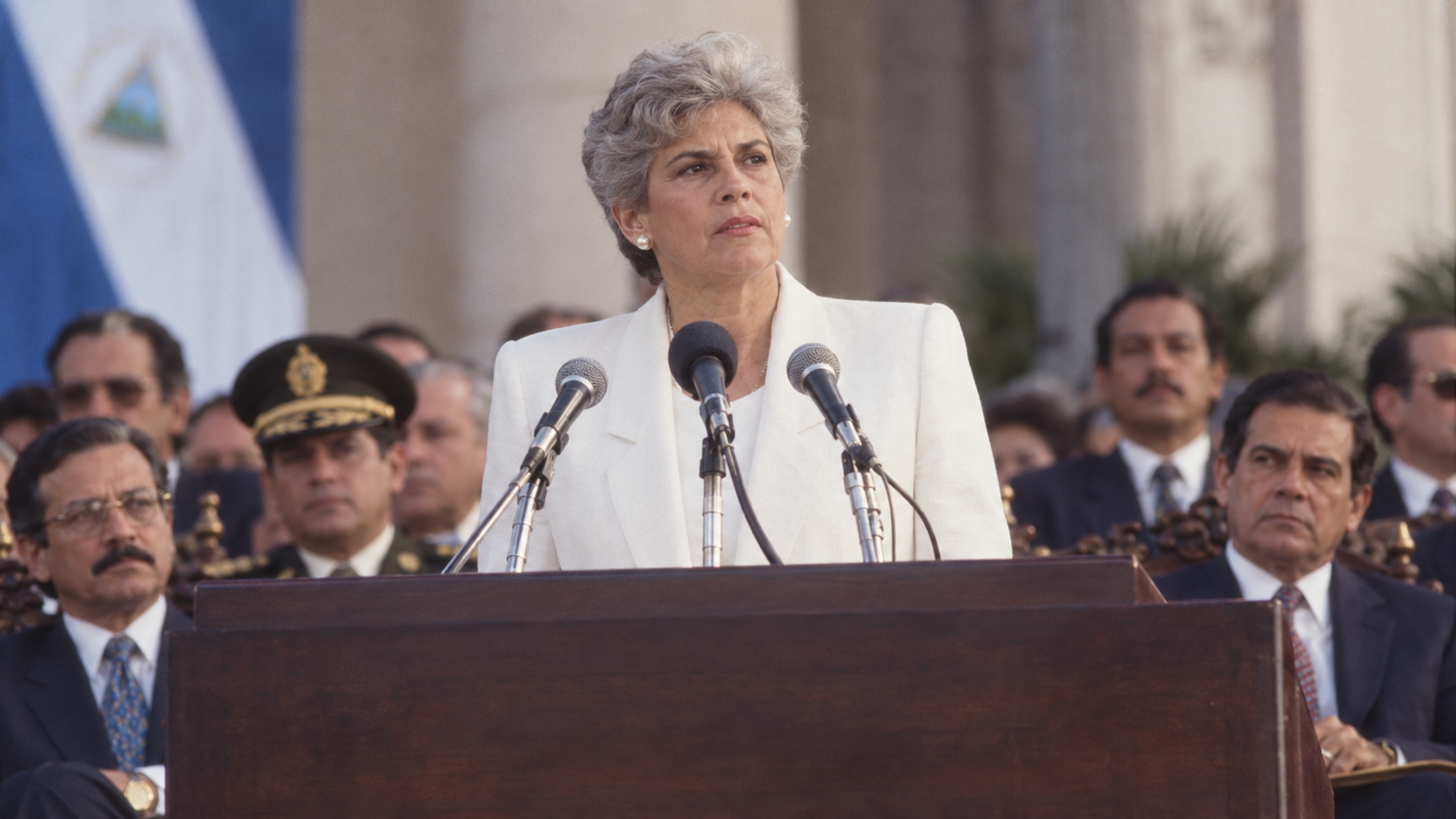
“The time has come to heal the wounds of the past.”
The featured words from Violeta Barrios de Chamorro come from the Inaugural address as President of Nicaragua on April 25, 1990. Chamorro took office after an election that ended Sandinista rule and followed years of revolution, Contra war, economic crisis, and foreign intervention. Her coalition promised peace, demobilization, pluralism, and a negotiated transition among deeply divided institutions and armed groups. The quotation reads: 'The time has come to heal the wounds of the past.' December 31 is its calendar assignment in this series; the historical date is given here so the words are not mistaken for a statement made on this day.
The sentence makes reconciliation a public task after conflict while acknowledging that political wounds persist beyond an election. The phrasing compresses a larger political argument into a memorable standard, but its force depends on the relationships it names: between citizen and state, principle and practice, or power and accountability. Read in context, it asks who can act, whose experience becomes visible, and what institutions must do. It also requires readers to separate a principle that travels across time from the specific coalition, conflict, and vocabulary that first carried it into public debate. This approach moves attention beyond admiration for a speaker and toward the rules, incentives, and distribution of practical power that made the statement necessary.
Healing can become impunity if it avoids truth, victims, accountability, land claims, or the unequal costs of economic transition. That qualification does not erase the quotation; it defines the work required to use it responsibly. Historical reputation cannot settle the issue. A serious reading keeps achievement beside contradiction and later outcomes, while distinguishing the claim's strongest principle from uses the record cannot support. The words should open examination rather than close disagreement, especially where translation, transcription, institutional position, or unequal risk affects what an audience hears.
The principle remains useful when peace processes combine disarmament and coexistence with documentation, rights, participation, and material repair. Applied now, the quotation becomes a method rather than an ornament. Readers can compare official ideals with law, budgets, enforcement, access, representation, and lived results, then decide what repair or restraint the evidence requires. That judgment should include people most affected by the policy at issue and should remain open to revision when facts change. It should also distinguish a measurable public commitment from a ceremonial promise that carries no accountable result. Political memory has value when it sharpens public responsibility in the present instead of turning a complicated figure or moment into a harmless slogan.
Chamorro took office after an election that ended Sandinista rule and followed years of revolution, Contra war, economic crisis, and foreign intervention.
Her coalition promised peace, demobilization, pluralism, and a negotiated transition among deeply divided institutions and armed groups.
The sentence makes reconciliation a public task after conflict while acknowledging that political wounds persist beyond an election.
The featured wording is part of a larger argument, so its political meaning depends on the institution, audience, and conflict surrounding it rather than on the isolated sentence alone.
Healing can become impunity if it avoids truth, victims, accountability, land claims, or the unequal costs of economic transition.
The principle remains useful when peace processes combine disarmament and coexistence with documentation, rights, participation, and material repair.
Explore more "Quotes of The Day"
Discover more notable quotes from influential voices across politics, science, business, technology, sports, and culture. Each quote offers insight into how ideas, beliefs, and decisions shape the world around us.