

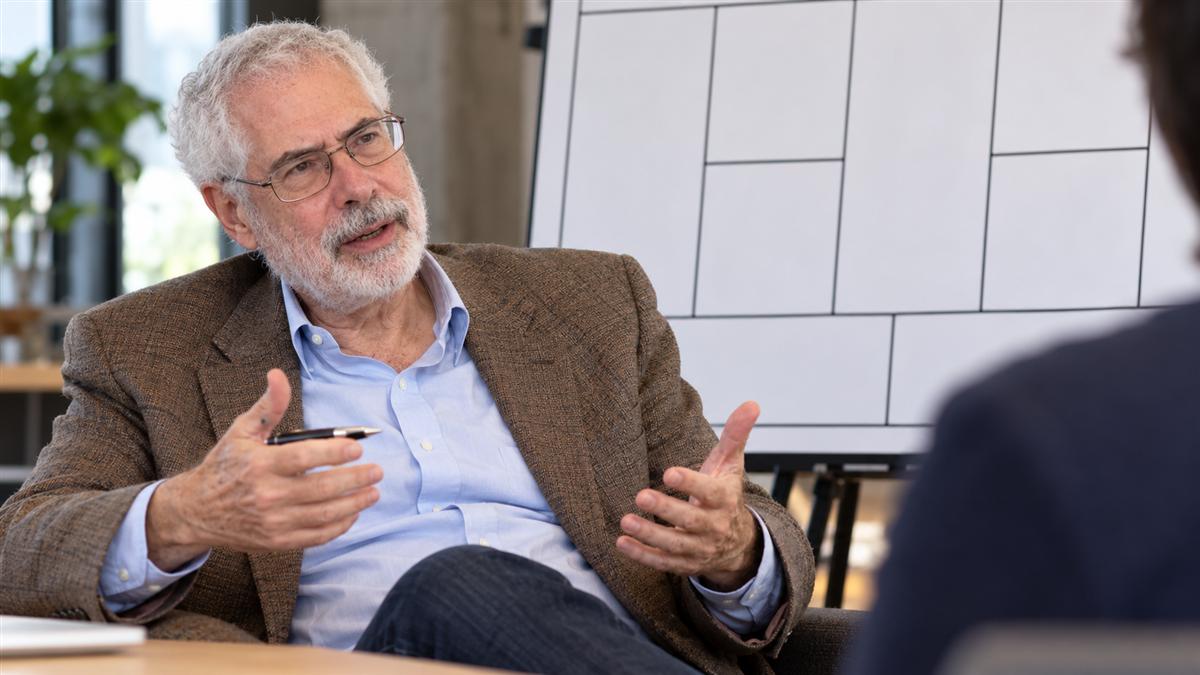
“No business plan survives first contact with customers.”
Steve Blank adapted a military maxim to entrepreneurship while teaching customer development. A traditional business plan can describe markets, pricing, channels, and revenue with impressive precision before the company has tested any of them. Blank calls those statements hypotheses. Once founders leave the building and encounter real customers, behavior rarely matches every assumption. The failure of the plan is not necessarily the failure of the venture; it is information that allows the business model to change before the company spends years scaling an unverified story.
Customer contact should be structured rather than anecdotal. Founders can identify a specific assumption, choose the people most able to test it, ask about past behavior, observe the existing workaround, and seek a commitment stronger than praise. Interviews, landing pages, prototypes, and small sales each answer different questions. Evidence should be recorded by segment and compared with a threshold set in advance. The team then updates the business model and chooses the next uncertainty, creating a sequence of decisions rather than a pile of conversations.
Customers cannot design the future for the company, and they may misstate intentions or prefer a familiar solution. A few enthusiastic interviews do not establish a market. Founders still need vision, technical judgment, competitive analysis, and ethical responsibility. In regulated or safety-critical products, learning must occur within strict safeguards. Blank’s principle challenges certainty, not preparation. A plan remains useful as a shared hypothesis and resource map, provided leaders do not defend its forecasts after evidence has changed the underlying reality.
AI makes it possible to produce sophisticated plans and market summaries before a founder speaks with anyone. Fluency can turn guesswork into a document that feels validated. Teams should label model-generated claims, verify external evidence, and reserve key decisions for direct customer learning. They can compare predicted behavior with observed use and make discrepancies visible to investors and boards. Blank’s sentence remains a defense against beautiful fiction: the market is not a presentation audience, and contact with customers is where the business first becomes accountable to facts. Boards and investors can help by asking what the team learned that invalidated the original plan, rather than treating every revision as incompetence. Founders should answer with evidence, economic consequence, and the next test—not with a new story immune to measurement. This creates accountability without rewarding stubbornness. A plan becomes a record of disciplined updates, allowing outsiders to distinguish adaptive learning from aimless movement and from the quieter failure of ignoring reality.
Blank used the maxim across his customer-development writing and Lean LaunchPad teaching.
He treated the assumptions in a startup plan as hypotheses that must meet real customer behavior.
Structured interviews, prototypes, and commitments test different parts of a business model before scaling.
Customer evidence complements vision and judgment; it does not replace safety, expertise, or careful preparation.
AI can create polished plans whose confident language hides untested assumptions.
Labeling generated claims and comparing predictions with observed behavior keeps the business accountable to customers.
Explore more "Quotes of The Day"
Discover more notable quotes from influential voices across politics, science, business, technology, sports, and culture. Each quote offers insight into how ideas, beliefs, and decisions shape the world around us.