

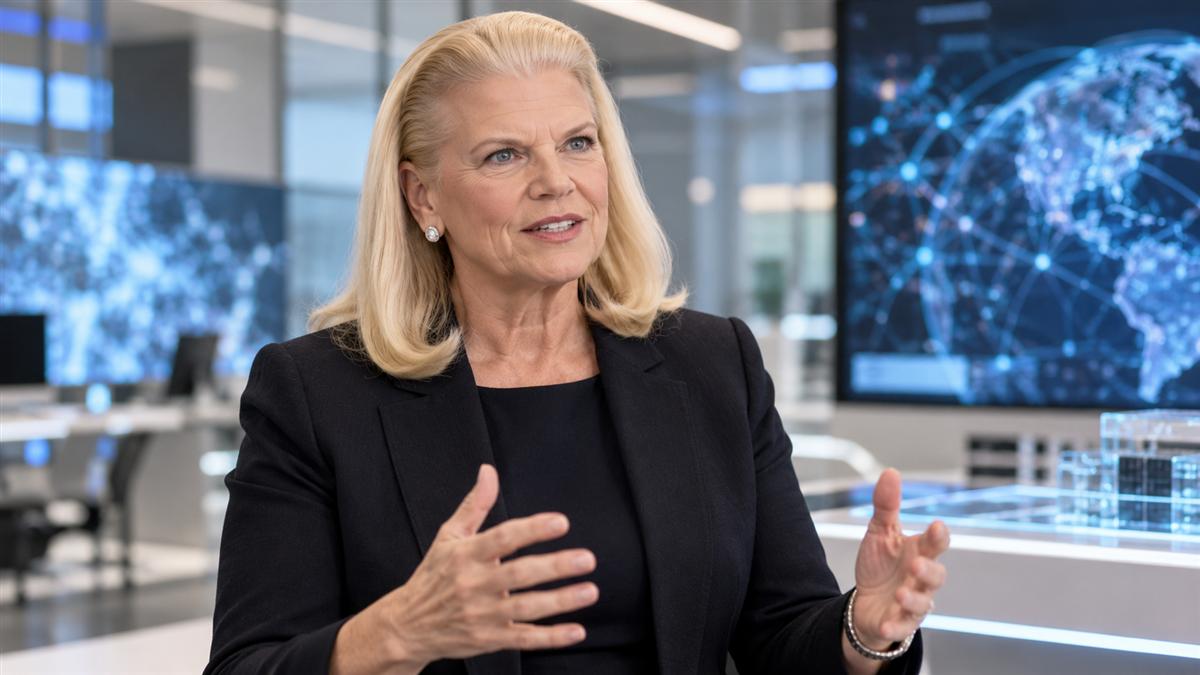
“Growth and comfort do not coexist.”
Ginni Rometty offered this advice at the 2011 Fortune Most Powerful Women Summit before becoming IBM’s chief executive. She connected growth with taking on unfamiliar work and with moving a business toward higher value before decline makes the move unavoidable. Comfort preserves known competence, status, and routines; growth exposes the gap between what worked before and what a new environment demands. The sentence is not a celebration of discomfort for its own sake. It identifies the tension that appears when learning changes a person’s identity or an organization’s successful formula.
Productive discomfort has a purpose and support. A leader can assign a stretch responsibility, clarify the outcome, provide access to expertise, and create review points before the risk becomes overwhelming. Organizations can make mobility normal by valuing new capabilities, lateral moves, and thoughtful experiments. At the enterprise level, capital should move toward emerging customer needs while the mature business still provides resources. Acting before crisis gives people time to learn rather than forcing transformation through panic and mass disruption.
Chronic anxiety is not growth. Employees learn poorly when workload, ambiguity, or job insecurity remains extreme. Leaders should distinguish a developmental challenge from preventable chaos and avoid using the quote to shift the cost of an underplanned change onto individuals. Recovery, psychological safety, fair opportunity, and the right to ask for help are part of sustainable growth. Some comfort—trust, belonging, predictable rights—creates the foundation from which people can take meaningful risks.
The principle speaks to companies adapting to AI. Buying a tool may be comfortable because it leaves roles and decisions untouched; real growth requires redesigning work, building new judgment, and sometimes retiring familiar processes. Leaders can choose bounded challenges, protect learning time, and measure capability gained as well as output produced. Rometty’s sentence becomes a balanced leadership test: is the organization stepping beyond a known model toward higher value, and has it created enough security that people can learn from the discomfort instead of merely surviving it? Development plans can pair a stretch zone with a stability zone. The employee names the new capability and uncertainty, while the manager protects clear priorities, respectful treatment, and access to help. Regular reviews adjust the challenge when it is too small or overwhelms learning. The same pattern works for business transformation: one part of the model changes deliberately while critical service remains dependable. Growth becomes a designed movement beyond comfort, not an organization-wide loss of footing.
Rometty gave the advice at the 2011 Fortune Most Powerful Women Summit.
She linked personal growth and IBM’s transformation with taking risks and moving toward higher value before change becomes compulsory.
Stretch assignments and strategic renewal build capability when they include clear outcomes, support, and time to learn.
Chronic fear is not development; trust, recovery, fair opportunity, and stable rights make productive risk possible.
AI adoption can remain comfortable when tools are added without changing decisions, skills, or workflow.
Bounded challenges and protected learning time turn technology into capability rather than a new layer on an old model.
Explore more "Quotes of The Day"
Discover more notable quotes from influential voices across politics, science, business, technology, sports, and culture. Each quote offers insight into how ideas, beliefs, and decisions shape the world around us.