

Vector-Borne Diseases Explainer
Vector-borne diseases are infections transmitted through living carriers such as mosquitoes, ticks, fleas, or other arthropods. The vector acquires a pathogen from an infected host or environment and later passes it to another host, often during feeding. Examples include malaria, dengue, Lyme disease, and West Nile virus disease.
The vector is part of the transmission cycle, not merely a contaminated surface. Many pathogens must develop or multiply inside the vector before transmission is possible. Each disease depends on particular combinations of pathogen, vector species, animal hosts, human behavior, and environmental conditions.
Risk varies by geography and season because temperature, rainfall, habitat, land use, and animal populations affect vectors. Travel and trade can introduce pathogens or vectors to new areas, while climate change can shift suitable ranges and seasons. A vector’s presence alone does not prove that local disease transmission is occurring.
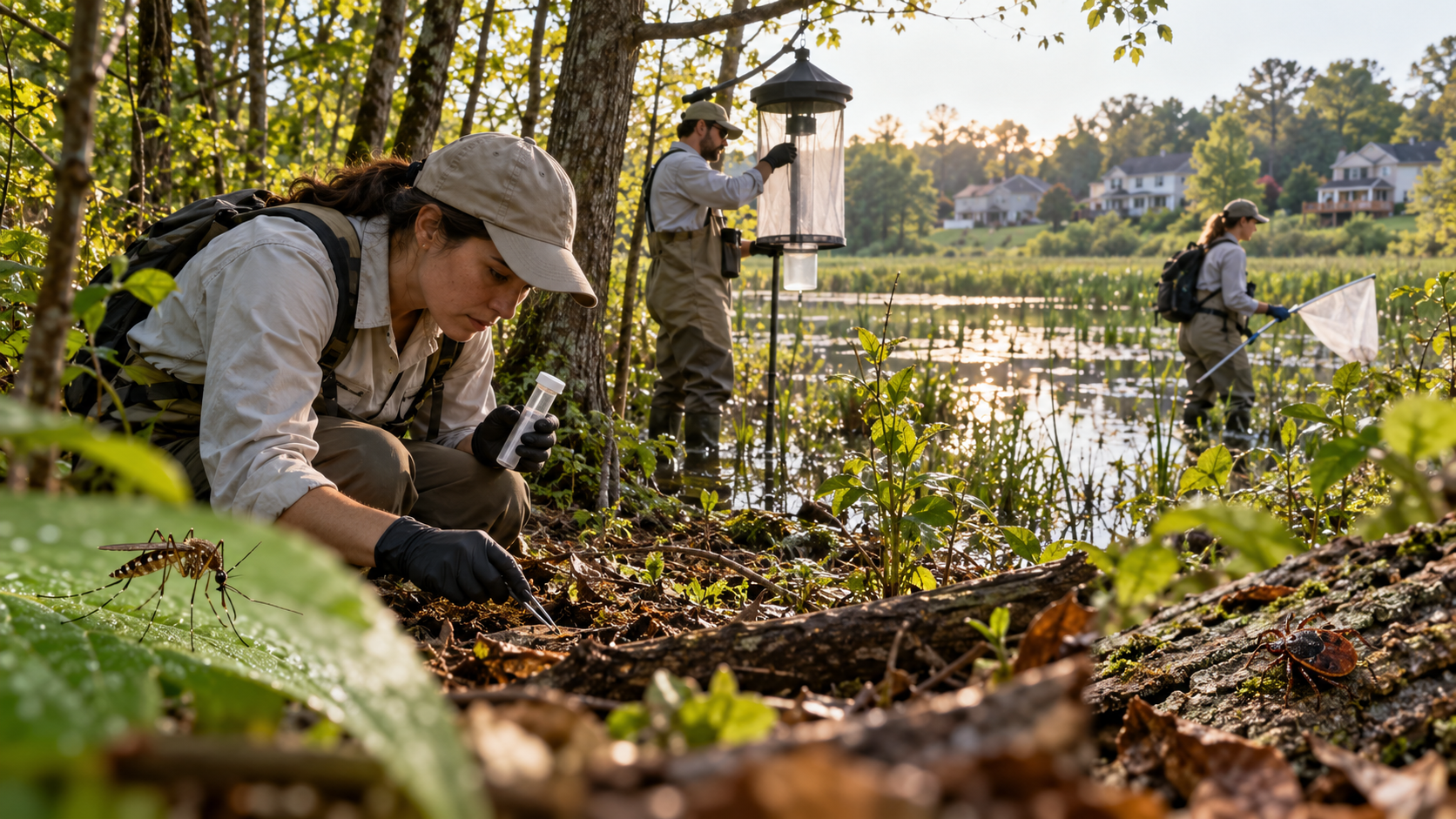
Prevention can include repellents, protective clothing, tick checks, screens, bed nets, removing standing water, targeted vector control, vaccination for some diseases, and rapid diagnosis. Communities also monitor vectors and human cases. The safest combination depends on the local disease and should minimize unnecessary harm to people and ecosystems.
A vector carries the infectious agent between hosts. Reservoir hosts can maintain the pathogen in nature, while humans may be incidental or central hosts.
Understanding each role helps investigators identify where the transmission cycle can be interrupted.
Vector abundance, biting behavior, pathogen prevalence, human exposure, housing, and prevention practices all influence risk.
Weather and climate can affect these factors, but local surveillance is needed to know what is happening now.
Personal protection reduces bites, while community measures manage breeding sites, monitor vectors, and respond to detected transmission.
Control programs should use evidence-based methods and track effectiveness, resistance, environmental effects, and community concerns.
Explore more "Explainers"
Discover additional explainers across politics, science, business, technology, and other fields. Each explainer breaks down a complex idea into clear, everyday language—helping you better understand how major concepts, systems, and debates shape the world around us.