

Innate vs. Adaptive Immunity Explainer
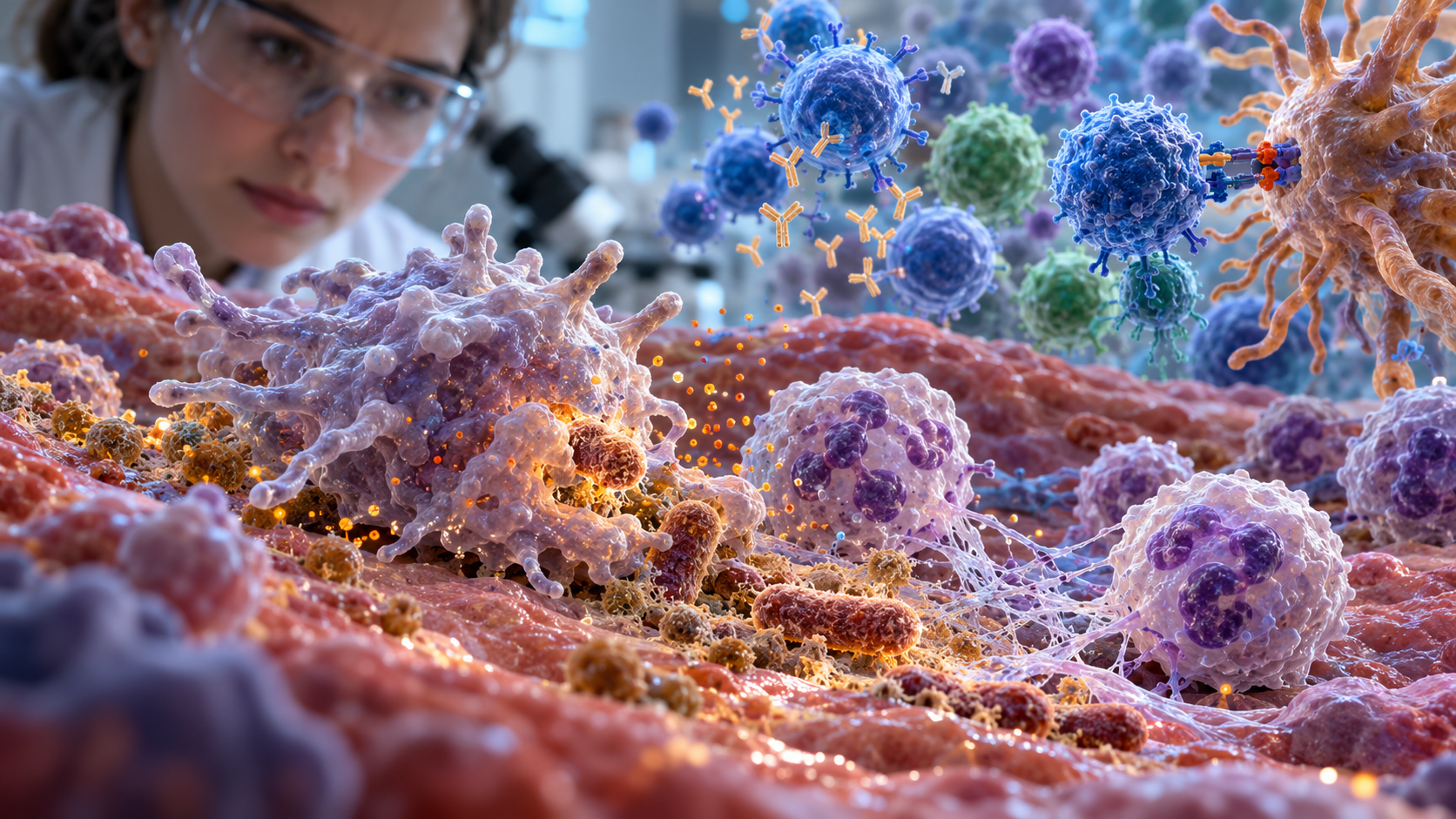
Innate immunity is the body’s rapid, broadly acting defense against injury and infection. Physical barriers such as skin and mucus, chemical defenses, inflammation, complement proteins, and cells including neutrophils and macrophages respond to common signs of danger. These defenses act within minutes or hours.
Adaptive immunity develops a targeted response to particular antigens. B cells can produce antibodies, while T cells help coordinate immunity or kill infected cells. The first response generally takes longer to build, but some activated cells become memory cells that respond faster during a later encounter.
The two systems are not independent. Innate cells detect danger, contain infection, and present information that helps activate adaptive cells. Antibodies can then mark microbes for destruction by innate cells and complement. Their continuous communication creates a coordinated response rather than two separate armies.
Both systems can protect and harm. A weak response may allow infection, while an excessive or misdirected response can damage tissue. Age, genetics, medicines, nutrition, prior exposure, and health conditions can affect the balance. Vaccines primarily train adaptive immunity while also relying on innate signals to start the response.
Innate defenses recognize shared patterns and act quickly. Adaptive cells recognize highly specific targets and usually need time to multiply on first exposure.
A faster response is not automatically better; the systems perform different and complementary jobs.
Innate cells release signals and present antigens that guide B and T cells. Adaptive antibodies and T-cell signals then sharpen the overall response.
This feedback helps match the type and strength of defense to the threat.
Classical long-term immune memory is a feature of adaptive B and T cells. It is the basis of durable protection from many vaccines.
Innate responses can also change after exposures, but they do not use the same antigen-specific memory mechanisms.
Explore more "Explainers"
Discover additional explainers across politics, science, business, technology, and other fields. Each explainer breaks down a complex idea into clear, everyday language—helping you better understand how major concepts, systems, and debates shape the world around us.