

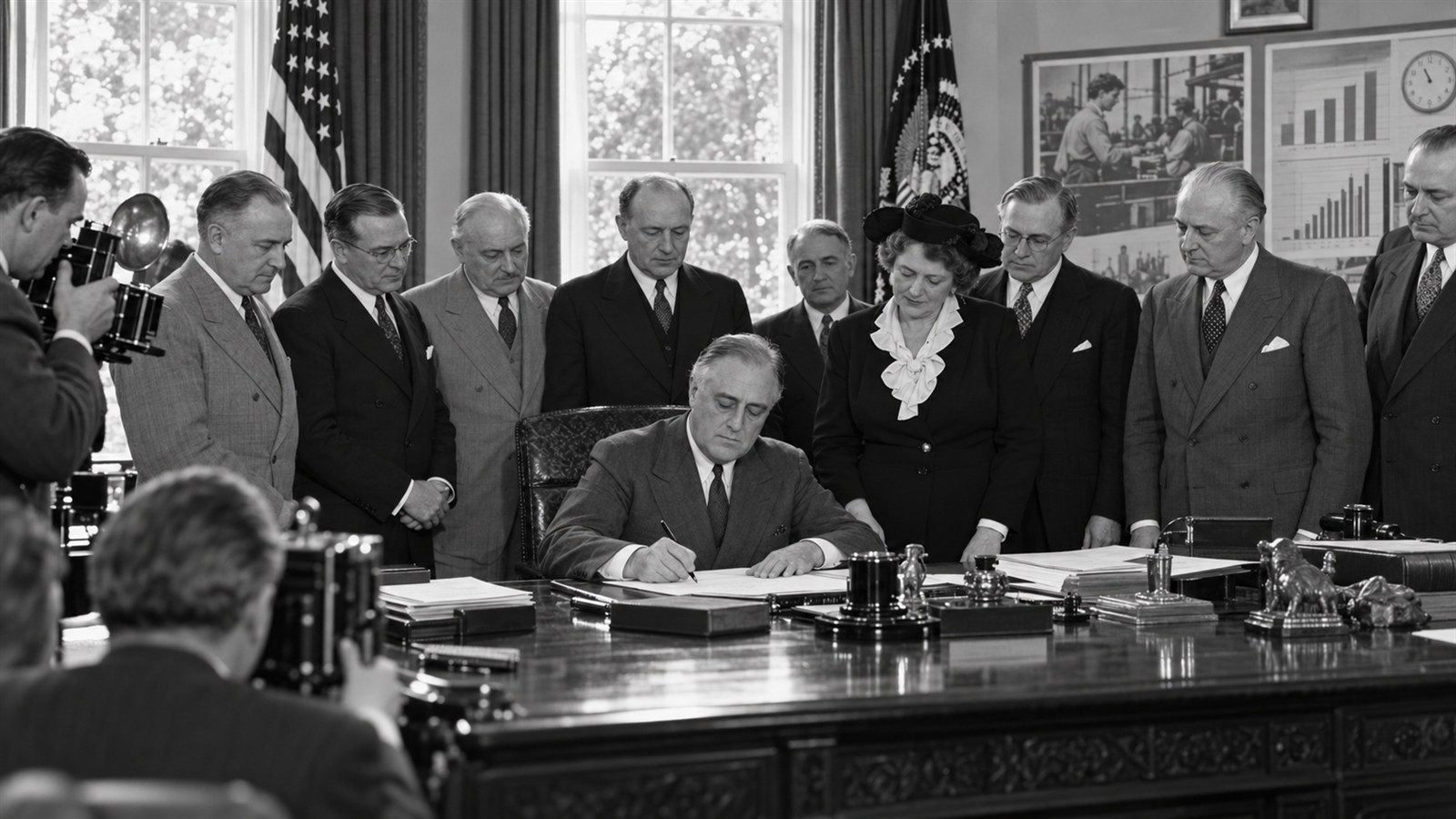
On This Day in Business: June 25, 1938
On June 25, 1938, President Franklin D. Roosevelt signed the Fair Labor Standards Act. The law established a federal minimum wage of 25 cents an hour, a maximum 44-hour workweek for covered employees, overtime pay, and restrictions on oppressive child labor. It followed years of political conflict over whether the national government could set basic labor conditions across industries engaged in interstate commerce. Secretary of Labor Frances Perkins and many reformers had pressed for standards during the Great Depression, when severe unemployment and weak bargaining power allowed wages and hours to vary widely. The act took effect on October 24, 1938, and initially covered only part of the workforce.
The business problem was a race in which low-standard employers could undercut firms paying higher wages or limiting hours. Federal rules created a floor across state lines, reducing one incentive to compete through extreme labor conditions. Coverage, exemptions, definitions, and enforcement became crucial because the statute did not apply identically to every worker or activity. The new Wage and Hour Division interpreted requirements, investigated complaints, and brought cases. Employers had to track time, classify workers, adjust schedules, and preserve records. Compliance therefore changed payroll administration as well as the price of labor.
Congress amended the act repeatedly, broadening coverage and raising standards as the economy changed. Courts tested its constitutionality, and employers, workers, and regulators disputed what counted as work, regular pay, overtime, or exempt employment. The law influenced scheduling, automation, location decisions, and the structure of jobs. It also created a common vocabulary for hours and wages that shaped collective bargaining and human-resource systems. Businesses could still compete through productivity, skill, service, technology, and organization, but the statutory floor limited some methods of lowering cost by transferring risk to workers.
The signing matters because labor standards are market rules, not only employee benefits. They influence prices, operating models, recordkeeping, and the boundaries between firms. A company may experience a wage floor as a cost, while also benefiting when competitors must meet the same minimum and workers have more purchasing power. The history also warns against treating compliance as a one-time legal review. New work arrangements continually raise questions about classification, time, and responsibility. Effective managers build accurate systems for scheduling and pay, test incentives for unintended behavior, and understand that a workforce model can create legal and reputational liabilities even when the immediate numbers look efficient. Worker understanding matters as much as employer systems. Rights that exist only in statutes may not change practice if people cannot recognize violations or report them safely. Clear notices, accessible records, and credible enforcement turn a formal rule into a standard that influences everyday decisions.
The 1938 act set a 25-cent minimum wage, a 44-hour maximum week, overtime rules, and child-labor restrictions for covered work.
National standards addressed competition among interstate employers that could otherwise seek advantage through extreme labor conditions.
Initial coverage was limited, making definitions, exemptions, recordkeeping, investigation, and enforcement central to practical impact.
Employers changed payroll, scheduling, time tracking, and job classification to operate within the new federal framework.
Later amendments and court decisions expanded the act while disputes continued over compensable time and exempt employment.
The law shows that labor standards shape market competition, operating systems, purchasing power, and corporate risk at the same time.
Explore more of "On This Day ..."
Discover more events from the same date across news, politics, technology, sports, and other fields. Each link highlights significant moments that shaped history on different fronts.