

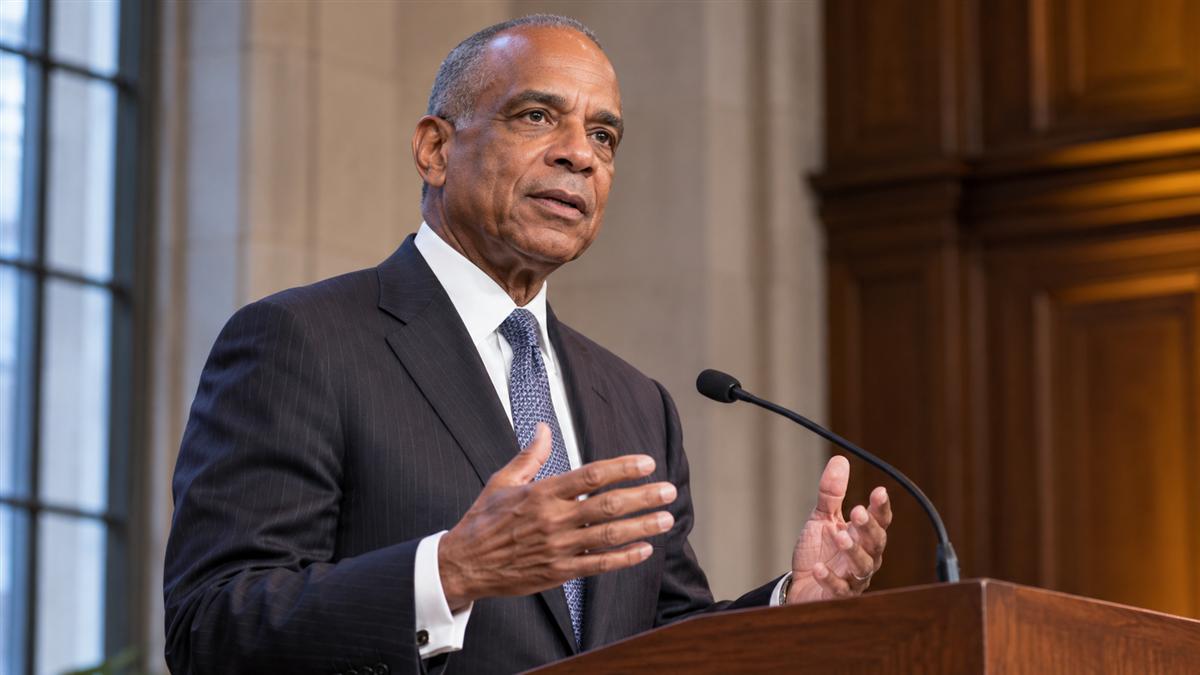
“A business exists to serve—to serve its customers and the communities in which it operates.”
Kenneth I. Chenault made this case in his 2010 Wake Forest University commencement address. Speaking after the financial crisis, the American Express leader rejected the idea that permission to pursue profit releases a corporation from obligations to the society that makes commerce possible. Service includes a useful customer exchange and the effects a company has through employment, operations, access, conduct, and community presence. Chenault’s formulation makes legitimacy relational: the enterprise succeeds within institutions and places whose trust cannot be reduced to a quarterly number. Read closely, the line is not a promise of easy certainty. It asks decision makers to examine the assumptions and conditions behind ordinary results, especially when familiar routines conceal what customers, employees, or the wider system actually experience.
Boards can connect strategy with explicit customer and community outcomes, then assign measures, owners, and review dates. Local stakeholders should have channels to surface harm, while investment and compensation reflect obligations the company claims are material. Managers can make the principle observable by naming the decision it should change, the evidence they will review, and the person accountable for follow-through. That discipline keeps an admired quotation from becoming wall decoration and turns it into a repeatable way of working.
Service rhetoric is weak when philanthropy distracts from harmful core operations or when leaders presume to define a community’s needs alone. Responsible service begins with product truth, fair treatment, law, tax, safety, and listening; charitable activity cannot purchase an exemption. The useful interpretation keeps ambition and restraint together. Leaders should ask who benefits, who bears the risk, what would disconfirm the current belief, and whether people have a fair way to challenge the decision before a local success is mistaken for a durable one.
Platforms and AI providers can affect communities far from headquarters through information, employment, energy, and access. Leaders need impact review early in product and infrastructure decisions, not after scale turns a foreseeable concern into a public crisis. A service ledger can place customer benefit, community effect, unresolved harm, and corrective investment beside conventional financial performance. A practical review can compare the stated promise with customer outcomes, employee experience, operating evidence, and unintended effects. It should record what changed, what remains uncertain, and when the decision will be examined again with documented evidence. The final test is not whether the line sounds inspiring, but whether it helps the organization learn sooner, act more responsibly, and create value that can survive scrutiny over time.
Kenneth I. Chenault made this case in his 2010 Wake Forest University commencement address. Speaking after the financial crisis, the American Express leader rejected the idea that permission to pursue profit releases a corporation from obligations to the society that makes commerce possible.
Service includes a useful customer exchange and the effects a company has through employment, operations, access, conduct, and community presence. Chenault’s formulation makes legitimacy relational: the enterprise succeeds within institutions and places whose trust cannot be reduced to a quarterly number.
Boards can connect strategy with explicit customer and community outcomes, then assign measures, owners, and review dates. Local stakeholders should have channels to surface harm, while investment and compensation reflect obligations the company claims are material.
Service rhetoric is weak when philanthropy distracts from harmful core operations or when leaders presume to define a community’s needs alone. Responsible service begins with product truth, fair treatment, law, tax, safety, and listening; charitable activity cannot purchase an exemption.
Platforms and AI providers can affect communities far from headquarters through information, employment, energy, and access. Leaders need impact review early in product and infrastructure decisions, not after scale turns a foreseeable concern into a public crisis.
A service ledger can place customer benefit, community effect, unresolved harm, and corrective investment beside conventional financial performance.
Explore more "Quotes of The Day"
Discover more notable quotes from influential voices across politics, science, business, technology, sports, and culture. Each quote offers insight into how ideas, beliefs, and decisions shape the world around us.