

On This Day in Politics: March 31, 1968
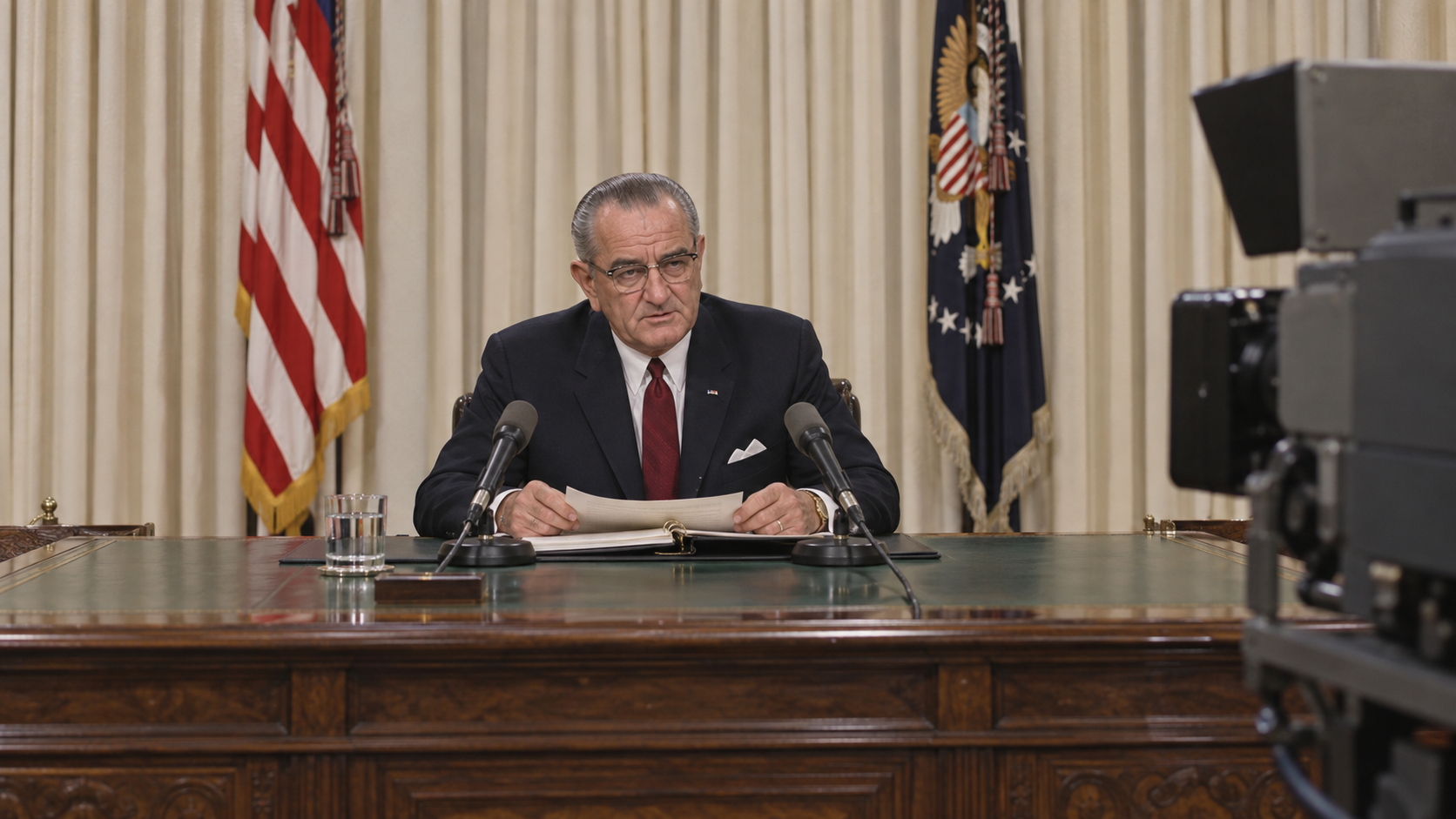
On March 31, 1968, President Lyndon B. Johnson ended a nationally televised address with the announcement that he would neither seek nor accept the Democratic nomination for another presidential term. The statement changed the direction of an already contentious election campaign. Johnson was withdrawing from the contest, not resigning from the presidency. His address began with Vietnam and announced a substantial reduction in American attacks on the North, while leaving an exception near the demilitarized zone. It was a partial bombing halt, not an end to the war. He linked that initiative to an appeal for negotiations and presented his political decision as a way to concentrate on presidential responsibilities.
The announcement came amid challenges inside his own party. Senator Eugene McCarthy’s stronger-than-expected performance in the New Hampshire primary had exposed opposition to Johnson, and Senator Robert F. Kennedy entered the race on March 16. Yet the prospect of losing the nomination does not fully explain Johnson’s decision. Recorded conversations show that he still received assurances of support from influential party leaders. They also reveal deep frustration over stalled domestic policy. War spending and budget pressures complicated his effort to secure a tax surcharge, while proposed spending cuts threatened support for his Great Society programs. The pressures of governing and campaigning had become tightly connected.
Lady Bird Johnson’s diary provides a different view of the day, emphasizing the family’s emotions and the uncertainty surrounding the speech. That morning, their daughter Lynda returned after saying goodbye to her husband as he departed for Vietnam. Work on the address continued, and Johnson discussed the proposed withdrawal statement with a small group. Lady Bird recalled that even people who had considered the possibility were shaken by hearing it stated so firmly. Before the broadcast, she entered an office crowded with television equipment and cables. Her account places the public announcement inside a day of private grief, discussion, preparation, and unresolved expectations.
March 31 remains significant because it exposed the limits of presidential authority even while Johnson exercised it in a dramatic way. His public explanation emphasized national unity and peace, while the private recordings show a leader struggling to preserve his domestic agenda and political coalition. Lady Bird’s diary adds the human cost of those pressures without settling every question about his motives. Taken together, these records resist a simple account in which one primary result or one rival forced an inevitable outcome. The speech removed an incumbent from the nomination contest while leaving him responsible for the difficult decisions of the presidency during the remaining months of his term.
Johnson announced his decision on national television on March 31, 1968.
He declined another nomination but remained president.
The speech also announced a partial halt to attacks on North Vietnam.
McCarthy and Kennedy had challenged him within the Democratic Party.
Private recordings reveal frustration over taxes, spending, and his domestic agenda.
Lady Bird’s diary records the family’s uncertainty and the preparations for the broadcast.
Explore more of "On This Day ..."
Discover more events from the same date across news, politics, technology, sports, and other fields. Each link highlights significant moments that shaped history on different fronts.