

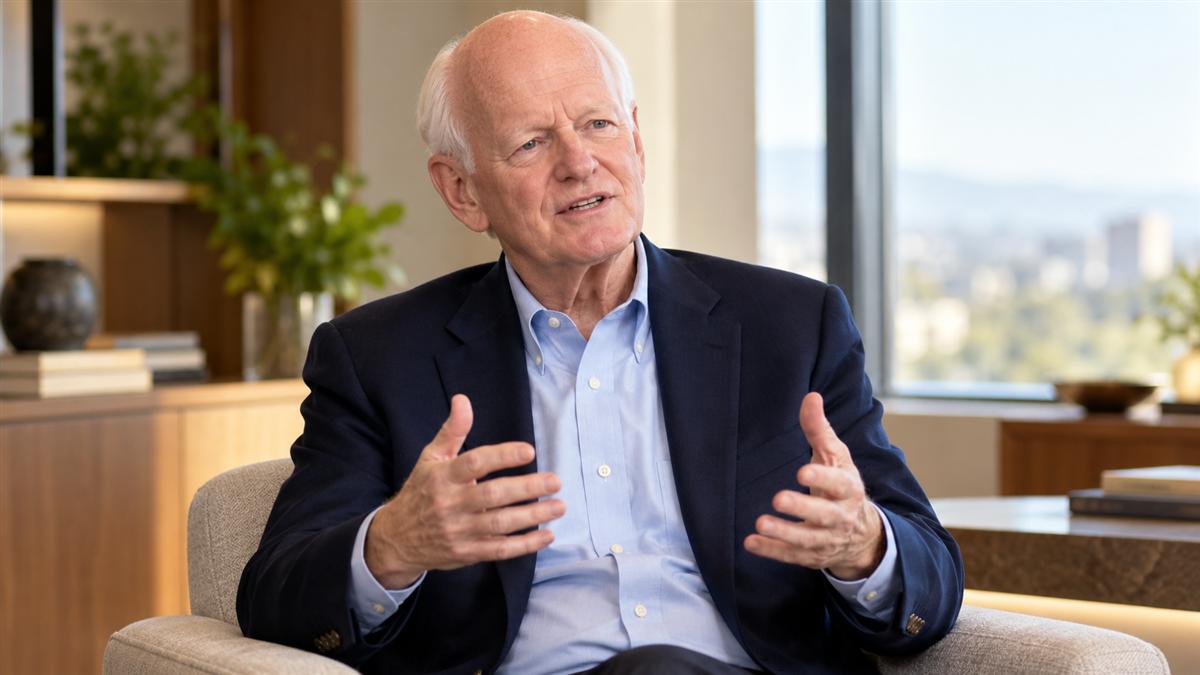
“What got you here won’t get you there.”
Marshall Goldsmith used this line as the title and organizing idea of his 2007 leadership book. His coaching work showed that the habits associated with earlier success can become obstacles when responsibility, relationships, and the demands of a role change. Success reinforces behavior because people naturally credit what preceded a good result. Yet technical brilliance, relentless competition, or always supplying the answer may stop serving a leader whose new work is listening, developing others, and coordinating judgment across a larger system. Behind the concise wording is a claim about how organizations create results. It encourages leaders to look beyond individual effort and examine design, incentives, information, relationships, and the customer context that determine whether a good intention becomes reliable performance.
Leaders can ask colleagues for one behavior that would make them more effective, choose a visible change, and follow up regularly with the people affected. Measurement should focus on their experience of the behavior, not the leader’s intention or self-assessment. Managers can translate the claim into a small experiment with a baseline, an owner, a defined customer or employee outcome, and a review date. Specificity protects the work from drifting into broad language that nobody can challenge or verify.
Growth does not require discarding every strength or performing a fashionable personality. The task is to identify when a useful habit is overapplied, preserve the underlying value, and add a behavior that fits the new context. Responsible use also requires naming the tradeoff. Speed, cost, autonomy, safety, equity, and learning may not all improve at once. People closest to the consequences should have a meaningful voice, and uncertainty should be reported instead of hidden behind confidence.
AI can extend a leader’s output while also strengthening habits of speed, certainty, and one-way communication. Advancement increasingly depends on creating conditions for collective intelligence, challenging automated answers, and making it safe for others to improve the decision. A quarterly leadership check-in can pair one retained strength with one limiting habit, a replacement behavior, and feedback from the colleagues who are best positioned to observe the change. Evidence from the experiment can guide scaling, revision, or stopping. The durable lesson is to join purpose with measurement and human judgment, so the organization becomes better at seeing reality and responding before a local success or failure hardens into mythology. Recording the decision and its limits gives colleagues a foundation they can inspect, challenge, and improve instead of asking them to rely on memory, authority, or an unexplained result.
Marshall Goldsmith used this line as the title and organizing idea of his 2007 leadership book. His coaching work showed that the habits associated with earlier success can become obstacles when responsibility, relationships, and the demands of a role change.
Success reinforces behavior because people naturally credit what preceded a good result. Yet technical brilliance, relentless competition, or always supplying the answer may stop serving a leader whose new work is listening, developing others, and coordinating judgment across a larger system.
Leaders can ask colleagues for one behavior that would make them more effective, choose a visible change, and follow up regularly with the people affected. Measurement should focus on their experience of the behavior, not the leader’s intention or self-assessment.
Growth does not require discarding every strength or performing a fashionable personality. The task is to identify when a useful habit is overapplied, preserve the underlying value, and add a behavior that fits the new context.
AI can extend a leader’s output while also strengthening habits of speed, certainty, and one-way communication. Advancement increasingly depends on creating conditions for collective intelligence, challenging automated answers, and making it safe for others to improve the decision.
A quarterly leadership check-in can pair one retained strength with one limiting habit, a replacement behavior, and feedback from the colleagues who are best positioned to observe the change.
Explore more "Quotes of The Day"
Discover more notable quotes from influential voices across politics, science, business, technology, sports, and culture. Each quote offers insight into how ideas, beliefs, and decisions shape the world around us.