

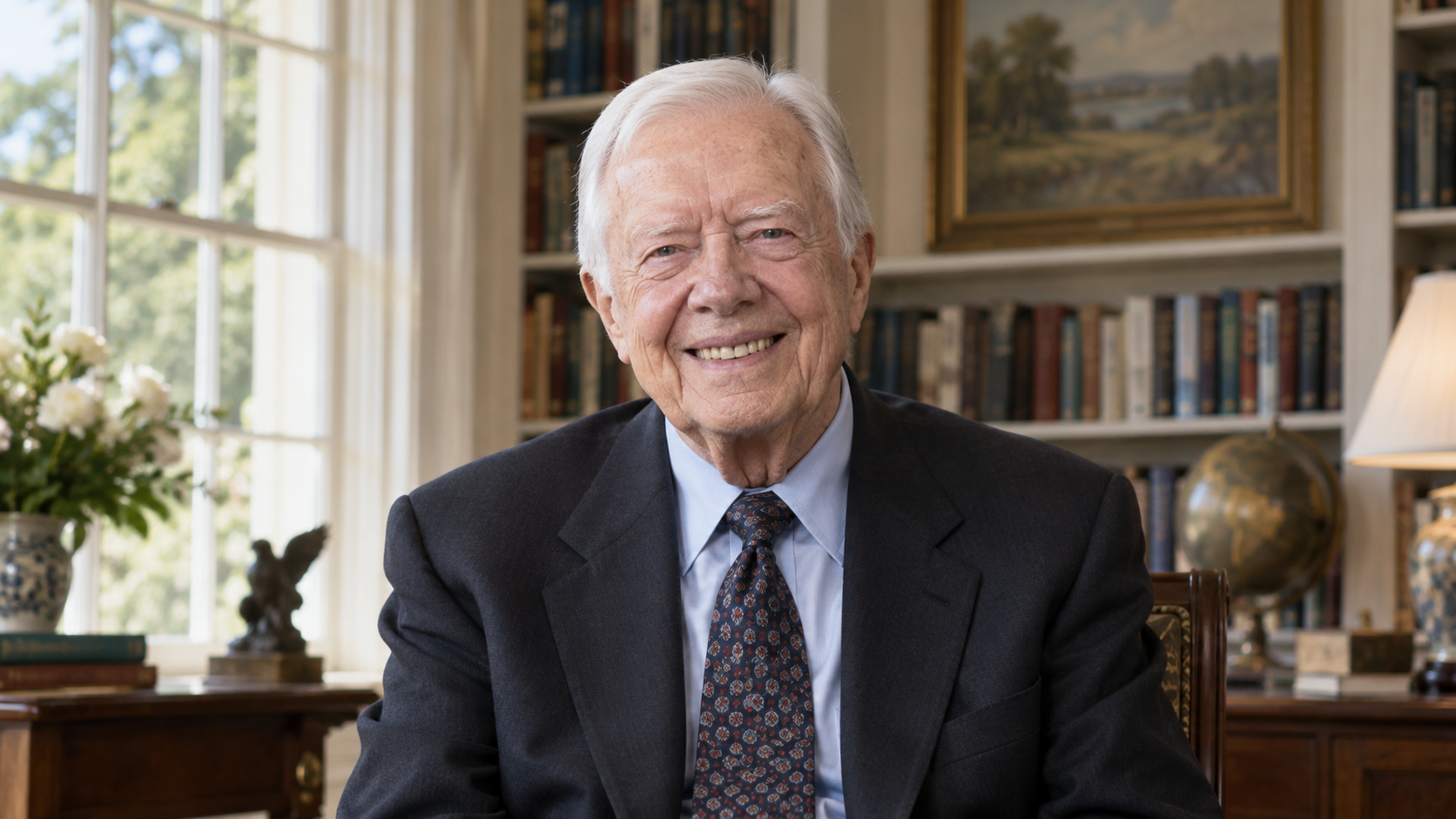
“We will not learn how to live together in peace by killing each other’s children.”
Jimmy Carter delivered this sentence near the close of his Nobel lecture at Oslo City Hall on December 10, 2002. The former American president was discussing international cooperation, human rights, and the costs of conflict. He recalled his military service and the responsibilities of a president facing the dangers of the Cold War. His conclusion did not deny that force might sometimes be necessary. It insisted that necessity could not transform war into something good. The featured quotation makes the human consequences vivid by focusing on children whose lives are affected by choices made far above them. It asks what kind of relationship violence can actually teach societies to sustain.
Learning to live together describes a task that extends beyond achieving a temporary advantage over an opponent. Even after a military objective is reached, communities must confront fear, grief, distrust, and the practical work of rebuilding. Carter’s sentence draws attention to that continuing relationship. People whose lives are treated as expendable may have little reason to trust a future promise of protection. For readers, the quotation therefore encourages scrutiny of a policy’s claimed route from destruction to peace. Naming an intended outcome is insufficient; the argument needs an account of how people will reach it and how the harm imposed along the way will be acknowledged and addressed.
The speech belongs to a particular diplomatic moment. Carter discussed Iraq, the United Nations, and the danger of powerful countries adopting preventive war as a principle. These were arguments made in 2002, rather than commentary on a later conflict. The sentence should also be read alongside his acknowledgment that war could sometimes be a necessary evil. Presenting him as saying every use of force was avoidable would omit an explicit qualification. Equally, the line is not a complete rule for resolving questions about self-defense or civilian protection. It supplies a moral constraint on political reasoning: an asserted necessity must still face the reality of human loss, rather than allowing that loss to disappear behind an abstract claim of success.
A practical application begins with the evidence leaders offer when they say that a policy will create security. What costs do they anticipate, what alternatives have they examined, and how will they judge whether the promised improvement occurs? These questions do not eliminate hard choices. They make the responsibilities attached to those choices visible. Carter’s focus on children also resists the habit of describing entire populations through the conduct of their rulers or armed groups. A political community contains people who neither designed the conflict nor control its course. The quotation remains significant because it puts their vulnerability inside the discussion of peace, requiring an account of coexistence that can be judged by the treatment of human beings.
Carter delivered the lecture on December 10, 2002, as a former president.
His discussion of Iraq and preventive war belongs to the diplomatic circumstances of 2002.
He explicitly acknowledged that war could sometimes be necessary, while insisting it remained an evil.
The quotation focuses on human consequences and does not itself resolve every question about self-defense.
Policies promising security should explain their anticipated costs, alternatives, and measures of success.
Children and other civilians should not be treated as interchangeable with the leaders or armed groups directing a conflict.
Explore more "Quotes of The Day"
Discover more notable quotes from influential voices across politics, science, business, technology, sports, and culture. Each quote offers insight into how ideas, beliefs, and decisions shape the world around us.