

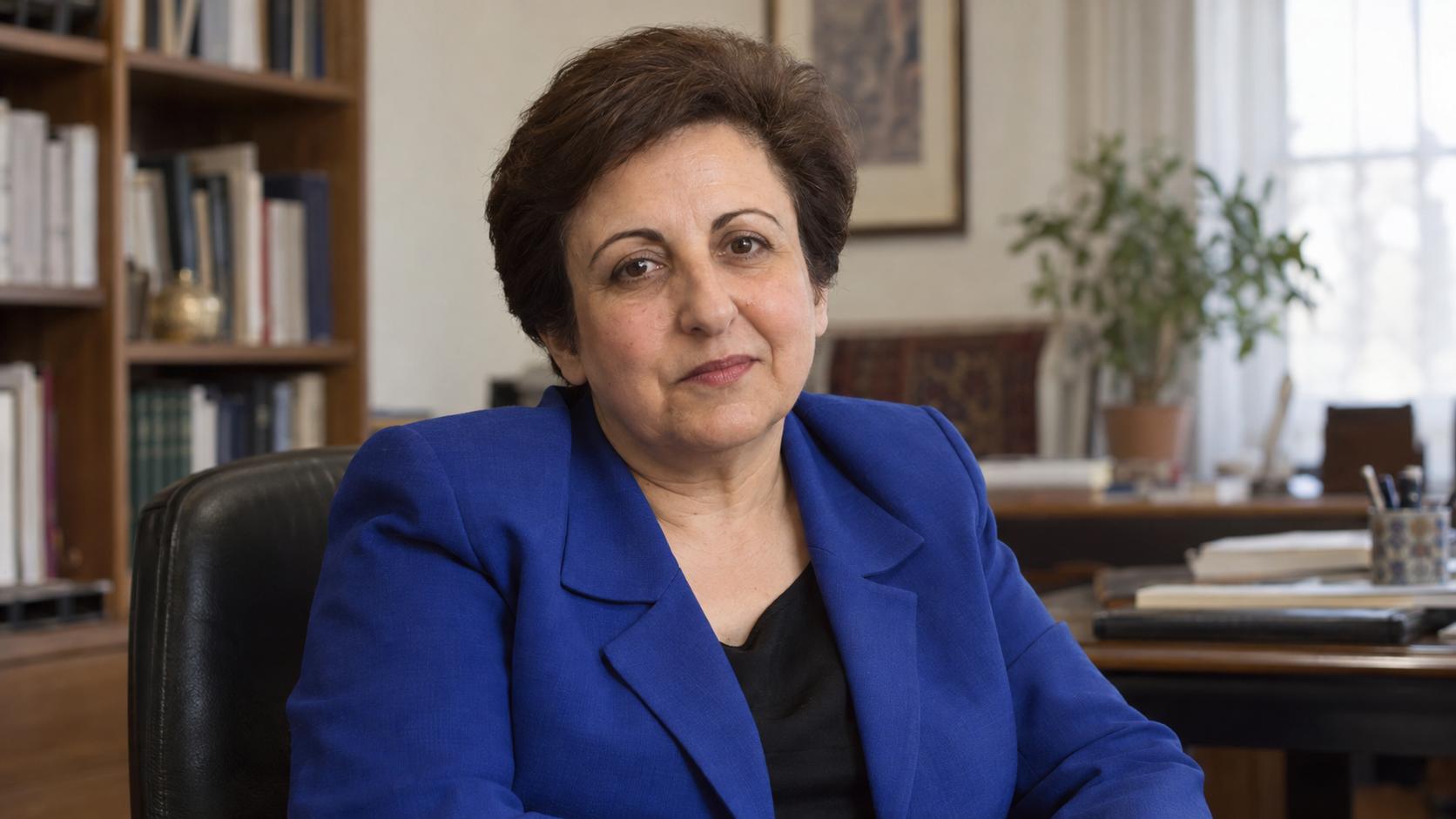
“This prize belongs to the people of Iran.”
An award places one person at the center of attention, but that person can use the occasion to move the spotlight. Shirin Ebadi did so in her Nobel lecture in Oslo on December 10, 2003. The Iranian lawyer described the recognition as encouragement for efforts toward human rights and democracy, then directed its meaning toward the people of Iran. This quotation follows the published English translation of her lecture. It is a statement about solidarity and the public meaning of the award, rather than a literal transfer of the medal. The person being honored wanted listeners to recognize a wider struggle.
The lecture coincided with the fifty-fifth anniversary of the Universal Declaration of Human Rights. Ebadi connected that history with women’s participation, legal protection, and people’s desire to shape their own political future. Her argument also challenged governments that used security or tradition to justify restricting rights. She did not reserve scrutiny for only one country or one political camp. The award, in her account, could give encouragement to people seeking change while drawing international attention to their work. Its importance lay partly in that support, rather than in suggesting that the recognition itself had secured the freedoms she defended.
The sentence asks how public credit should be distributed. Political movements depend on work that rarely receives a ceremony: preparing a legal case, supporting a family, recording an abuse, sustaining a meeting, or giving others confidence to participate. A visible representative can make those efforts easier to recognize, but can also overshadow them. Sharing recognition helps resist the idea that rights arrive because a single exceptional person grants them. It gives a movement a larger cast of actors. The relevant measure is whether attention helps others continue their work and exercise their voice, rather than merely enlarging a leader’s reputation.
There is an equally useful caution in the word people. No society speaks with one opinion, and an admired advocate does not gain authority to erase its disagreements. The strongest reading of Ebadi’s statement preserves that plurality: recognition can support people’s capacity to seek rights without dictating all their choices. For readers, the quotation offers a way to assess honors and public platforms. Look beyond who receives them to whose work becomes visible and whose opportunities improve. A prize has a political life after the applause, through the forms of solidarity and attention that its recipient chooses to build. Collective recognition matters most when it broadens the space for people whose work is rarely named.
Ebadi spoke in Oslo on December 10, 2003. The quotation follows the published English translation of her Nobel lecture.
The sentence follows her hope that international recognition would support work for democracy and human rights in Iran and the wider region.
She presents individual recognition as a form of encouragement for collective work. The award draws attention to people seeking rights.
The wording is a symbolic expression of solidarity. It does not claim that a ceremony had already delivered the political changes described.
When a public figure receives an honor, look for the less visible people whose work made the achievement possible.
Sharing credit is most meaningful when it expands participation and preserves different voices, rather than substituting one leader for a whole society.
Explore more "Quotes of The Day"
Discover more notable quotes from influential voices across politics, science, business, technology, sports, and culture. Each quote offers insight into how ideas, beliefs, and decisions shape the world around us.