

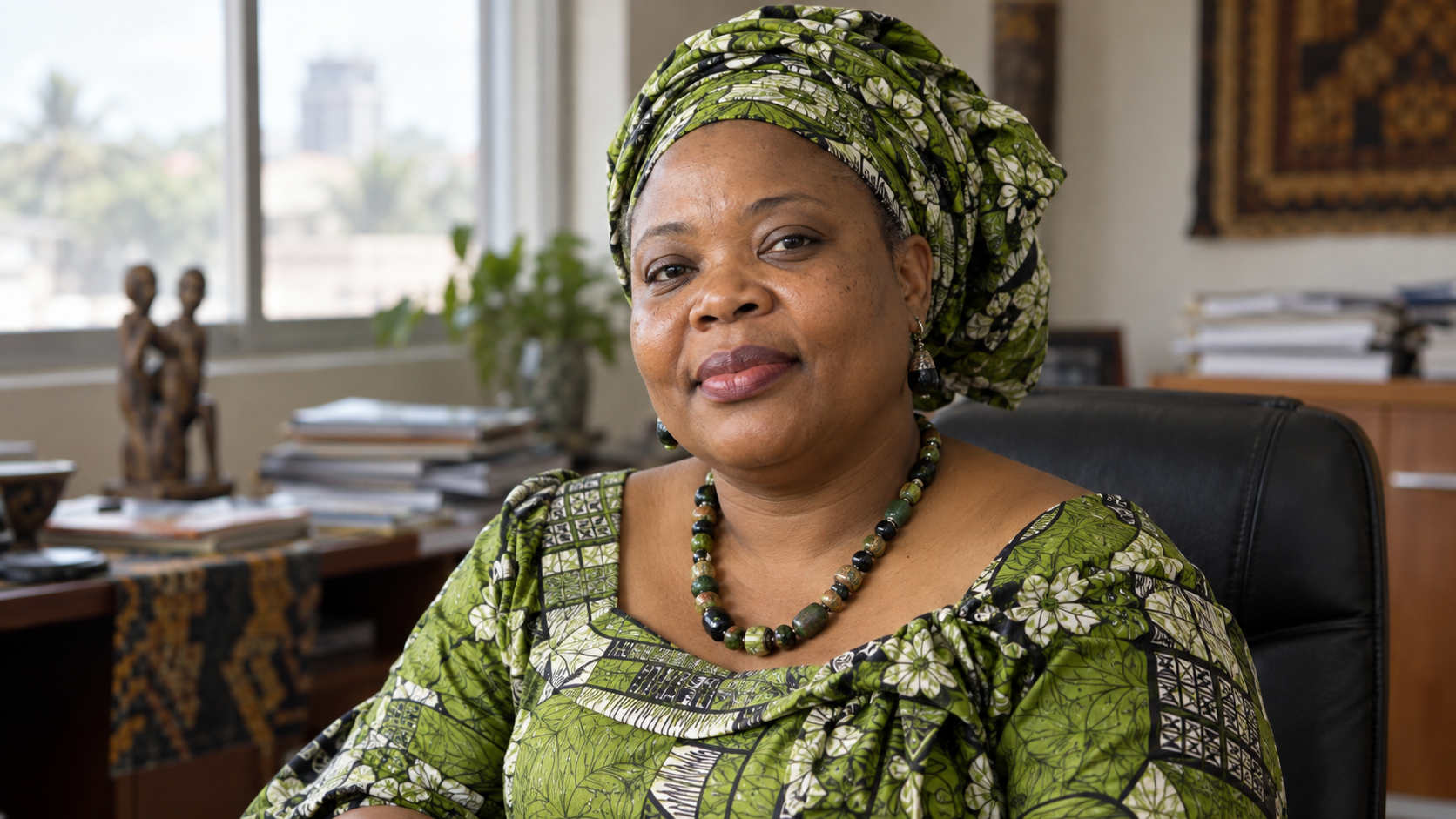
“We used our pain, broken bodies and scarred emotions to confront the injustices and terror of our nation.”
For Leymah Gbowee, a peace movement began with people whose lives had already been changed by war. In her Nobel lecture in Oslo on December 10, 2011, the Liberian organizer recalled women bringing their experience of violence into a common effort to confront it. The featured sentence describes that transformation. Its force comes from the collective subject: suffering had isolated and harmed people, but organizing gave them a way to act together. Gbowee did not present pain as a qualification others should have to acquire. She described what women chose to do in circumstances they had never chosen for themselves.
The lecture traces the Women of Liberia Mass Action for Peace campaign to a small gathering in early 2003, as war threatened the capital, Monrovia. In Gbowee’s account, the women began with very little money and a strong conviction that further violence would deepen the destruction. Their response was nonviolent action. She shared the 2011 Nobel Peace Prize with Ellen Johnson Sirleaf and Tawakkol Karman, while using the occasion to honor women working for peace more broadly. The narrative places practical cooperation before international recognition. The movement’s significance was rooted in action during the conflict, not created by the later award.
Collective action changes what a private experience can do in public life. A person who is treated as an isolated victim can become a witness, an organizer, or a participant in decisions that affect the community. That change requires more than a compelling story. People need time, trust, shared purpose, and arrangements that make it possible to remain involved. They may also need support without being required to repeat their worst experiences. Reading Gbowee’s sentence this way keeps the emphasis on agency. The suffering is part of the history; the ability to organize is the political development the sentence brings into view.
A peace effort should not make survival depend on displaying strength for an audience. Some people can speak publicly, while others contribute privately or need space to recover. The collective language leaves room for those different roles. It also challenges negotiations that recognize armed actors while overlooking people who have worked to end the violence without taking up arms. The question for institutions is concrete: whose experience shapes the agenda, and who is allowed to influence the settlement? Gbowee’s recollection broadens the answer. People carrying the consequences of war can become makers of peace when their participation is taken seriously.
Gbowee delivered this Nobel lecture on December 10, 2011. She recalled the beginnings of the Liberian women’s peace campaign in 2003.
The quoted sentence is her own description of collective action. A quotation from Martin Luther King elsewhere in the lecture is a separate attribution.
The passage connects shared suffering with organized nonviolent resistance. It emphasizes women acting together rather than remaining isolated.
It should not be read as suggesting that suffering is desirable or that every survivor has an obligation to become a public activist.
Ask who is included in a peace process beyond those carrying weapons. People affected by war need real opportunities to influence decisions.
Respect different forms of participation. Public testimony, quiet organizing, practical support, and recovery can all have a place in a community’s response.
Explore more "Quotes of The Day"
Discover more notable quotes from influential voices across politics, science, business, technology, sports, and culture. Each quote offers insight into how ideas, beliefs, and decisions shape the world around us.