

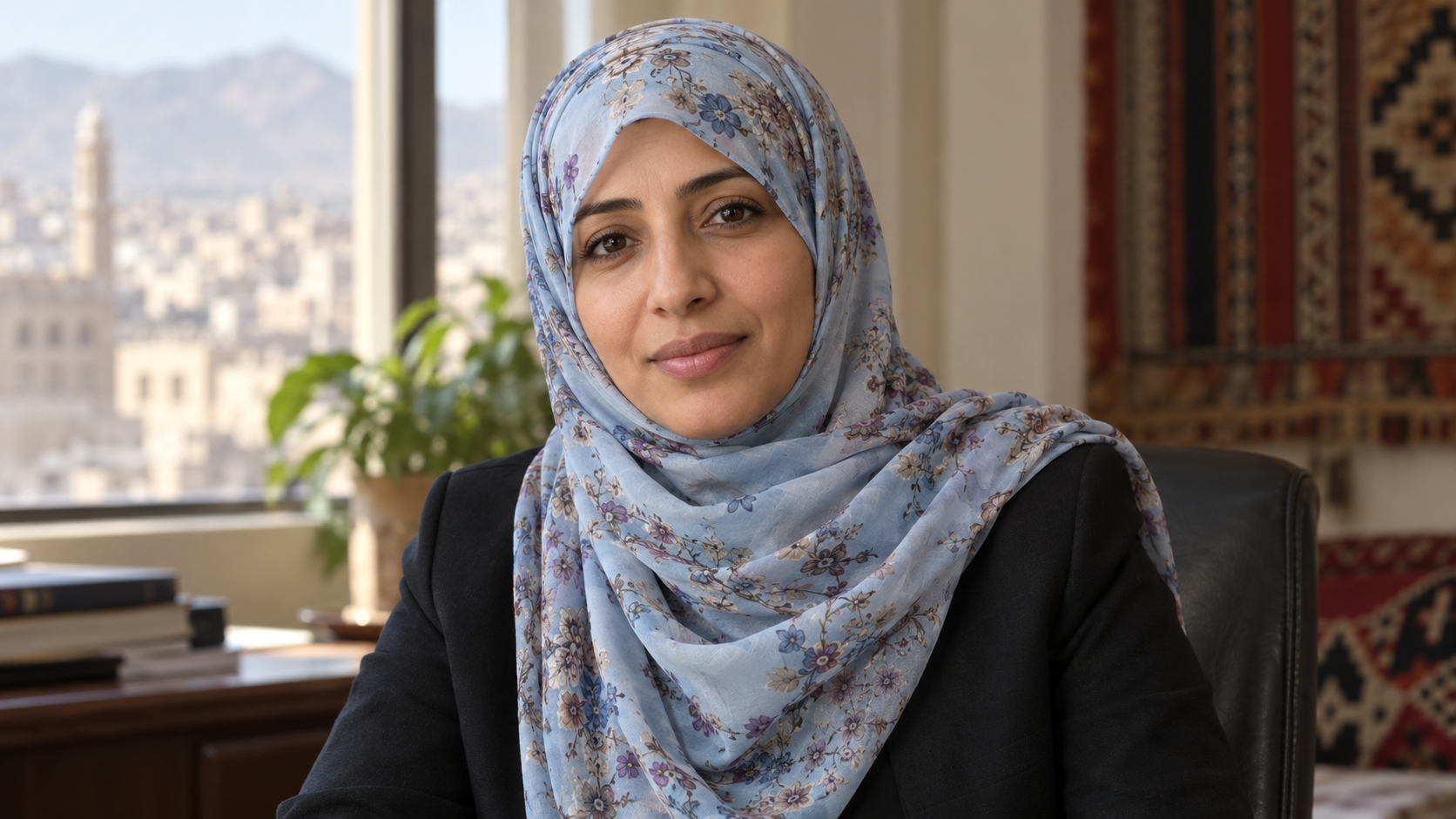
“Peace does not mean just to stop wars, but also to stop oppression and injustice.”
A country can be quiet while its people are afraid to speak. Tawakkol Karman’s Nobel lecture challenges any definition of peace that overlooks that possibility. Speaking in Oslo on December 10, 2011, the Yemeni journalist and activist linked the end of war with the end of oppression and injustice. The featured sentence follows the published English translation. It belongs to the period of the Arab Spring, when demands for political freedom and dignity were confronting entrenched authority. Karman’s point was that the condition of ordinary people must enter the judgment of whether a society has actually become peaceful.
The speech celebrated peaceful struggle while drawing attention to repression directed against those seeking change. Karman shared the Nobel Peace Prize that year with Ellen Johnson Sirleaf and Leymah Gbowee, recognized for efforts involving women’s safety and participation in peacebuilding. Her own work included Women Journalists Without Chains and advocacy for freedom of expression in Yemen. The lecture’s expectations should be read in their 2011 setting. They express the aspirations of that moment, not a claim that the region’s subsequent conflicts had already been resolved or that every movement followed an identical course. Hope in a speech remains distinct from a later outcome.
The broader definition of peace changes what observers must look for. The absence of fighting is essential, but the daily ability to challenge a decision, seek protection, and participate without coercion also matters. Those conditions are harder to display in a single photograph or summarize in a headline. They require attention to institutions and to the people whose complaints do not reach official reports. A settlement can reduce immediate violence while leaving a serious question about rights unanswered. Recognizing that gap does not make a ceasefire worthless. It helps identify the further work needed to give peace a durable public foundation.
There is no automatic policy contained in the sentence. Governments, negotiators, and communities must still determine how to protect life, address competing claims, and build safeguards that people can use. The quotation offers a standard against which those efforts can be assessed. Ask whether an arrangement makes people safer and freer, whether critics can speak, and whether an injured person has somewhere to turn. Peace then becomes a continuing responsibility rather than a label applied by those in power. Karman’s challenge keeps the experience of people living under an agreement at the center of the assessment, after international attention has moved elsewhere.
Karman delivered the lecture on December 10, 2011. The featured wording follows its published English translation.
The quotation is reproduced in human rights education material and by the Nobel Women’s Initiative, alongside the original Nobel text.
The sentence distinguishes a halt to war from a fuller peace involving freedom and justice. People’s daily conditions are part of that assessment.
It expresses an aspiration from the Arab Spring period. It should not be mistaken for a claim about the eventual success of every uprising.
Evaluate an agreement through access to protection, participation, and criticism as well as immediate security.
A ceasefire can be a vital achievement while further work on rights remains necessary. The two questions should be examined together.
Explore more "Quotes of The Day"
Discover more notable quotes from influential voices across politics, science, business, technology, sports, and culture. Each quote offers insight into how ideas, beliefs, and decisions shape the world around us.