

On This Day in Politics: April 21, 1960
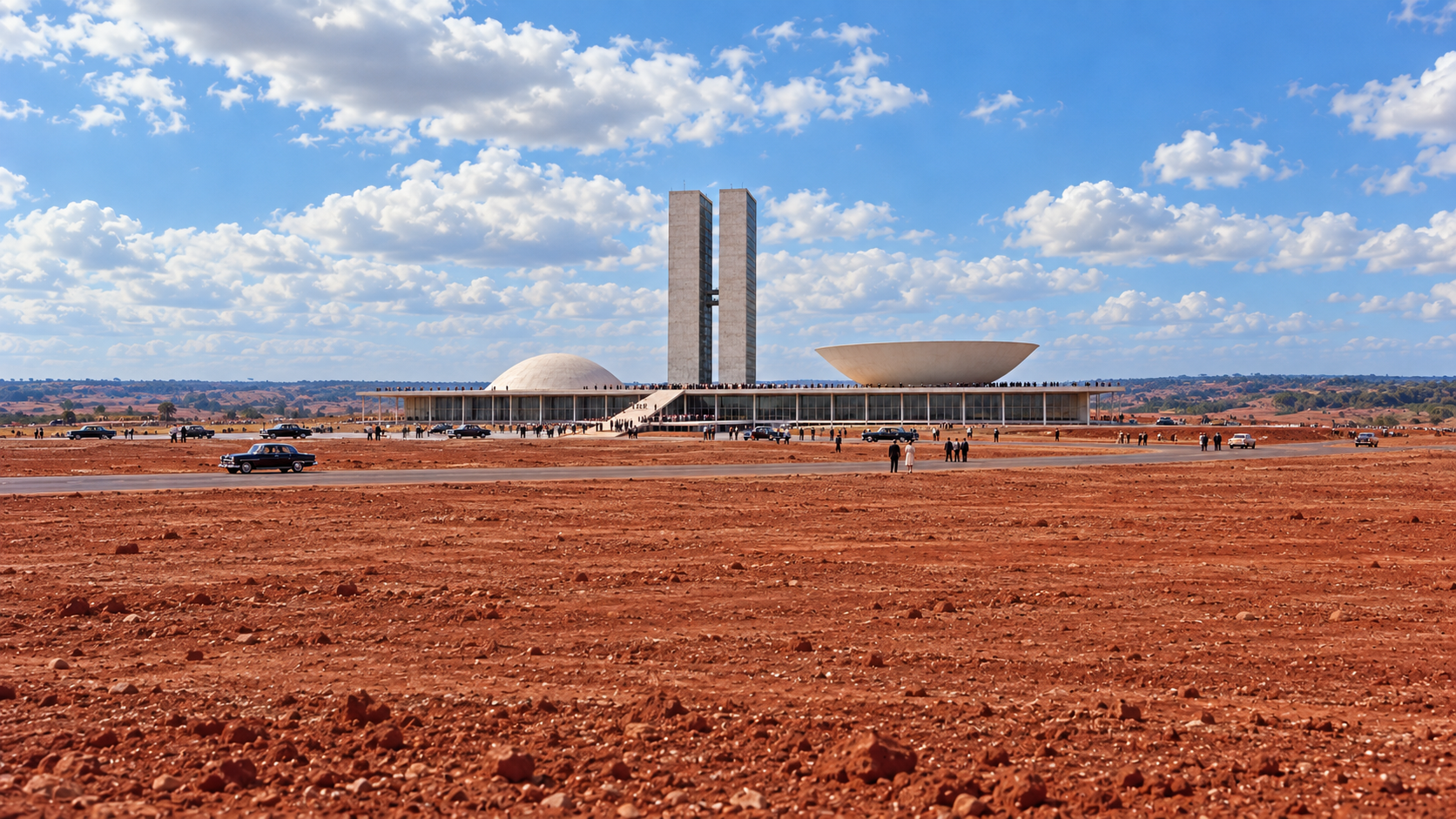
On April 21, 1960, Brazil inaugurated Brasília as its new federal capital, transferring the seat of national government from Rio de Janeiro to the Central Plateau. President Juscelino Kubitschek made the new city a defining project of his administration. The ceremonies established more than a collection of modern government buildings: they marked a deliberate relocation of political authority within a vast country. The executive, legislature, and judiciary took their places in a capital designed to express national ambition. Yet inauguration did not mean that construction was finished. Brasília began its official life while substantial work remained, making the day both a completion and a beginning.
The idea of an inland capital long predated Kubitschek. Supporters had connected relocation with defense and national integration, and the republican Constitution of 1891 endorsed moving the capital to the interior. Earlier proposals and symbolic gestures had not produced the city. Kubitschek committed himself to the project during his presidential campaign and, after taking office, created Novacap to manage construction and the planning competition. Lúcio Costa’s urban plan and Oscar Niemeyer’s major public buildings gave the political decision its distinctive physical form. Rapid construction required a large workforce, whose labor turned an ambitious government commitment into functioning roads, residences, offices, and monumental civic spaces.
At the installation of the executive in the Palácio do Planalto, Kubitschek explained the move in terms of regional development. His speech praised the country’s technical and industrial capacity, named Costa and Niemeyer, and argued that the capital could help reduce excessive differences in development among Brazil’s regions. He also credited the workers and organizers who had built the city. These were the president’s objectives and claims for the undertaking, rather than proof that the inequalities had already been overcome. The speech presented Brasília as a center around which further development would take place, linking the ceremonial opening to an economic program extending beyond the capital’s boundaries.
The legislature’s inaugural session gave the transfer a separate institutional meaning. Vice President João Goulart, who also presided over the Senate, opened the gathering in the new Congress building. Chamber president Ranieri Mazzilli and Senate vice president Filinto Müller also spoke. The complex brought the two legislative chambers into a shared architectural setting, while the nearby executive palace and Supreme Federal Court completed the arrangement around the Praça dos Três Poderes. The new capital did not itself solve the problems its advocates identified. Its lasting political significance was the decision to use the location and design of government as instruments of national integration, placing the country’s central institutions in a purpose-built inland city.
Brasília became Brazil’s federal capital on April 21, 1960.
The seat of government moved from Rio de Janeiro to the interior.
Juscelino Kubitschek made the project a central government commitment.
Lúcio Costa planned the city; Oscar Niemeyer designed major buildings.
João Goulart opened the legislature’s inaugural session.
The city’s official opening came while construction was still unfinished.
Explore more of "On This Day ..."
Discover more events from the same date across news, politics, technology, sports, and other fields. Each link highlights significant moments that shaped history on different fronts.