

On This Day in Politics: April 22, 1889
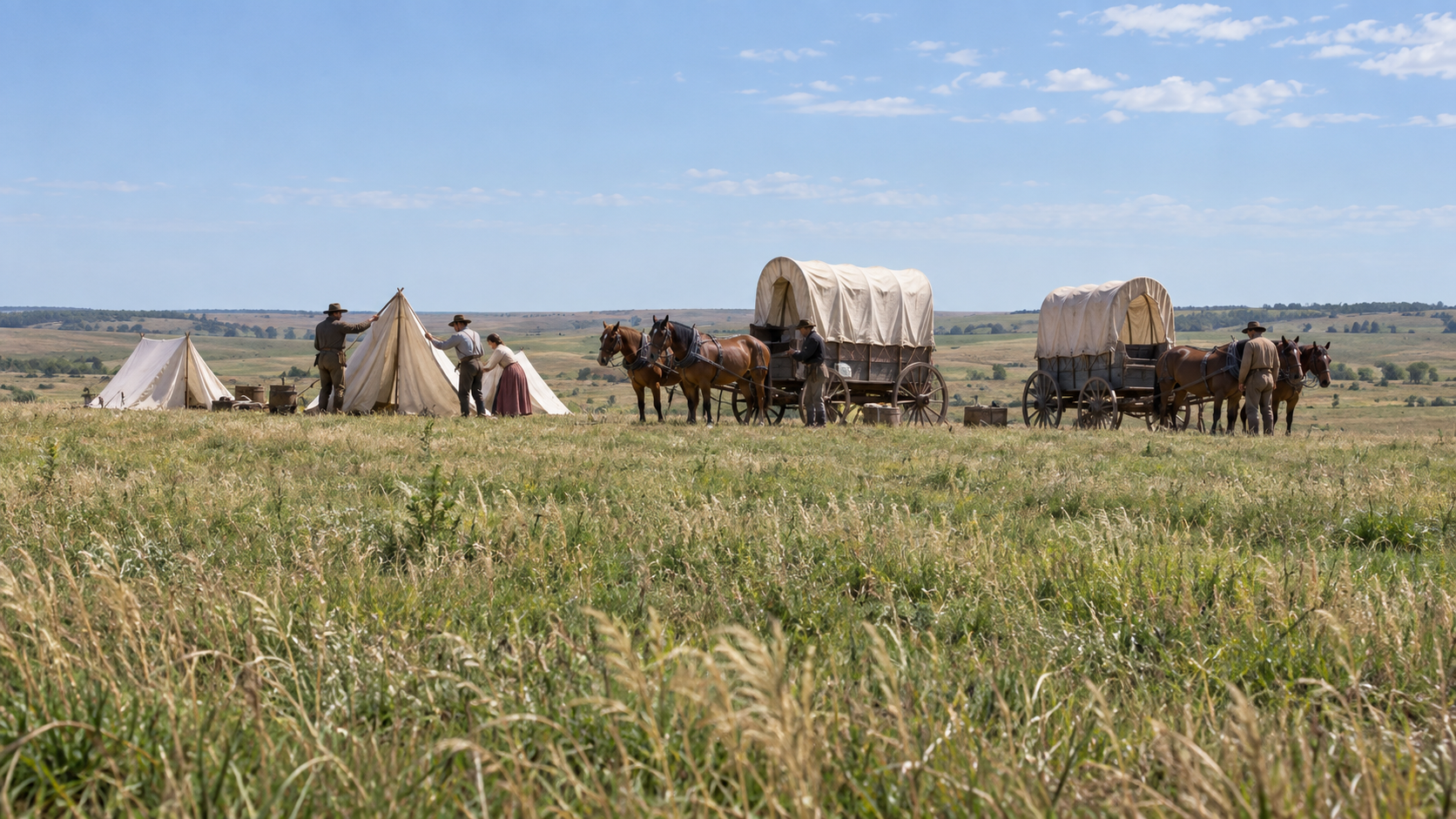
At noon on April 22, 1889, the United States opened roughly two million acres in central Indian Territory to settlement, triggering the first Oklahoma land run. Thousands of people crossed the boundary or arrived by rail to seek farms, town lots, and business opportunities. The area was known as the Unassigned Lands, and President Benjamin Harrison had announced the opening in a proclamation issued the previous month. Although remembered for horses, wagons, and hurried claims, the event was fundamentally an exercise of federal land policy. Congress and the president had determined when the land could be occupied and the legal conditions under which claims could become ownership.
The opening rested on a longer history of Indigenous dispossession. During the nineteenth century, the United States had forced numerous tribal nations from their eastern homelands into Indian Territory. After the Civil War, the federal government required major land cessions through new treaties with the Five Tribes. Some of the ceded land was used for reservations for other peoples; the central area later called the Unassigned Lands remained outside those assignments. Describing it as available public land concealed that history of coercion and changing treaty boundaries. The opportunities offered to incoming settlers were therefore inseparable from earlier federal decisions that had reduced Native peoples’ control over land and their own futures.
Harrison’s proclamation specified the opening hour and geographic boundaries in detail. It declared that other parts of Indian Territory were not included and warned that anyone entering and occupying the designated lands before the appointed time would be barred from acquiring rights there. Those restrictions were meant to govern a competitive rush, but enforcing an equal starting point proved difficult. Settlers who entered too early became known as sooners, and rival claims generated disputes that could last far beyond the day itself. Under the ordinary homestead route, an eligible claimant could seek 160 acres and earn title by meeting residence and improvement requirements. Reaching a desirable tract first did not, by itself, complete the legal process of ownership.
New settlements expanded with extraordinary speed, including Guthrie and Oklahoma City. Farmers were joined by merchants, tradespeople, professionals, and speculators, all seeking different benefits from the opening. The rapid influx created demands for land offices, local organization, services, and a formal territorial government. Oklahoma Territory followed under the Organic Act of 1890, with statehood coming in 1907. Those later developments should not be confused with the land run’s opening date. April 22 matters because it shows how a timed federal proclamation could abruptly alter population, property claims, and political expectations. Its legacy includes both the communities newcomers built and the costs imposed by the policies that made their arrival possible.
The land run began at noon on April 22, 1889.
Harrison’s proclamation opened the Unassigned Lands in central Indian Territory.
The opening followed earlier coerced tribal land cessions.
Other parts of Indian Territory were excluded from the proclamation.
Early entry could disqualify a claimant from acquiring land.
Oklahoma Territory was organized in 1890, after the land run.
Explore more of "On This Day ..."
Discover more events from the same date across news, politics, technology, sports, and other fields. Each link highlights significant moments that shaped history on different fronts.