

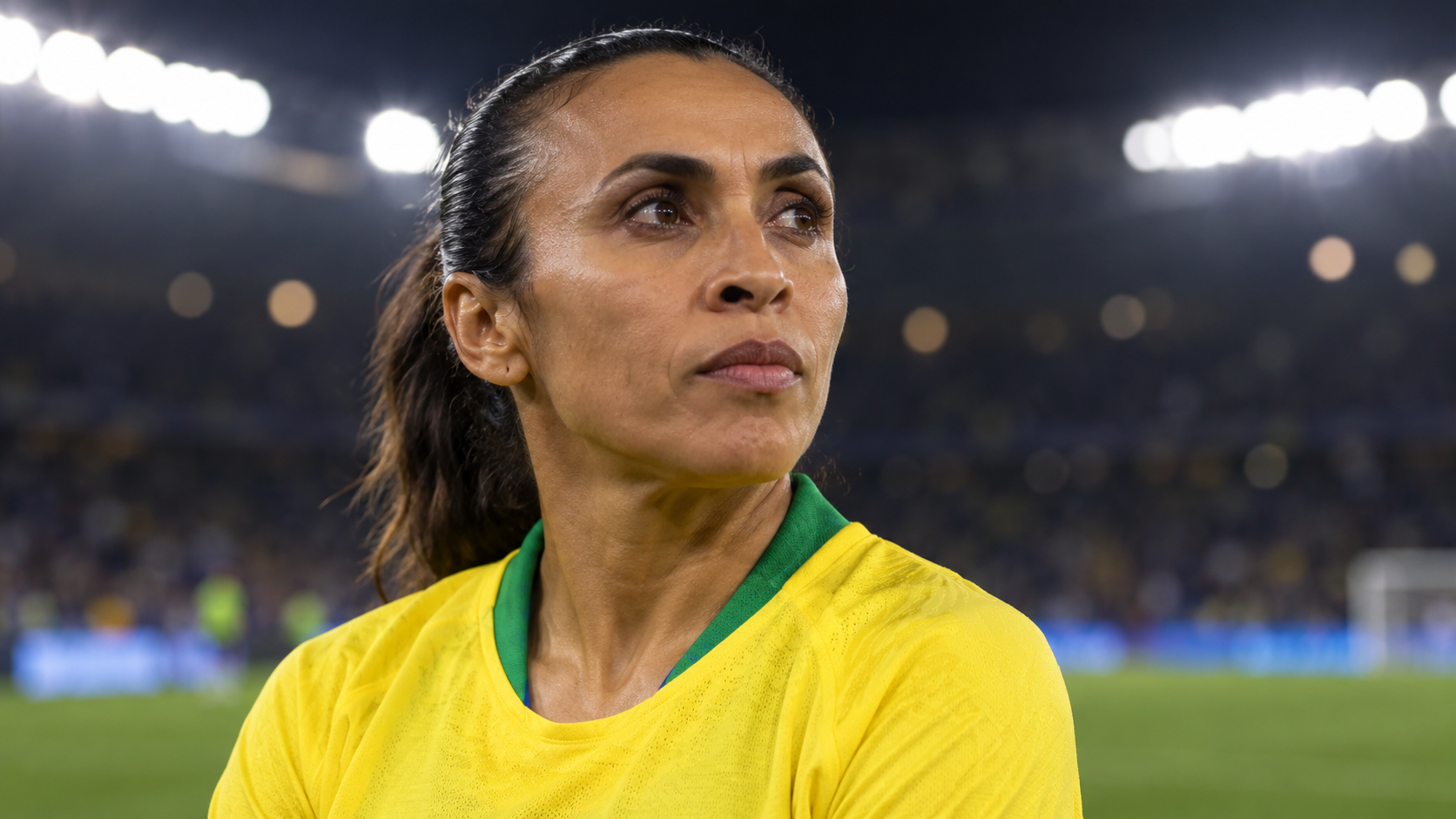
“Cry in the beginning, so you can smile at the end.”
Marta said, “Cry in the beginning, so you can smile at the end.” in an emotional pitch-side interview after Brazil lost to France in extra time in the round of 16 at the 2019 Women’s World Cup. Marta addressed the next generation directly after elimination. She asked young players to value the women who had built the sport, work harder, and accept early sacrifice so that future victories could be shared. Its brevity works only because the surrounding performance, risk, and public expectation supply the rest of the argument.
Elite sport often compresses years of preparation into a score, time, or final possession. This account restores the longer process behind that narrow result and shows why one instant can carry several meanings at once. In this case, the quotation belongs to soccer, but the record around it also shows how sporting achievement is shaped by relationships, institutions, and the meaning an athlete gives to experience. A source-first reading checks three connected layers: the exact wording, the occasion described as an emotional pitch-side interview after Brazil lost to France in extra time in the round of 16 at the 2019 Women’s World Cup, and the later significance attached to the remark. Keeping those layers together helps protect Marta from a cleaner or larger interpretation than the documented moment can support.
The appeal joined grief and responsibility. The tears were not weakness and the smile was not promised; her point was that progress asks athletes to endure difficult beginnings and keep building institutions around them. The point is not that confidence overrides evidence or that persistence always receives a reward. Good judgment still includes safety, support, changing conditions, and the courage to revise a plan when the original one no longer fits. This is the difference between honoring a speaker’s insight and turning a vivid sentence into advice it was never designed to carry.
The speech traveled far beyond the match because it connected Brazil’s defeat to the wider survival and growth of women’s football. The quote lasts because it offers direction rather than certainty. It asks for a clearer response to the present challenge while respecting the people, structures, and time required for meaningful change. The enduring question is not whether another person can reproduce the same career. It is whether the underlying idea can improve preparation, judgment, or care in the circumstances that actually exist now. That approach lets the quotation remain attached to Marta and soccer while still inviting a reader to carry its most defensible lesson into a different arena. Context narrows the claim, but that precision is what makes the lesson portable.
Marta delivered these words in an emotional pitch-side interview after Brazil lost to France in extra time in the round of 16 at the 2019 Women’s World Cup. Marta addressed the next generation directly after elimination. She asked young players to value the women who had built the sport, work harder, and accept early sacrifice so that future victories could be shared.
The appeal joined grief and responsibility. The tears were not weakness and the smile was not promised; her point was that progress asks athletes to endure difficult beginnings and keep building institutions around them.
The quotation is most responsible when it strengthens deliberate action without pretending that effort controls every body, institution, resource, injury, or competitive result.
The speech traveled far beyond the match because it connected Brazil’s defeat to the wider survival and growth of women’s football.
Its present value lies in turning admiration into a practical question about preparation, support, judgment, and the next decision.
Explore more "Quotes of The Day"
Discover more notable quotes from influential voices across politics, science, business, technology, sports, and culture. Each quote offers insight into how ideas, beliefs, and decisions shape the world around us.